

An ad budget that brings clicks but few patient appointments can leave your clinic questioning whether advertising is worth the cost. Reaching the right people also means navigating healthcare advertising restrictions. In this article, I’ll explain everything you need to know about Google Ads for doctors, from reaching local patients to improving campaigns and reviewing healthcare policies.
Quick summary:
- Focus your keywords and location targeting on the medical services and areas your clinic serves.
- Use clear ad copy and relevant assets to help prospective patients explore your practice.
- Make landing pages easy to navigate and appointment requests simple to complete.
- Review healthcare advertising rules before using remarketing or sharing conversion data.
- Evaluate inquiry quality and patient acquisition costs alongside clicks and impressions.
Why should doctors use Google Ads for healthcare?
Google Ads can help your clinic reach prospective patients, generate inquiries, and understand how your advertising budget performs.
- Reach people searching for your services. Target relevant searches such as “family doctor near me” to connect with people exploring care options in your service area.
- Increase your clinic’s visibility. Search ads give your practice an opportunity to appear prominently while patients compare providers, without waiting for organic rankings to improve.
- Generate measurable inquiries. Mega Digital’s healthcare search advertising report recorded an 8.09% average conversion rate across its Google and Microsoft ads dataset. This measures tracked conversions, which do not necessarily represent attended appointments.
- Make it easier for patients to contact you. Ad assets can highlight your location, phone number, and service pages, helping people find relevant information and take the next step.
- Control spending and refine performance. Set campaign budgets and review clicks, costs, and permitted conversion data to identify where your advertising needs improvement.
How does Google Ads reach patients?
For Search campaigns, Google matches a person’s search with eligible ads based on keywords and campaign settings. When someone searches for a service such as “family doctor near me,” relevant ads enter an auction that determines whether and where they appear. Placement depends on factors such as bids, ad quality, and search context.
Doctors can use geographic targeting to focus campaigns on their service areas. When an ad appears, prospective patients can click through to explore services or contact the clinic. With cost-per-click pricing, you pay for the click, while an inquiry or appointment depends on what the visitor does next.
Healthcare advertising restrictions doctors should know
Google’s Healthcare and medicines policy distinguishes between content that cannot be advertised and content allowed under specific conditions.
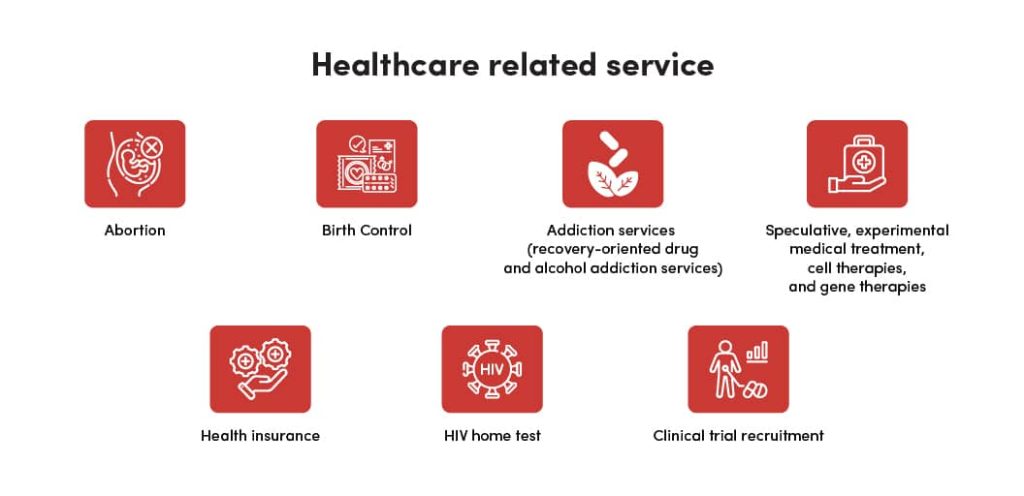
- Prohibited content includes offering prescription drugs without a prescription and promoting certain unapproved substances, such as supplements containing dangerous pharmaceutical ingredients.
- Restricted content includes online prescription drug services, prescription drug terms, and drug or alcohol addiction treatment services. Eligibility depends on the specific category and target location, with certification required in certain cases.
Before launching, check the requirements for your services and target country, including your ads and landing pages. Certification does not override content prohibitions or guarantee approval.
How to create effective Google Ads for doctors
These are the strategies that we have successfully implemented in our client’s case and I think you can apply them to your ads too.
#1 Use Keyword Targeting
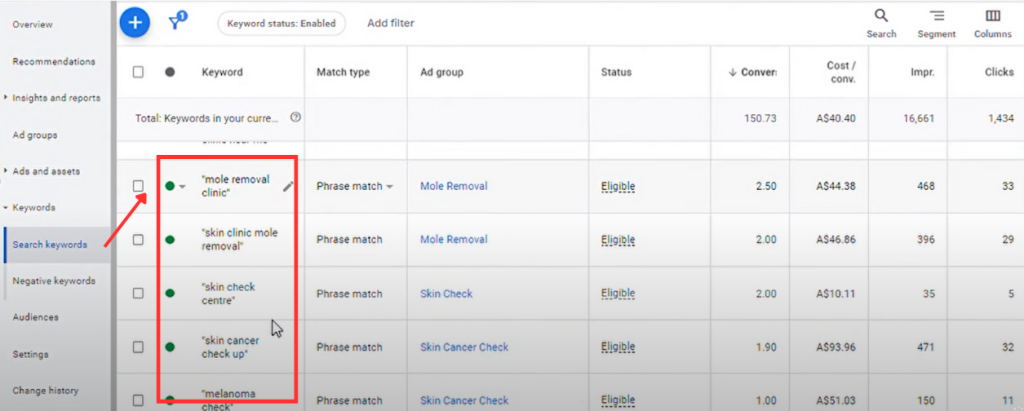
Let’s conduct extensive research to identify the most relevant and high-converting keywords related to medical services, healthcare, and specialized treatments.
When someone is searching, it’s because they’re genuinely interested in a specific term, product, or service. My top tip here is to invest time in solid keyword research. Whether it’s your team, a PPC agency, or yourself, identifying the right keywords – those intended to convert – is key.
For example, “doctor near me” gets over 200,000 searches monthly. Imagine the potential if your ad pops up when someone is actively looking for a doctor.
Search campaigns were created to target potential patients actively searching for medical services, utilizing a mix of phrase and exact match keywords.
#2 Create Engaging Ad Copy and Assets
Doctors should create compelling and relevant advertisements that showcase their medical services, expertise, and any special offers. These ads usually include a headline, description, and a link to the doctor’s website.
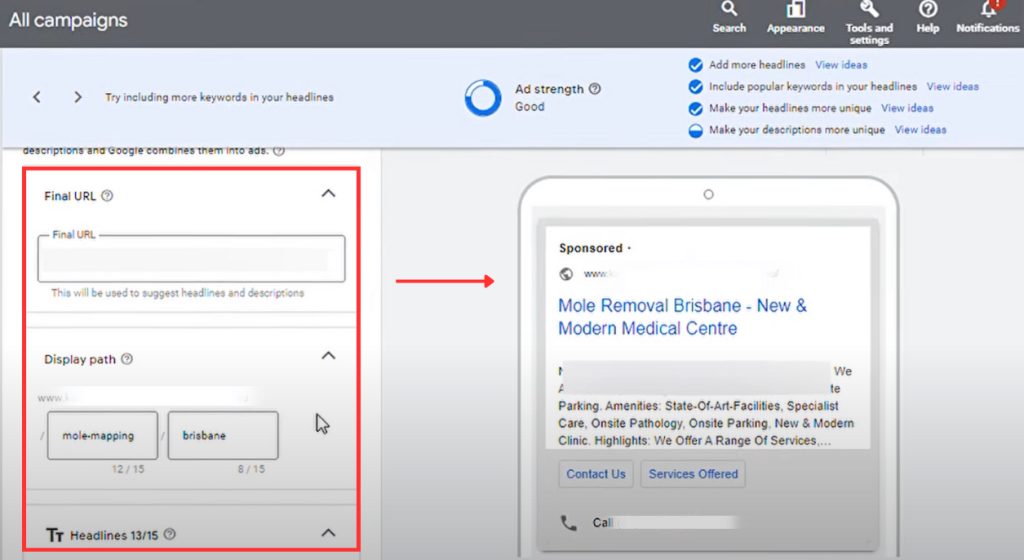
For example, we’ve crafted an engaging ad copy that highlighted our client’s unique selling points, such as experienced staff, state-of-the-art facilities, and patient-focused care.
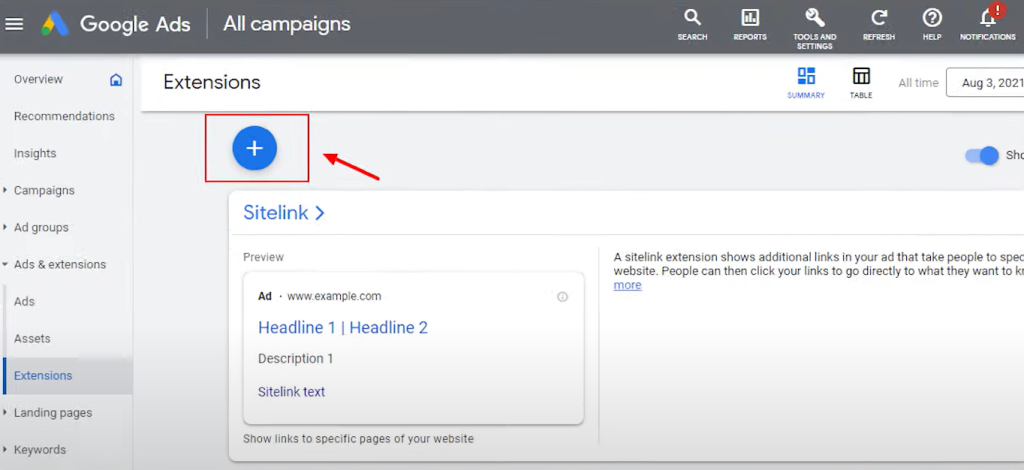
You should also utilize ad assets, previously called extensions, including location, callout, and site link extensions, to provide additional information to users.
These little details below your ads, like location and phone number, are golden. Especially for local businesses, adding location extensions can land your ad in the coveted maps area. So, quiz your team on having sufficient negative words and the right extensions.
#3 Use Location Targeting
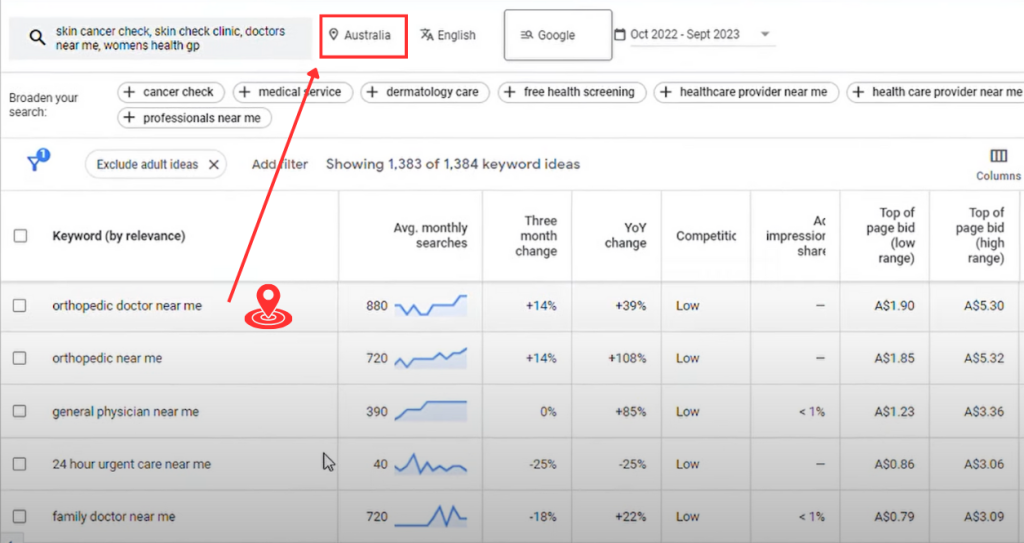
Medical practices can target their ads to appear for users in specific geographic locations. This ensures that the ads are seen by potential patients within the doctor’s service area. We employed geo-targeting for the client to refine ad visibility based on their geographic location.
Living in the digital age doesn’t mean we overlook the power of local. If you’re a healthcare provider, leveraging Google Ads locally can put you front and center. People want services nearby, so make sure your ad is the first one they see.
#4 Enable Ad Scheduling and Conversion Tracking
Ad scheduling, also known as dayparting, played a crucial role in optimizing the effectiveness of our Google Ads campaign for the clinic. This strategy involved strategically determining when our ads would be displayed during the clinic’s operating hours.
By aligning the ad display with the clinic’s operational times, we aimed to maximize relevancy and increase the likelihood of user engagement.
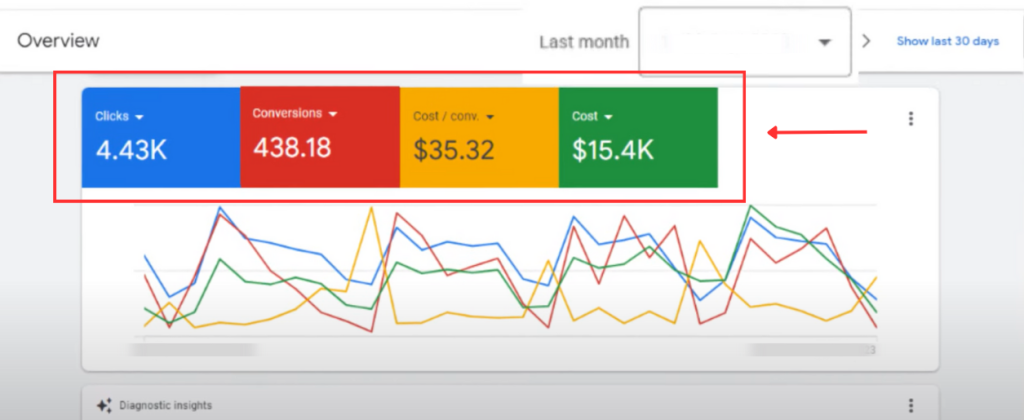
As for conversion tracking, it includes phone call tracking and form submissions. Google Ads also provides detailed analytics and insights into the performance of the advertisements.
Doctors can track metrics such as the number of clicks, impressions, and conversions, allowing them to assess the effectiveness of their campaign.
Read more: 10 Google Ads Metrics You Must Track to Stop Wasting Budget
#5 Optimize Landing Page
Your landing page should match the service advertised and make it easy for prospective patients to take the next step. Include relevant doctor qualifications, service details, location, and pricing or insurance information where applicable. Check loading speed and mobile usability, and provide a clear appointment request button.
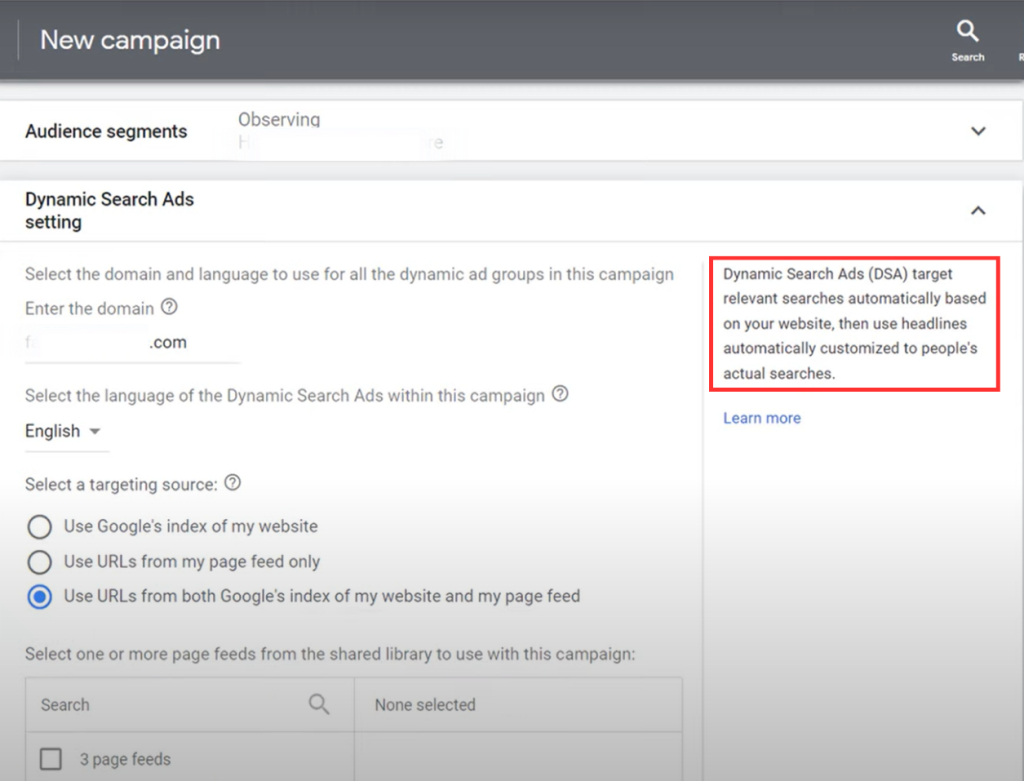
Test changes to headlines, page layout, and forms to identify what improves relevant inquiries. If you use Dynamic Search Ads, review which pages can become ad destinations. Google has announced that automatic upgrades from DSA to AI Max will begin in February 2027, so review your targeting and destination controls when planning the transition.
#6 Utilize the Google Display Network
The Google Display Network can introduce your clinic to people browsing websites and apps. Use responsive display ads with clear visuals and accurate service information, then review placements to understand where your budget is being spent.
Healthcare campaigns require particular care with audience selection. Under Google’s personalized advertising policy, advertisers promoting sensitive-interest services cannot use advertiser-curated audiences such as Customer Match or website-visitor data segments. Consider permitted contextual targeting or placement options instead of automatically retargeting previous visitors, and review eligibility for your specific services.
#7 Target competitor keywords
Competitor-name keywords can be tested to reach people comparing medical providers. Start with clinics offering similar services in your area, use a separate campaign with a limited budget, and assess whether these searches generate relevant inquiries.
Clearly identify your own clinic and highlight verifiable differences, such as services offered or appointment availability. Google’s trademark policy distinguishes bidding on trademarked keywords from using those trademarks in ad copy. Avoid wording that implies affiliation with a competitor or makes unsupported claims about their care.
Google Ads case study: A Melbourne medical clinic
A Melbourne clinic offering primary care and specialist services needed to improve the volume and quality of inquiries generated through Google Ads.
Challenge
The clinic received only three to four leads per month. Broad keywords, missing negative keywords, and incomplete conversion tracking made it difficult to reach relevant patients and evaluate campaign performance.
Solution
The account was restructured with phrase and exact match keywords, negative keywords, and ad copy testing. Conversion tracking was revised, while Performance Max campaigns were introduced alongside Search campaigns and connected to the clinic’s Google Business Profile.
Results
Following a three-month optimization period, the published case study reported these results for March 1-31, 2026:
- 95 conversions during the reporting month.
- AUD $7.80 per conversion.
- Under AUD $800 in monthly advertising spend.
- Approximately 1,030 clicks.
- Approximately 57,400 impressions.
FAQs about Google Ads for doctors
Most ads are reviewed within one business day, although complex reviews can take longer. If your ad remains under review for more than two full business days, check its status in your account.
Review the stated reason and correct the affected ad or landing page. If you believe the decision is incorrect, you can appeal the disapproval through Google Ads.
Your own search does not reliably indicate whether a campaign is running. Use Google’s Ad Preview and Diagnosis tool to check visibility for a specific search and location and investigate potential serving issues.
No. Advertising spend does not influence organic search rankings. Google Ads provides paid visibility, while improving organic visibility requires separate SEO work.
Conclusion
Google Ads for Doctors can be a powerful tool to increase the online visibility of medical practices, attract new patients, and promote specific healthcare services. By leveraging targeted advertising, doctors can connect with individuals actively seeking medical information or services, at the right time.
Feel like you can do better than your competitors? Don’t be shy to elevate your advertising now. Mega Digital is a trusted Google partner that can help you with that.
Don’t forget to subscribe, ask questions, or check our website for more on marketing your private practice.