

Is TikTok still worth it for small businesses? Yes, it can help you introduce your brand to new audiences, build relationships with potential customers, and generate leads or sales. But results depend on reaching the right people, creating content they care about, and choosing marketing activities that fit your budget and resources.
In this guide, Mega Digital shares 10 practical TikTok strategies, content ideas, and real business examples to help you get started. You’ll also learn when to focus on organic content, collaborate with creators, consider paid ads, and measure what’s actually contributing to your business goals.
Quick summary:
- Why TikTok matters: Reach new customers, build brand awareness, support sales through organic content and paid ads.
- 10 marketing strategies: Set clear goals, create engaging videos, leverage trends, collaborate with creators, and measure results.
- 9 content ideas: Try product demos, behind-the-scenes videos, customer testimonials, Q&As, and storytelling.
- Turn views into sales: Follow a practical 30-day plan, track leads & conversions, and invest in ads when your business is ready.
Why is TikTok Important for Small Business?
TikTok has become a powerful platform for businesses of all sizes, and small businesses can reap particular benefits from this trendy app. With effective TikTok for Business marketing strategies, here’s why small businesses should promote on TikTok:
Massive Reach
TikTok gives small businesses opportunities to reach people beyond their existing followers through content discovery. A useful product demonstration, behind-the-scenes video, or answer to a common customer question can introduce your brand to viewers who haven’t heard of it before. The opportunity is especially relevant when your target customers actively watch and engage with content in your niche.
Cost-Effective Marketing
TikTok offers both organic marketing and paid advertising options, allowing small businesses to start with the resources they have. You can create product demonstrations, educational videos, or customer stories without paying for ad distribution, although organic reach is never guaranteed.
When you’re ready to advertise, TikTok Ads can help you reach specific audiences and pursue measurable business goals. However, advertising costs vary by industry, market, competition, objective, and creative performance. TikTok isn’t necessarily cheaper than Facebook or Instagram, so compare results based on your cost per qualified lead or sale rather than CPC alone.
Targeted Advertising
TikTok Ads Manager offers advertising objectives for different business goals, including Reach, Traffic, Lead Generation, and Sales. Depending on your campaign setup and eligibility, you can use available audience targeting options to reach relevant potential customers.
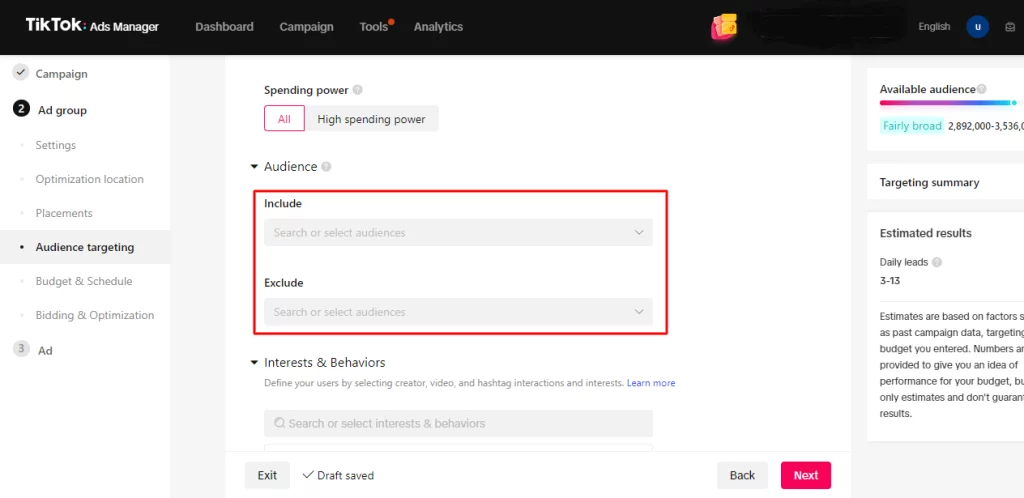
For small businesses, the key is choosing an objective that matches the result you want. For example, a local service provider may focus on generating inquiries, while an ecommerce store may prioritize product purchases. Targeting and campaign objectives support these goals, but they don’t guarantee a profitable return.
Overall, TikTok for small businesses provides a powerful platform to increase brand awareness, engage with their target audience, and drive sales. It’s a platform that rewards authenticity and fun, making it a great space to showcase your brand personality and potentially achieve viral success.
How to Promote Small Business on TikTok?
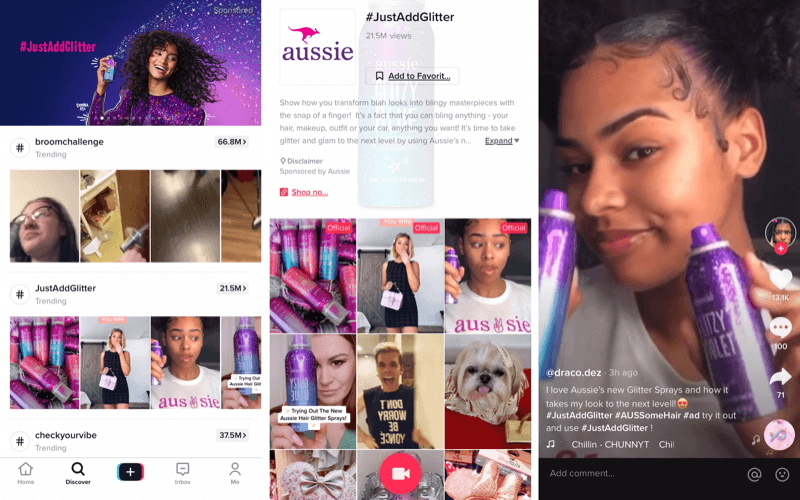
Even if you are an expert on Instagram or Facebook marketing, it’s crucial to acknowledge that TikTok is a distinct platform with its own unique dynamics. Following by TikTok, for small businesses aiming to expand their presence on TikTok, a continuously engaged strategy is the key to success. You need a three-pronged approach:
Organic content + Paid Ads + Creator Collaborations
This combination allows you to organically connect with viewers, reach a wider audience through ads, and benefit from the power of influencer marketing specific to the TikTok platform.
Using the formula mentioned above, I will provide small businesses with clear guidelines for achieving effective marketing on TikTok:
1. Understand the platform
Take the time to explore TikTok and understand its unique features and user behavior. Also, familiarize yourself with the demographics of TikTok users to ensure your content aligns with your target audience is such significant.
To understand the TikTok platform better, here are some effective ways to gain insights and knowledge:
- Watch videos: Navigate through and watch several videos to familiarize yourself with the platform. Browse through the For You page, which showcases a curated feed of popular and trending videos. Engage with content by liking, commenting, and sharing to understand the user experience and preferences.
- Follow popular creators: Identify and follow influential creators within your industry or niche. Pay attention to the type of content they create, their storytelling techniques, and the engagement they receive. Observing successful creators can provide inspiration and help you understand what resonates with TikTok users.
To make this research useful without spending hours scrolling, choose a few businesses or creators in your niche and look for patterns:
- Opening hooks: What do they show or say in the first few seconds?
- Customer questions: Which problems, objections, or requests appear repeatedly in the comments?
- Content formats: Do demonstrations, tutorials, comparisons, or customer stories generate meaningful discussions?
- Calls to action: How do they encourage viewers to visit a profile, ask questions, or explore a product?
- Engagement quality: Are viewers asking relevant questions or showing purchase interest, rather than simply leaving generic comments?
Use these observations to develop your own ideas, not to copy another creator’s content. You can also explore TikTok Creative Center for relevant trends and creative inspiration.
2. Set clear goals
Determine what you aim to achieve with your TikTok presence. Are you looking to increase brand awareness, drive traffic to your website, generate leads, or boost sales? Having clear goals will help you tailor your content and measure your success of TikTok for small business effectively.
Make each goal measurable by deciding what success looks like for your business:
| Business goal | What to measure | Small-business example |
|---|---|---|
| Brand awareness | Reach, qualified video views, and audience interest | A new bakery introduces its products to local customers through short videos |
| Community growth | Relevant comments, shares, follower growth, and profile visits | A skincare brand answers recurring customer questions to build trust |
| Lead generation | Qualified inquiries, form submissions, and booked consultations | A home renovation service encourages viewers to request a quote |
| Ecommerce sales | Attributed purchases, conversion rate, cost per order, and profitability | An online accessories store tracks orders from product demonstration campaigns |
For organic content, start with views, engagement quality, profile activity, and any website or inquiry data you can reliably track. For paid campaigns, use the relevant conversion and cost metrics available in TikTok Ads Manager.
Remember that not every sale can be attributed directly to a TikTok video. Customers may discover your business on TikTok and purchase later through another channel, so consider both platform reporting and your actual business results.
3. Create engaging content
Creating engaging content is crucial for capturing the attention of TikTok users and building a loyal following. Here are some detailed tips to help you create compelling and effective TikTok content:
- Understand your target audience: Before you start creating content, it’s essential to have a deep understanding of your target audience. Consider their demographics, interests, preferences.
- Showcase your brand’s personality: TikTok for small business encourages authenticity and creativity. Use your content to showcase your brand’s unique personality, values, and identity.
- Grab attention quickly: TikTok users have short attention spans, so it’s crucial to capture their attention within the first few seconds of your video.
- Optimize video length: TikTok videos are typically short, ranging from 15 to 60 seconds, the ideal video length may vary depending on your content and audience. Experiment with different video lengths and monitor audience engagement.
- Use visual and auditory elements effectively: Use clear visuals, appealing colors, and thoughtful compositions to capture attention. Add music, sound effects, or voiceovers that support your message. For promotional content, make sure you have the appropriate commercial rights to use the audio. TikTok’s Commercial Music Library offers music intended for commercial use, but not every trending sound is licensed for business promotion.
- Experiment with video effects and filters: Experiment with a range of creative effects, filters, and editing tools to add visual interest and uniqueness to your videos.
- Incorporate calls to action (CTAs): Encourage viewer engagement and action by incorporating clear and compelling calls to action in your videos.
- Be consistent and post regularly:
- Build a realistic posting schedule based on the time and resources your business can maintain. Experiment with different content themes, formats, and posting times, then use your TikTok analytics to identify when your audience is active and which posts generate meaningful engagement.
- There is no single best time to post on TikTok for every small business. A local café, an international ecommerce store, and a B2B service provider may reach audiences with very different viewing habits.
- Start by testing a few posting windows that make sense for your customers’ locations and daily routines. Compare views, watch time, engagement, and relevant business actions across several posts before adjusting your schedule. Focus on consistent content quality rather than following a universal posting-time chart.
Read more: When Is the Best Time to Post on TikTok?
4. Embrace trends
TikTok trends can help small businesses discover content formats and conversations that are relevant to their audiences. Explore the For You feed, use TikTok Search to research topics in your niche, and check TikTok Creative Center’s Trends section for popular hashtags by industry, region, or time period.
Not every trending challenge is worth joining. Choose trends that fit your products, brand personality, and customers’ interests rather than chasing popularity alone. Here’s how to approach relevant trends:
- Put a unique spin on it: While it’s important to follow the general structure or format of a trend, strive to put your unique twist on it. Find a way to incorporate your brand’s personality, values, or products into the trend.
- Participate early: With TikTok for small business. trends can come and go quickly, so it’s crucial to jump on them early to maximize your visibility. As soon as you identify a relevant trend, start planning and creating your content promptly.
5. Leverage influencers
Leveraging influencers of TikTok for business is a powerful strategy to expand your reach, increase brand awareness, and tap into the existing fan bases of popular content creators. Influencers have a dedicated following and can help amplify your message to a larger audience. Here are some detailed steps to effectively leverage influencers on TikTok:
- Identify relevant influencers
- Research influencer credibility
- Establish your campaign goals
- Reach out to influencers
- Collaborate on content creation
- Track and measure performance
- Engage with influencer-generated content
For small businesses working with limited budgets, start with a focused creator collaboration rather than a large campaign. Look for creators whose audiences match your potential customers, even if they don’t have a massive following.
Before agreeing to a collaboration, confirm:
- Audience fit: Does the creator regularly discuss topics related to your product, service, or local market?
- Content expectations: Agree on the video concept, deliverables, publishing schedule, and approval process.
- Usage rights and disclosure: Clarify whether your business can reuse the video organically or in paid ads, and ensure the partnership follows applicable advertising disclosure requirements.
- Business outcomes: Use relevant indicators such as qualified inquiries, tracked website visits, purchases, or promotional-code redemptions where available, not views alone.
Start with a manageable test and review the results before committing more resources. Eligible businesses can also explore TikTok One for creator collaborations, subject to market and account availability.
6. Use hashtags strategically
Hashtags are essential for increasing the discoverability of your TikTok for small business content. When selecting hashtags, it’s beneficial to include a mix of popular and niche hashtags.
- Popular hashtags: Broad hashtags can help describe widely discussed topics, but popularity alone doesn’t make a hashtag relevant to your content. For example, a small clothing business might use a fashion-related trending hashtag when the video genuinely fits that trend.
- Niche hashtags: Use more specific hashtags that describe your products, audience, or content topic. A handmade jewelry store might use #handmadejewelry or #jewelrymaking when those terms accurately describe the video. These hashtags can help place your content in a more relevant topic context.
By using a combination of both, you can increase the chances of your content being discovered by a wider range of users.
Additionally, participate in trending hashtags and challenges to increase your chances of appearing in the corresponding search results. Consider creating your own TikTok branded hashtags challenge to encourage user-generated content and foster a sense of community around your brand.
7. Engage with the community
Building a strong community is crucial on TikTok for small business. You can actively participate in the TikTok niche communities by:
- Comment on videos
- Respond to comments on your own videos
- Like and reply to user-generated content related to your brand
- Engage in duets and collaborations.
- Encourage user participation through duets and challenges
Engaging with other users and creators can help you understand the preferences and interests of the TikTok community, as well as build relationships with potential followers and collaborators. Furthermore, by fostering a sense of interaction and connection, you can build brand loyalty and encourage user-generated content.
8. Cross-promote on other platforms
Cross-promotion helps maximize your content’s reach and attract new followers. Leverage your existing social media platforms and marketing channels to promote your TikTok presence.
- Share your TikTok videos on platforms like Instagram, Facebook, or Twitter to reach your existing followers and encourage them to follow you on TikTok.
- Embed TikTok videos on your website or blog to showcase your content to website visitors.
9. Consider Paid Ads
Like any other social media platform, TikTok offers advertising opportunities for businesses, providing a valuable means to increase brand visibility and reach potential customers.
Small businesses don’t need to start with a large advertising budget. If you’re still learning what resonates with your audience, focus on organic content first. Once you’ve identified a clear business goal and have suitable creatives and a way to measure results, you can consider paid promotion.
TikTok provides different options depending on your needs:
- Promote: Use TikTok’s in-app promotion feature, where available, to give suitable existing content additional exposure and pursue supported promotion goals.
- TikTok Ads Manager: Create campaigns with objectives that match your goals, such as Reach for awareness, Traffic for website visits, Lead Generation for customer inquiries, or Sales for purchases. Available objectives and features may vary by market and account.
You can create a standard TikTok Ads Manager account, subject to TikTok’s account review and eligibility requirements. Renting an agency advertising account is not a general requirement for running TikTok Ads.
For a small business, start with a clear goal, a realistic test budget, and a relevant creative. Measure results using the metric that matters to your business, such as cost per qualified lead, cost per purchase, or return on ad spend, before deciding whether to invest more.
10. Track and analyze results
Use TikTok Analytics tools or third-party platforms to track the performance of your TikTok content. Pay attention to TikTok metrics such as:
- Views
- Engagement rate (likes, shares, comments)
- Follower growth
- Click-through Rate (CTR)
- Conversion Rate
To turn these metrics into useful decisions, review performance regularly and connect your content results to your business goals.
- Identify which content attracts attention: Compare video views, watch time, audience retention, and engagement across similar posts. If viewers consistently leave early, test a clearer opening hook or show the product benefit sooner.
- Look for buying or inquiry signals: Review relevant comments, profile visits, website clicks, and customer inquiries. A video with fewer views may still be valuable if it attracts people who are genuinely interested in your offer.
- Connect activity to leads or orders: Where tracking is available, compare website visits, form submissions, and purchases with your TikTok activity. Use campaign attribution reports carefully, since they may not capture every customer interaction.
- Evaluate advertising efficiency: If you run paid campaigns, track your cost per qualified lead or order. For ecommerce, consider revenue, advertising costs, product margins, and other selling expenses before deciding whether a campaign is profitable.
- Make one informed adjustment at a time: If viewers watch but rarely click, review your CTA and offer. If clicks are strong but purchases are weak, investigate the landing page, pricing, or checkout experience. If cost per acquisition rises, review creative performance, targeting, and campaign delivery.
The goal isn’t to make every metric increase. It’s to understand which TikTok activities help your business attract relevant customers and generate worthwhile results.
Remember that the relevance of these metrics may vary based on your TikTok ad objectives and overall marketing goals. Regularly tracking and analyzing these metrics will help you make data-driven decisions, optimize your TikTok content strategy, and achieve better results with your TikTok marketing efforts.
A Simple 30-Day TikTok Marketing Plan for Small Businesses
If you’re starting from scratch, you don’t need to implement all 10 strategies at once. Here’s an example of how to organize your first month on TikTok without overwhelming a small team.
| Period | Main focus | What to do |
|---|---|---|
| Week 1 | Set up and research | Optimize your profile, define your main business goal, identify your target customers, and review content from relevant businesses and creators |
| Week 2 | Test content ideas | Choose 2–3 content pillars, such as product demonstrations, educational tips, or behind-the-scenes videos, and test different hooks and formats |
| Week 3 | Review and improve | Compare audience retention, relevant engagement, profile activity, and any inquiries or orders you can track. Refine the topics and formats that show promise |
| Week 4 | Build on what works | Continue producing useful content, explore a relevant creator collaboration, or consider promoting a suitable post if you have a clear objective and measurement plan |
This is an illustrative starting plan, not a required TikTok schedule or a proven formula for sales growth. Adjust the pace based on your team’s capacity, customer buying journey, and the results you observe.
For example, a local service business may focus on generating inquiries through helpful Q&A videos, while an ecommerce seller may prioritize product demonstrations and tracked purchases.
9 TikTok Content Ideas for Small Business
If you’re a small business exploring TikTok Marketing for Business and looking for content ideas to promote your brand, engage with your audience, and showcase your products or services, here are some suggestions:
- Behind-the-Scenes: Show them how your products are made, introduce your team, or provide a glimpse into your daily operations. This helps build transparency and authenticity on TikTok for small business, fostering a deeper connection with your audience.
- Product Demonstrations: Create short videos demonstrating how to use your products or showcasing their features and benefits.
- Customer Testimonial: Share video testimonials from satisfied customers who have had positive experiences with your products or services. This social proof can build trust and credibility, influencing others to consider your brand.
- Trendy Challenges and Dances: Participate in popular TikTok challenges and dances that align with your brand or industry. Add your unique twist to make it relevant to your business.
- Q&A Sessions: Host Q&A sessions where you answer frequently asked questions about your products, services, or industry. This helps build trust, addresses concerns, and positions you as an expert in your field.
- Start to Finish Timelapse: Create a high-speed timelapse showcasing any process you’d like to highlight, such as the creation of your products, or the decoration of your front desk. Watching something unfold rapidly from start to finish can be an enjoyable experience.
- Storytelling: Use storytelling techniques to share the story behind your brand, your mission, or the inspiration behind your products. Connect with your audience on an emotional level and create a memorable narrative that resonates with them.
- User-Generated Content Campaigns: UGC content encourages your customers to create content featuring your products or services. You can run contests or challenges where users share their experiences or creative ways they use your offerings.
- Educational Tips and Advice: Share valuable tips, advice, or industry insights related to your niche. Position yourself as a source of knowledge and expertise.
Remember to keep your content authentic, entertaining, and aligned with your brand’s tone and values. Experiment with different ideas, monitor audience engagement, and refine your approach based on what resonates best with your TikTok community.
Read more: Unfold the top 11 TikTok Video Ideas to captivate your audience
2 Examples of Small Business on TikTok
These examples demonstrate the diverse range of businesses that have found success on TikTok. By leveraging the platform’s features, creativity, and engagement opportunities, small businesses can effectively promote their products, showcase their expertise, and connect with a broader audience.
Paint Your Life
Paint Your Life is an eCommerce company that offers a custom experience of creating artwork to cherish and honor special memories. The company has been a prominent player on TikTok for several successful years, primarily focusing on performance activities.
Despite their consistent and successful presence on TikTok, the company encountered unexpected challenges in meeting their KPIs on the platform during the third quarter of 2023.
Paint Your Life also demonstrates how a product with strong emotional appeal can inspire engaging TikTok content. Its customer reaction videos and behind-the-scenes painting content help viewers understand the personal experience behind its custom artwork.
However, the performance improvements reported in TikTok’s official case study came from a separate paid advertising strategy, not simply from publishing customer reaction videos.
To address its campaign performance challenges ahead of the holiday season, Paint Your Life adopted TikTok’s Smart Performance Campaign (SPC), an automated campaign solution available in that period. The advertiser subsequently expanded its approach with additional campaigns optimizing for lower-funnel events, including add-to-cart and add-payment-info.
According to TikTok’s published case study, this multi-event paid advertising strategy delivered the following year-over-year results:
- 63% increase in conversion rate (CVR)
- 17% decrease in cost per acquisition (CPA)
- 10% increase in return on ad spend (ROAS)
These are reported results from Paint Your Life’s specific advertising campaign, not evidence that customer reaction videos alone produce similar improvements. For small businesses, the broader lesson is to combine relevant creative content with a campaign strategy aligned with measurable business goals.
Down to Earth Beauty (DTE beauty)
DTE Beauty is a small beauty business that uses TikTok to share product information and engage with its community. The women-of-color-owned brand specializes in cruelty-free body and skincare products.
This TikTok account actively engages with its followers by responding to questions through videos and fostering interactions in the comments section. Moreover, they provide personalized product recommendations to address their customers’ needs, organizing them into playlists such as body acne scars, facial acne products, and body acne products.
Additionally, they curate playlists showcasing the packaging process of orders and an ASMR playlist for followers who enjoy the satisfying sounds of product packaging.
These varied content formats give DTE Beauty opportunities to answer customer questions, showcase its products, and build stronger connections with its TikTok community.
Read more: Tiktok for Real Estate: Ultimate Tips to Sell Homes Faster
Final word
In conclusion, harnessing the power of TikTok for small business can be a game-changer when it comes to generating more sales and expanding your customer base. By implementing our guideline, you can make the most out of this popular platform and take your business to new heights.
If you’re ready to explore TikTok Ads but need help planning, managing, or optimizing your campaigns, Mega Digital offers professional campaign management support through its White-Glove Services. Talk to our team about an advertising approach that fits your business goals and resources.