
TikTok CPM is one of the most searched metrics among advertisers. However, many still struggle to understand how it’s calculated or what a good CPM looks like. That’s why this 2026 guide will walk you through everything, from what TikTok CPM is, how much it costs, and how to lower it to get more out of your TikTok ads!
Quick Summary
- Learn what TikTok CPM means – the cost of 1,000 impressions – and how it works across Auction (dynamic) and Reach & Frequency (fixed) campaigns.
- Understand why CPM matters: it measures reach efficiency, helps forecast delivery costs, and flags targeting or creative issues.
- Explore 2026 CPM benchmarks by industry, with real-world data and a comparison with Meta.
- Apply practical tips to optimize CPM – test ad schedules, refine targeting, improve creative quality, compare formats, and choose the right bidding strategy.
What is TikTok CPM?
TikTok CPM (Cost Per Mille) measures how much you pay for every 1,000 ad impressions. It is a reporting metric across campaigns, regardless of the bidding method used. TikTok also offers CPM bidding for supported objectives, such as Reach.
Unlike oCPM or CPC, CPM bidding focuses on impression delivery rather than optimizing for clicks or conversions. This makes it useful for awareness campaigns where visibility is the main goal.
TikTok supports CPM in both major buying types:
- In Auction campaigns: CPM is dynamic. You bid to get impressions, and the actual cost fluctuates based on your bid, audience targeting, competition, and ad relevance. This approach gives you flexibility but requires active budget control.
- In Reach & Frequency campaigns: CPM is fixed. You reserve impressions in advance for a guaranteed cost. This method ensures predictable delivery and is typically used for large-scale awareness campaigns or high-traffic periods.
Why Is TikTok CPM Important?
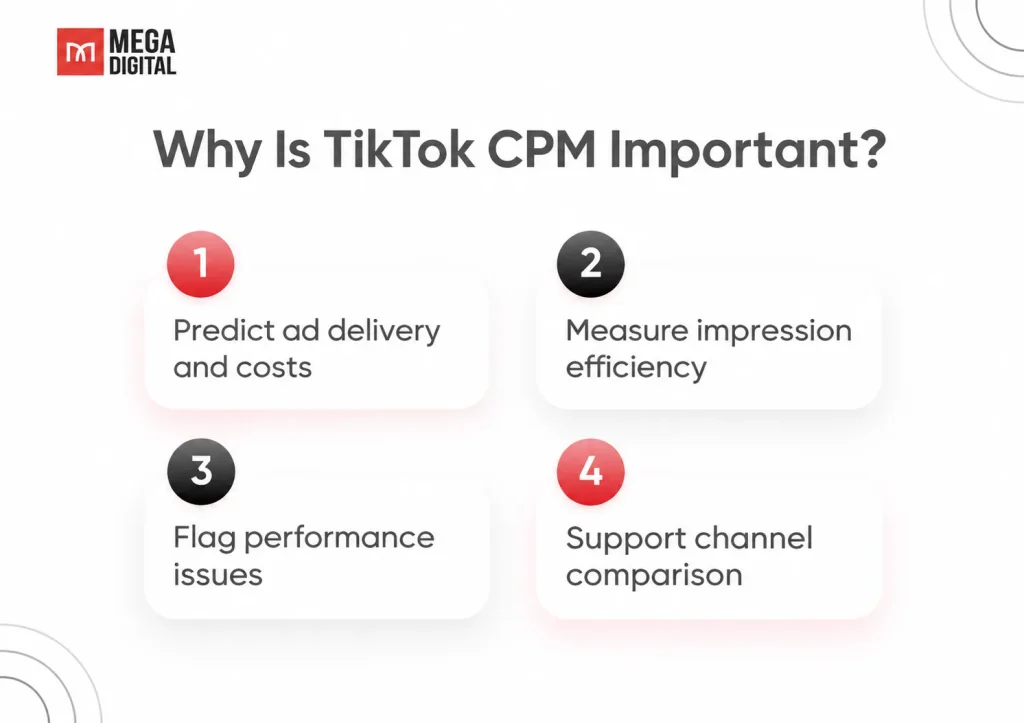
Understanding TikTok CPM is essential because it directly influences how efficiently your ads reach users and how far your budget can stretch.
- Predict ad delivery and costs: Use estimated or historical CPM to forecast how many impressions your budget may deliver. Actual reach also depends on how often users see your ads.
- Measure impression efficiency: CPM helps you compare the cost of ad impressions. For example, Campaign A has a $5 CPM and Campaign B has a $10 CPM for the same 100,000 impressions. Campaign A costs less for the same number of impressions, but you should also compare conversions and cost per result before deciding which performs better.
- Flag performance issues: A rising CPM may signal poor targeting, weak creatives, or high competition. Therefore, CPM could help inform your advertising team to act fast and optimize.
- Support channel comparison: CPM helps compare impression costs across platforms like TikTok and Meta. However, campaign objectives, audiences, and placements may differ, so CPM alone doesn’t determine advertising efficiency.
TikTok CPM Formula (with Calculator)

To calculate TikTok CPM, you can use the following formula:
Explain:
- “Total Cost” is the money you’ve spent on your TikTok ad campaign.
- “Total Impressions” is how many times users have seen your ad.
For instance, if you’ve spent $500 on your campaign and your ad has been seen 10,000 times, your CPM would be:
- CPM = (500 / 10,000) * 1,000 = $50
This means you’re paying $50 for every 1,000 ad impressions.
Factors Affecting TikTok CPM

A good TikTok CPM is one that balances cost with performance. For awareness campaigns, consider CPM alongside reach and frequency. For conversion-driven campaigns, a higher CPM may still be acceptable if it brings valuable results, such as purchases or installs, at a reasonable cost.
To assess whether your CPM is strong, compare it against both internal benchmarks and market data. For example, one ad group delivering 100,000 impressions at $5 CPM is more cost-efficient than another at $10, unless the latter achieves stronger results.
To evaluate your performance even more accurately, you need to consider the factors affecting TikTok CPM, including:
- Target audience: Narrow or highly sought-after segments typically drive up CPM due to stronger competition among advertisers.
- Type of ad: Auction ads, premium placements like TopView, and branded effects use different pricing models, so their costs aren’t always directly comparable.
- Ad placement: Premium placements often cost more because they appear in high-visibility locations.
- Quality of ad: Good, relevant ads get better placements at lower costs.
- How much you bid: Higher manual bids can win more impressions, but also raise CPM, especially in competitive auctions.
- Seasonal timing: CPMs increase during high-demand periods like holidays, sales events, or cultural festivals.
- Geographic location: Costs can differ based on where your audience is located.
- Competition: The more advertisers targeting your audience at the same time, the higher your CPM is likely to be.
How Much Does TikTok CPM Cost in 2026?
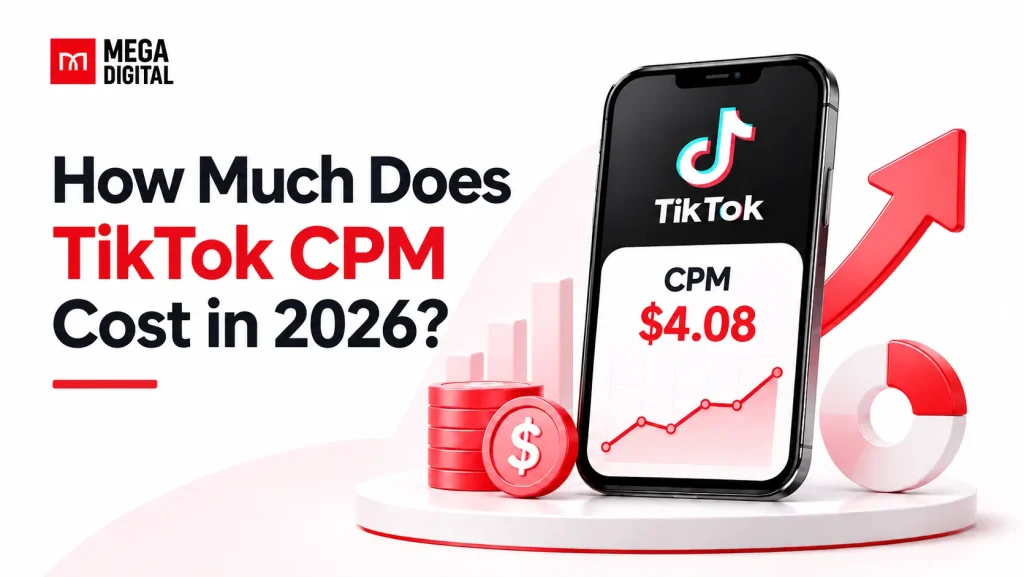
TikTok CPM varies depending on your audience, industry, ad format, and campaign timing. There’s no fixed CPM that applies to every advertiser.
According to Triple Whale’s November 2026 report, the median TikTok CPM was $4.08, based on data from over 6,000 ecommerce brands between November 2025 and October 2026. This is a useful reference, but your actual CPM may differ depending on your market and campaign objectives.
TikTok ad formats use different buying and pricing models. Here’s how they compare:
| Ad Format | Pricing Model | Notes |
|---|---|---|
| In-Feed Ads | Auction-based | CPM varies by targeting, competition, and campaign objectives. |
| Spark Ads | Depends on campaign buying type | Uses existing TikTok posts or authorized content, with no universal Spark-specific CPM. |
| TopView Ads | Premium CPM-based booking | Costs depend on the booking date, market, audience, and inventory availability. |
| Brand Takeover | Premium placement; availability varies | Check current product availability and pricing with TikTok. |
| Branded Effects | Custom creative pricing | Production and activation costs aren’t directly comparable to standard auction CPM. |
TikTok CPM also varies by industry. Here are selected benchmarks from Triple Whale’s 2026 ecommerce advertising data:
| Industry | Median CPM (USD) | Change YoY |
|---|---|---|
| Apparel & Accessories | $4.29 | -1.44% |
| Beauty | $3.79 | -36.85% |
| Home & Garden | $4.43 | -25.13% |
| Electronics | $4.28 | -20.17% |
| Sports & Outdoors | $3.62 | -8.13% |
How to optimize TikTok CPM?
To make the most of your TikTok ad budget, understanding how to lower your CPM is essential. Here are some proven strategies to help you optimize your TikTok CPM:
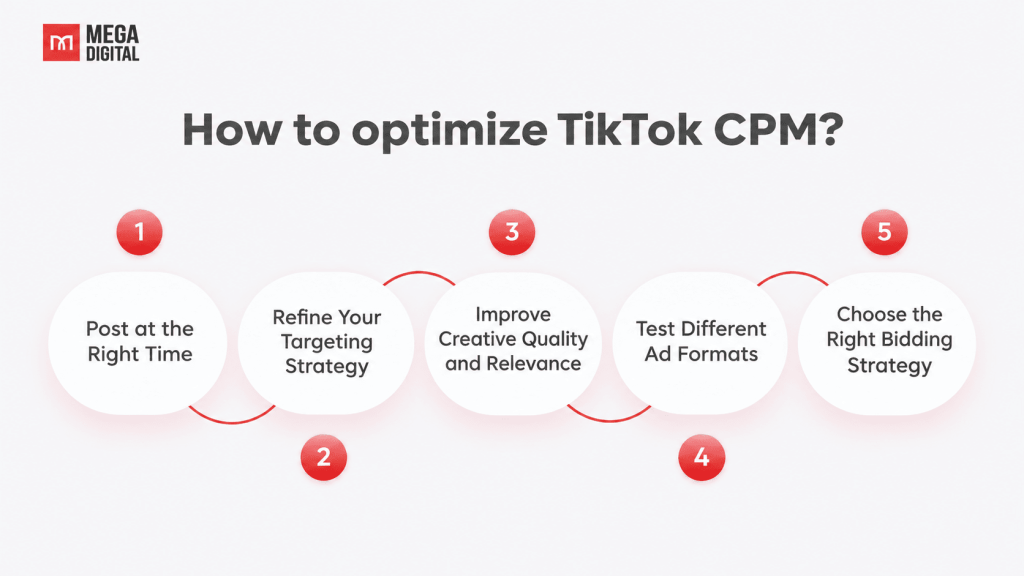
1. Post at the Right Time
Ad scheduling can affect your TikTok CPM, but there is no fixed posting time that guarantees lower costs. The best time depends on your target audience, campaign objectives, and competition.
For example, if your target audience is office workers, test lunch hours against other time slots. Compare CPM, CTR, and cost per result to see which schedule works best for your campaign.
Use TikTok Ads Manager to review campaign performance by time of day, then adjust your ad schedule based on the results.
Read more: When Is The Best Time To Post On TikTok In 2026? [Proved]
2. Refine Your Targeting Strategy
Your audience setup has a big impact on CPM. Broad targeting isn’t necessarily a problem, as it gives TikTok more room to find people likely to engage with your ads.
On the other hand, overly narrow targeting may limit delivery and increase competition within a smaller audience. Check your audience size and campaign performance before adjusting your targeting.
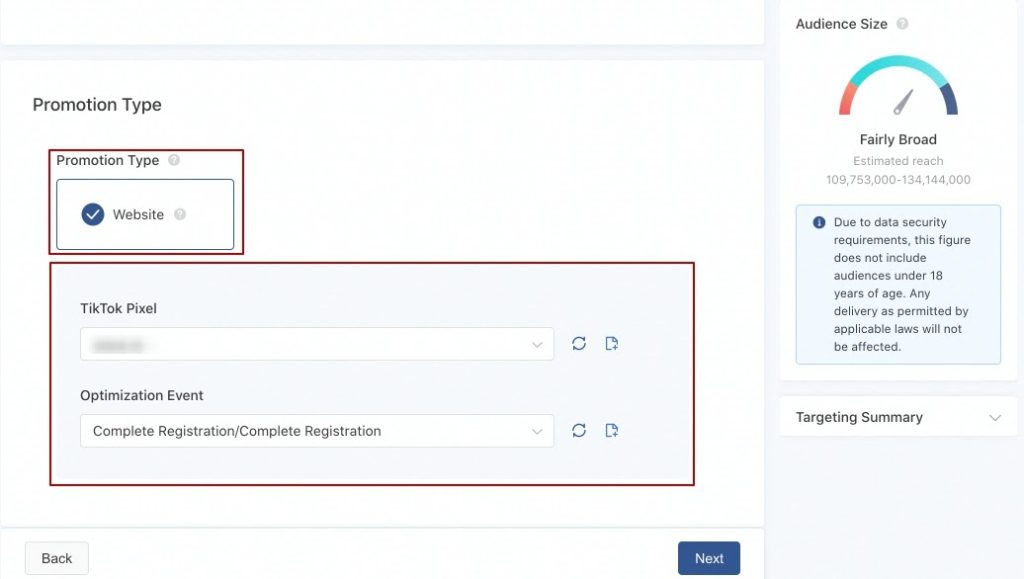
To lower CPM, try adjusting your targeting settings and test different combinations. Use TikTok Ads Manager to run A/B tests and find audience groups that bring in steady impressions and good engagement. The key is to find a balance: specific enough to reach people who care, but not so tight that competition drives your costs up.
3. Improve Creative Quality and Relevance
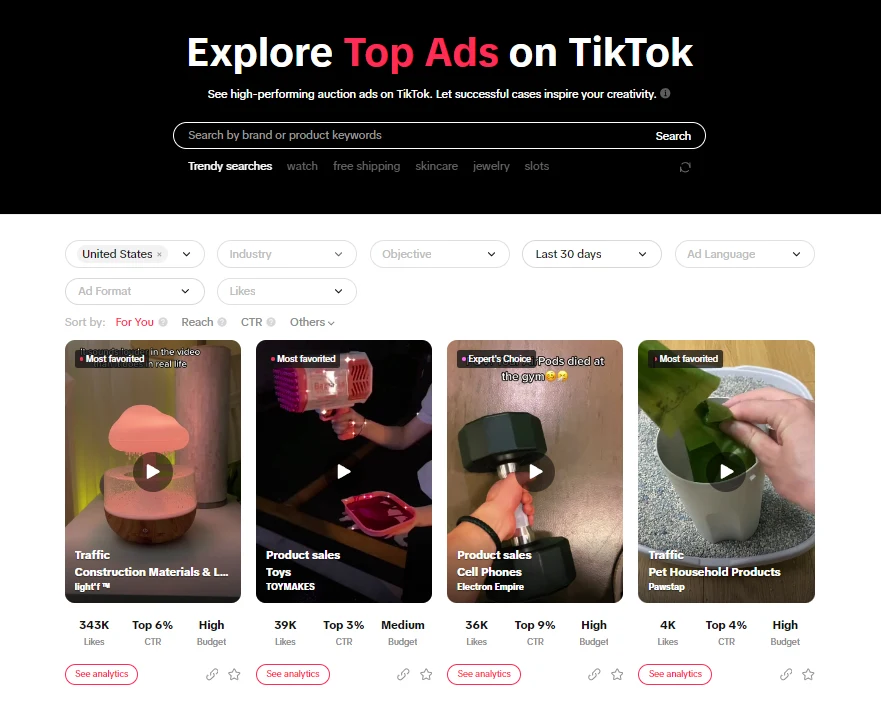
Relevant, engaging creatives can help improve ad performance on TikTok. Strong watch time and interactions are useful signals of audience interest, but they don’t guarantee a lower CPM.
To improve ad creatives and reduce CPM:
- Start strong: Hook viewers in the first 3 seconds using bold visuals, quick cuts, or a surprising moment. You should use Creative Center to learn from top ads.
- Make it feel native: Use camera angles, edits, and voiceovers that match the look of regular TikTok videos, not overly polished ad styles.
- Keep it clear and focused: Share one idea at a time. Use short captions, simple language, and clean visuals so viewers don’t lose interest.
- Refresh based on performance: Instead of changing assets every 7-10 days by default, you must monitor drop-off rates, negative feedback, or declining TikTok CTR to decide when to rotate or revise your creative. If engagement drops or CPM spikes, change your creative.
4. Test Different Ad Formats
Ad format plays a key role in how TikTok delivers your campaign and calculates CPM. Some formats are designed for high visibility, while others are better suited for engagement or storytelling.
For example, imagine a brand running a time-sensitive promotion. TopView could help it gain visibility quickly, while In-Feed Ads may be more suitable for ongoing delivery and creative testing. Their CPM and overall results would depend on the campaign setup and audience.
This means neither format was inherently better. The results depended on how each was used and what the brand wanted to achieve. You can further explore our comprehensive ebook guide to navigate the ad types on TikTok and discover the right strategy for your business!

5. Choose the Right Bidding Strategy
Your bidding method and strategy affect ad delivery and costs, but they don’t guarantee a fixed CPM. Available options depend on your campaign objective and account setup:
- CPM Bidding: Used for eligible Reach campaigns, where bidding focuses on the cost of 1,000 impressions.
- Target Cost per Result (Cost Cap): Aims to control your average cost per action, such as CPA, rather than CPM.
- Maximum Results (Maximum Delivery): Focuses on getting as many results as possible within your budget, without guaranteeing the lowest CPM.
Choose the method and strategy that match your campaign goals, whether you’re focusing on reach, app installs, or lead generation.
TikTok CPM vs Other Platforms
Comparing TikTok CPM with other advertising platforms can help you evaluate impression costs. However, differences in audiences, placements, and campaign objectives mean that CPM alone doesn’t tell the full story.
| Platform | Average CPM (USD, 2026) | Performance Insight |
|---|---|---|
| TikTok | $4.08 | Lower impression costs within the sampled ecommerce brands. |
| Meta (Facebook & Instagram) | $15.72 | Higher impression costs within the same research dataset. |
In this dataset, TikTok had a lower median CPM than Meta. However, cheaper impressions don’t always mean better advertising results.
To compare platform performance accurately, consider CPM alongside CTR, conversion rate, CPA, and ROAS.
TikTok CPM Benchmarks & Performance Checklist
Once your campaigns are running, tracking CPM trends regularly helps you identify when to optimize or refresh your strategy.
TikTok CPM Benchmarks
- Below your historical CPM: May indicate cheaper impressions, but check whether conversions and other results remain strong.
- Close to your industry benchmark: A useful reference when comparing similar markets, objectives, and campaign types.
- Above your historical CPM: Review competition, targeting, placements, and creative performance before making changes.
CPM Performance Checklist
Ask these quick questions when you notice your CPM increasing:
- Is my audience too narrow? → Broaden slightly or test new lookalike segments.
- Is my creative fatigue high? → Refresh visuals or hooks when CTR, watch time, or cost per result shows signs of declining performance.
- Is my bidding strategy suitable? → Review your campaign objective, bidding strategy, and cost per result before adjusting bids.
- Did I launch during a high-demand period? → Compare CPM with conversion rate, CPA, and ROAS before changing your ad schedule.
- Am I tracking engagement rates (CTR, watch time)? → Weak engagement signals lower ad quality and higher CPM.
How to know when your CPM needs attention
- CPM increases, but CPA and ROAS remain stable: Your campaign may still be performing well. Avoid making changes based on CPM alone.
- CPM increases while CTR or watch time drops: Check creative fatigue, audience relevance, and ad engagement.
- CPM increases while conversions decline or CPA rises: Review your targeting, bidding strategy, tracking, and campaign objectives.
Compare results across similar periods, markets, and campaign settings to identify what is actually driving the change.
Review this checklist regularly to identify CPM changes early and make adjustments without losing sight of your campaign’s overall performance.
FAQs About TikTok CPM
Where can I find my CPM in TikTok Ads Manager?
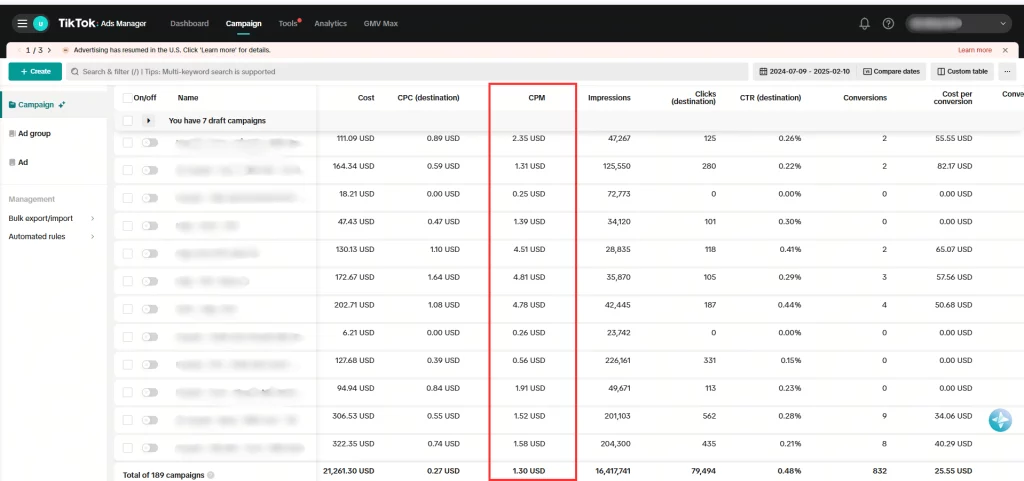
Go to Campaigns in TikTok Ads Manager and customize your reporting columns to display CPM. You can view this metric at the campaign, ad group, or ad level.
Does TikTok count repeated impressions from the same user?
Yes. TikTok counts each ad impression, even when the same user sees your ad multiple times. To measure unique viewers, use the Reach metric instead.
Why is my campaign CPM different from the average CPM of its ads?
Campaign CPM is calculated using total campaign spend and impressions, not the simple average of individual ad CPMs. Ads with more impressions have a greater impact on the overall result.
Can I set alerts when my TikTok CPM increases?
Yes. For supported campaigns, use Automated Rules in TikTok Ads Manager to set CPM conditions and receive email notifications when your specified threshold is met.
Wrap Up
TikTok CPM is an essential metric for measuring the cost-effectiveness of advertising on TikTok. By understanding how TikTok uses CPM, you can optimize your campaigns to reach your target audience at the lowest possible cost.
If you want to make sense of other TikTok ad metrics, please check out our full guide on important TikTok metrics to track in 2026!