

In-App Advertising (IAA) serves as the critical link between broad user acquisition and sustainable revenue. Rather than gating content behind paywalls, this strategy allows apps to remain free and accessible while capitalizing on the attention of the entire user base. In this article, we will provide a detailed guide to IAA.
Quick Summary
- IAA monetizes 100% of active users, turning non-payers into revenue, unlike IAP which targets only the top 2-5%.
- Rewarded Video leads in eCPM and engagement. Playables and Native ads offer immersive experiences.
- Hybrid Monetization (IAA + IAP) is the industry standard for sustainable growth in 2026 .
- Leveraging TikTok Ads for high-volume User Acquisition is critical for scaling hyper-casual and hybrid games.
What is an IAA (In-App Advertising)?
In-App Advertising (IAA) is a monetization strategy where app developers allocate digital space within their mobile applications to display third-party advertisements. In essence, it allows developers to “rent out” real estate in their app to advertisers who wish to reach their user base.
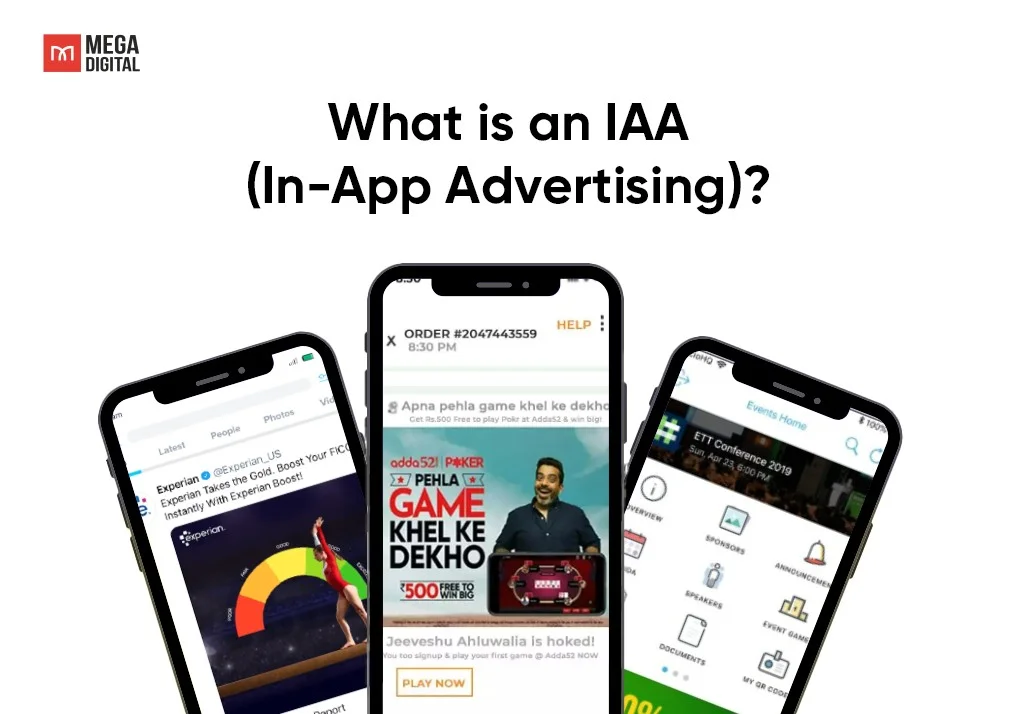
Unlike IAP which only monetizes the top 2-5% of paying users, IAA allows developers to monetize 100% of their active user base, turning non-payers into a sustainable revenue stream without creating barriers to entry.
This model enables apps to remain free for users while still generating revenue for the developer. Income is typically earned through specific user interactions or views, measured by metrics such as views, clicks, or conversions.
Why In-App Advertising Matters in Mobile Games
In the 2026 mobile economy, IAA (In-App Advertising) is a critical revenue engine, particularly for mass-market genres. As user acquisition costs continue to rise, relying solely on In-App Purchases (IAP) limits profitability, especially when IAP typically monetizes only a small fraction of players.
According to 2025 industry insights, ad revenue is growing approximately 2x faster than IAP revenue in the casual sector. While mid-core titles still lean heavily on IAP, ad monetization now accounts for approximately 70-95% of total revenue for hyper-casual titles and 50-70% for many casual games. Without IAA, the “Free-to-Play” (F2P) model would struggle to monetize the vast majority of non-paying users, significantly hampering scale and ROI.
Critical for Specific Genres
- Hyper-Casual: Despite a shift toward hybrid models, these games still rely primarily on IAA. With simple mechanics and short sessions, they utilize high volumes of Interstitials and Rewarded Ads to drive ~90% of revenue.
- Casual Games: Genres like Puzzle or Simulation use a balanced mix. They rely on IAA to monetize the massive base of non-payers (which can be up to 95% of DAU) while using IAP for power-ups and progression.
- Hybrid-Casual: The defining trend of 2026. These games combine the simple engagement of hyper-casual with the depth of mid-core games. Here, Rewarded Video is essential, serving as a gateway to convert ad-watchers into IAP spenders, with IAP revenue in this category growing 37% YoY.
>>> Read more: In-App Purchase (IAP): A Guide to App Revenue Growth
How does IAA (In-App Advertising) work?
Here’s how it works in detail:
- The Trigger: A user opens an app or reaches a specific checkpoint (e.g., finishing a game level). The app’s integrated SDK (Software Development Kit) sends an ad request to the SSP.
- The Auction: The SSP analyzes the user’s data (segmentation, device, behavior) and sends a bid request to the Ad Exchange.
- The Bidding: DSPs, representing advertisers, evaluate the request against their targeting criteria. If it matches, they submit a bid in real-time (Real-Time Bidding or RTB).
- The Selection: The Ad Exchange selects the winning bid (usually the highest) and sends the ad creative back to the app.
- The Display: The ad is rendered on the user’s screen. If the user interacts (clicks or views), the data is sent back for attribution and billing.
Types of IAA (In-App Advertising)
There are five common types of IAA: Banner ads, interstitial ads, native ads, video ads, and playable ads. Depending on the business need, companies will choose the most suitable format.
Banner Advertising
Banner ads are rectangular image or text ads that occupy a designated spot within an app’s layout, typically anchored to the top or bottom of the screen.
This is a traditional format and still used to advertise on IAA. However, they typically command the lowest eCPM compared to other formats. They are best used in utility apps or casual games where screen real estate permits.

Interstitial Advertising
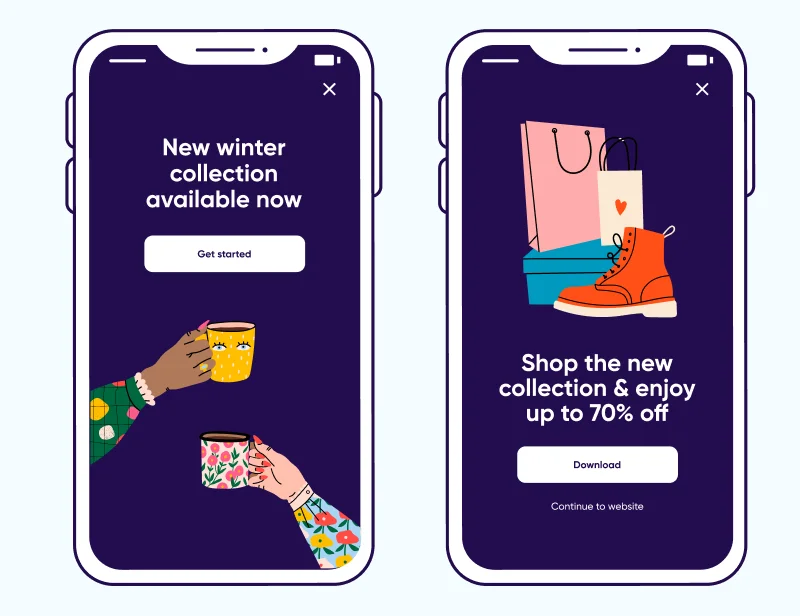
Interstitial ads are full-screen advertisements that cover the interface of their host app, appearing at natural transition points like between game levels or during app loading.
Interstitial ads have higher impressions and revenue than banner ads, because they attract 100% of the user’s attention. This is a format used for hybrid-casual and hyper-casual games tiktok ads.
Timing is critical to success. Showing an interstitial during active gameplay is a UX disaster, but showing it after a level completion is accepted standard practice.
Native Advertising
Native ads are paid assets that match the look, feel, and function of the media format in which they appear.
Native advertising has become the gold standard for non-disruptive monetization. Unlike banners that scream advertisement, native ads blend into news feeds, content streams, or game menus. They offer a seamless experience, leading to higher click-through rates (CTR) and better user retention.
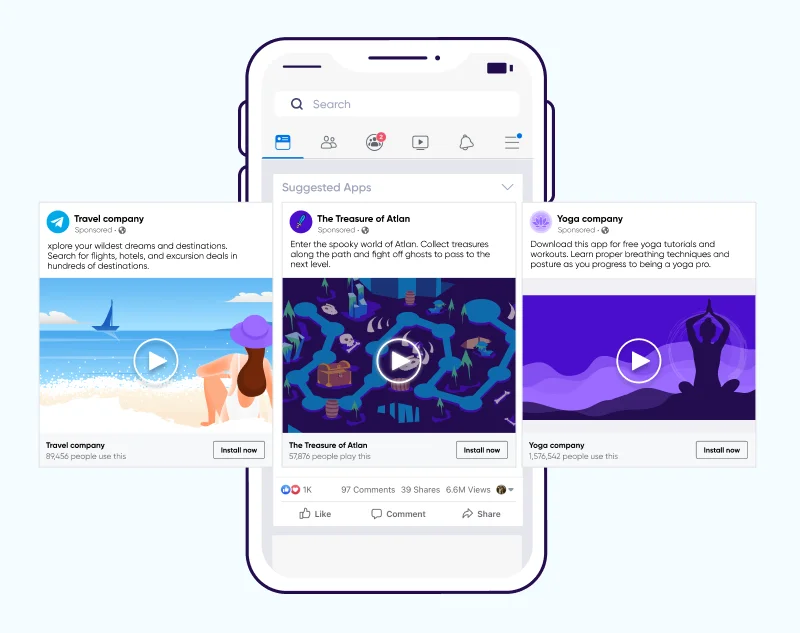
Video Advertising
Video advertising in apps encompasses both standard video spots and, more importantly, Rewarded Video Ads.
Rewarded Video is widely considered the “king” of IAA revenue mobile games, often commanding eCPMs of $15-$30+ in Tier 1 markets. In this model, users voluntarily opt-in to watch a 15-30 second video in exchange for an in-app reward (e.g., extra lives, currency, or premium content). This format boasts the highest user satisfaction rates because it puts the control in the user’s hands.
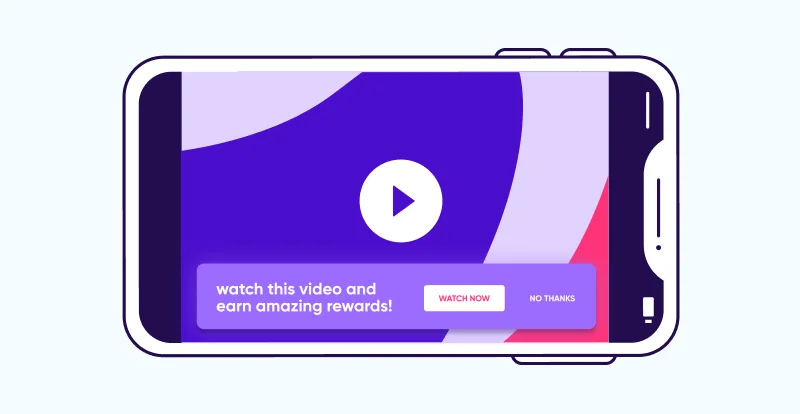
Rewarded Video Ads
Rewarded Video Ads are built on a transparent value exchange model that is highly effective in gaming apps. The mechanic is simple: “You watch an ad, we give you a reward.”

Unlike forced ads, users voluntarily opt-in to watch content in return for tangible benefits like extra lives, currency, or premium items. This format is exceptional for driving user engagement, especially when developers implement “daily streak” mechanics, where the value of the reward increases when users watch ads on consecutive days. This strategy not only boosts ad revenue but also incentivizes users to return to the app daily, turning monetization into a retention tool.
Rewarded Video creates a positive feedback loop: Users get free rewards, Advertisers get high-intent views, and Developers earn the highest eCPM in the ecosystem.”
Playable Advertising
Playable ads are interactive advertisements that act as a “try you before buy” mini-game, allowing users to experience the core gameplay of an advertised app for 15 – 45 seconds.
Playables have evolved with cloud-streaming technology and AR elements to offer near-native fidelity. They are exceptionally effective for gaming user acquisition because they filter for high – intent users, someone who enjoys the 30 seconds demo is highly likely to enjoy and retain in the full game.

Key Metrics to Measure IAA Performance
To optimize IAA revenue, developers need to track specific KPIs that reflect both monetization efficiency and user health. Here is an overview of the essential metrics:
- eCPM (Effective Cost Per Mille)
- Measures the revenue generated for every 1,000 ad impressions, reflecting the demand value of your inventory. (Formula: Total Revenue / Total Impressions x 1,000).
- Fill Rate
- Indicates the percentage of ad requests that are successfully filled with an ad. A low rate suggests technical errors or insufficient demand. (Formula: Ads Served / Ad Requests x 100).
- ARPDAU (Average Revenue Per Daily Active User)
- The “North Star” metric for game economy, measuring the daily monetization efficiency across your active user base. (Formula: Daily Revenue / Daily Active Users).
- Ad LTV (Lifetime Value)
- The total ad revenue a single user generates throughout their lifetime in the app, crucial for calculating Return on Ad Spend (ROAS).
- Retention vs. Ad Frequency
- A balancing metric used to track how increasing the number of ads shown per session impacts user churn rates (Day-1 and Day-7 Retention).
Benefits and Challenges of In-App Advertising
IAA (In-App Advertising) is more and more chosen by many companies. There are several benefits and challenges that company may face:
The benefits
- Scalable revenue model: Unlike IAP, which relies on a small fraction of users converting, IAA monetizes 100% of active users. As your daily active users grow, your revenue grows proportionally.
- Low barrier to entry: By making the app free to download, developers can attract users much faster. This is crucial for genres relying on viral growth, such as those utilizing TikTok ads for IAA games.
- Enhanced user engagement: Rewarded ads give non-paying users a taste of premium features, often keeping them in the game longer and sometimes converting them into paying users later.
The challenges
- User experience friction: Poorly placed ads lead to Ad fatigue. If a user sees an interstitial every 30 seconds, the churn rate will skyrocket. Balancing ad frequency with session length is a constant struggle.
- Fraud and invalid traffic: Despite advancements in AI detection in 2026, ad fraud (bots, click farms) remains a “cat-and-mouse” game. It creates a threat that can lead to account bans or revenue clawbacks from networks if not monitored closely.
- Privacy regulations & targeting: With the tightening of privacy laws (GDPR, CCPA) and frameworks such as Apple’s ATT and Android’s Privacy Sandbox, behavioral targeting has become more difficult. Developers must now rely heavily on contextual targeting and first-party data rather than tracking users across apps.
Best practice for In-App Advertising
To increase the effectiveness of IAA campaigns, here are the best practices that Mega Digital suggests to take:
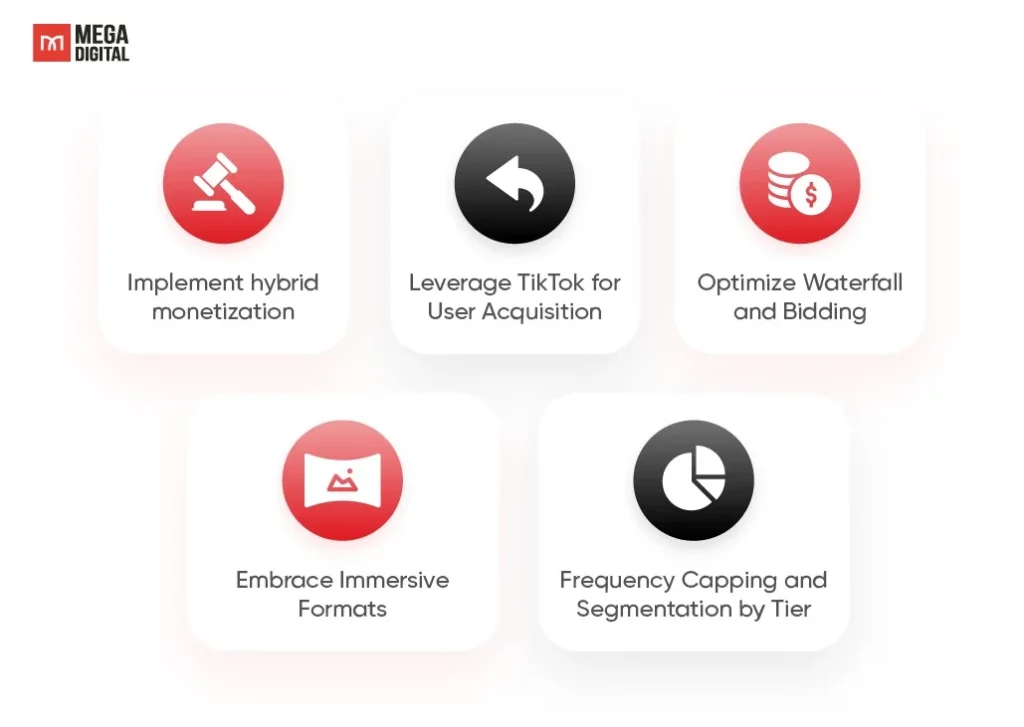
Implement hybrid monetization
The industry has shifted from pure Hyper-Casual to Hybrid-Casual. Do not rely only on ads. In spite of this, combine IAA with IAP. Use IAA to monetize free users and IAP for loyal fans. Smart segmentation can hide ads for users who have made a purchase, instantly upgrading their experience and incentivizing spend.
Leverage TikTok for User Acquisition
The relationship between user acquisition and IAA is symbiotic. You need volume to make IAA work. TikTok ads (especially Playables and Spark Ads) have proven to be the most effective channel for acquiring users who are open to ad-supported models. The “For You” page algorithm excels at finding users who engage with hyper-casual and hybrid games.
Optimize Waterfall and Bidding
Move beyond static waterfalls. In 2026, In-App Bidding (Header Bidding for apps) via platforms like AppLovin MAX or ironSource LevelPlay is essential. It allows all ad networks to bid simultaneously for every impression, ensuring you always get the highest possible price for your inventory.
Frequency Capping and Segmentation by Tier
Never treat all users the same.
- New Users: Show fewer ads in the first session to ensure they get hooked.
- Geo-Targeting: Optimize floor prices differently for Tier 1 markets (US, UK, JP) versus Tier 2/3 markets (SEA, IN, BR) to maximize fill rates and revenue.
- At-Risk Users: Reduce ads to prevent churn.
Embrace Immersive Formats
Test AR ads and Interactive Playables if your game genre allows. These formats often see higher engagement rates than standard video, particularly with Gen Z audiences on platforms like TikTok.
FAQs
There is no “better” option. It depends on the genre. Hyper-casual and casual games typically rely on IAA for 80-90% of their revenue because the gameplay loops are short. Mid-core and RPG games rely more on IAP. However, the most successful apps in 2026 use a Hybrid model to capture value from both user types.
eCPM (effective Cost Per Mille) is calculated by dividing total earnings by total impressions, then multiplying by 1,000. Formula: (Total Earnings / Total Impressions) x 1,000. It helps you compare the performance of different ad networks and ad units regardless of their volume.
The future of IAA (In-App Advertising) lies in contextual data and first-party data. Since tracking individual users across apps (IDFA/GAID) is restricted, advertisers are targeting based on the content of the app (e.g., showing sports shoe ads in a football game) and the user’s in-app behavior, rather than their historical browsing data.
>>> Read more: TikTok Game Ads: A Winning Strategy for Boosting Downloads
Conclusion
Through the article above, we hope you have understood what is an IAA (In-App Advertising) and the immense potential of it in the 2026 mobile economy. If you are looking for a strategic partner to scale your growth and maximize monetization, Mega Digital is ready to help!