

A broad match keyword in Google Ads gives your ads the widest reach, helping you discover searches and potential customers you might otherwise miss. However, that broader reach can also trigger irrelevant searches and waste your ad budget if not properly controlled. In this guide, I’ll explain how broad match works, when to use it, and how it compares with phrase match so you can get more relevant traffic from your campaigns.
Quick summary:
- Broad match keywords help you reach a massive audience by triggering ads for synonyms and related search intents.
- Combining broad match with modern Smart Bidding algorithms maximizes your return on investment and conversion volume.
- Phrase match provides tighter control over search queries but generally incurs a higher cost per click.
- Balancing both match types in your account ensures you capture new market trends while maintaining high ad relevance.
- Regular monitoring and building a robust negative keyword list are mandatory requirements for broad match success.
What is broad match keyword?
Broad match keyword is the keyword match type that allows your ads to reach a larger audience without forcing you to create a lengthy keyword list.
For instance, suppose you have the broad match keyword automobile window repair. Even though it does not include any of the words as your keyword, it can reach searches such as automotive glass replacement because they are related to the query.
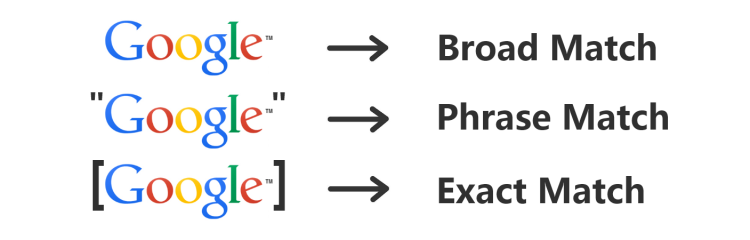
The syntax for the broad match keyword is just to enter the keyword. Here’s an example of broad match keywords:
Update: Starting in September 2026, Google will automatically upgrade Search campaigns using the campaign-level broad match setting to AI Max. This change applies to the campaign-level setting, not to individual broad match keywords.
Benefits of broad match keyword
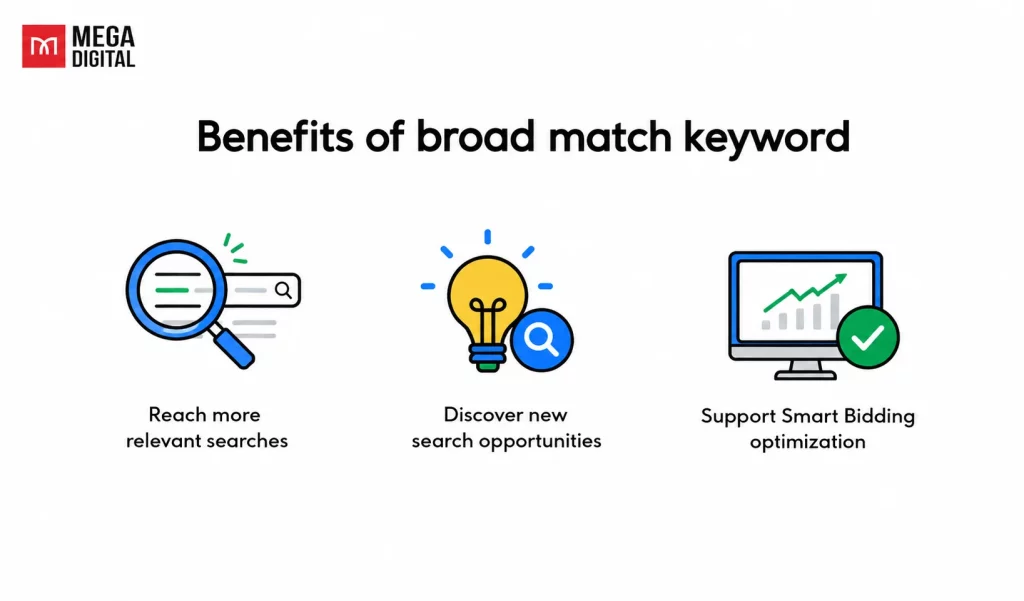
Broad match gives your campaigns more flexibility to reach relevant searches beyond your existing keyword list. Here are three key benefits:
- Reach more relevant searches: Broad match can show your ads for related queries that don’t contain your exact keyword, helping you connect with potential customers you may miss with more restrictive match types.
- Discover new search opportunities: By capturing a wider range of relevant queries, broad match can uncover new search terms and customer intents that you can use to refine your keyword and targeting strategy.
- Support Smart Bidding optimization: Broad match gives Smart Bidding access to more eligible searches and contextual signals, helping Google identify auctions that are more likely to achieve your conversion goals.
How to set up broad match keyword
As I said before, broad match keyword serves as the default match type for all keywords within Google Ads. When initiating a new keyword, employing a broad match is as simple as entering the keyword in plain text.
So, if you wish to transform existing exact or phrase match keywords into broad matches, follow these steps:
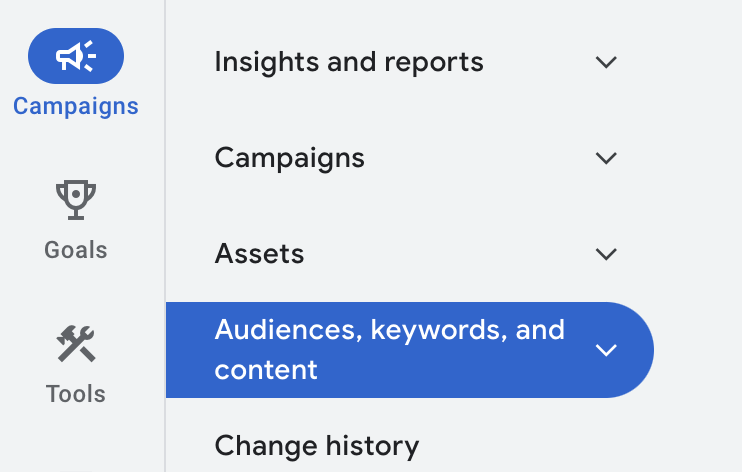
Step 1: Open audience setting
- Log in to your Google Ads account, and navigate to Campaigns.
- Select “Audiences, keywords, and content” from the section menu.
Step 2: Modify the match type
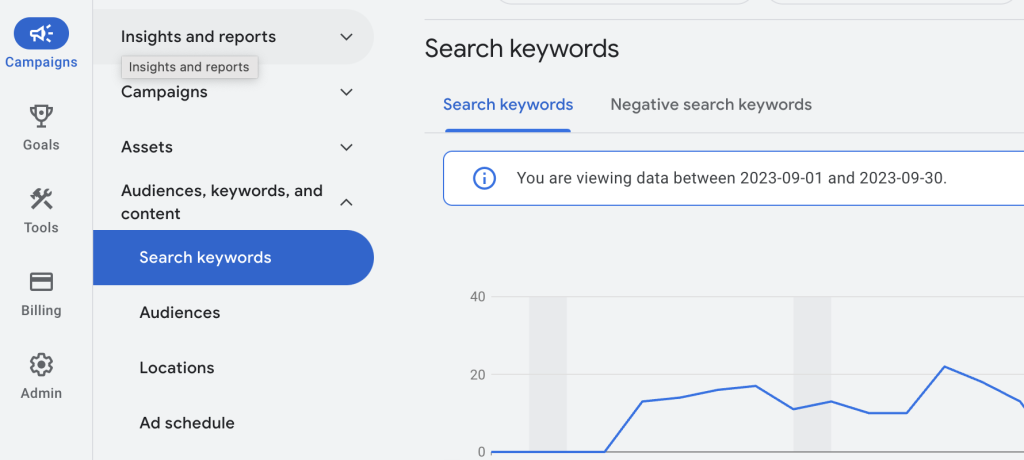
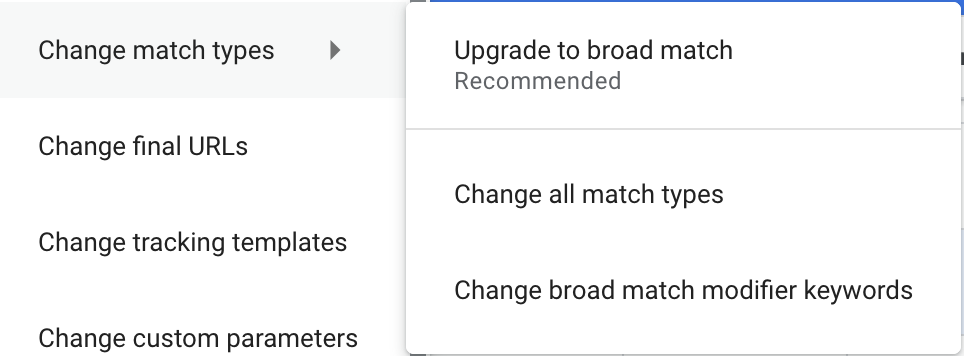
- Choose “Search keywords”, check the box next to the keywords you want to modify, click “Edit”, and select “Change match types”.
- Upgrade to broad match or choose “Change all match types” and specify “broad match”.
Step 3: Save changes
Confirm your changes by clicking “Apply”.
Mega Digital’s 5 tips to use broad match keywords in Google Ads effectively
Broad match can uncover valuable search opportunities, but its wider reach also requires careful optimization. Based on our experience managing Google Ads campaigns, here are five practical ways to make broad match work more effectively.
1. Optimize your negative keywords
Regularly review the Search Terms report to identify irrelevant queries triggered by broad match and add appropriate negative keywords to prevent wasted spend. Look for recurring patterns such as “free”, “jobs”, “DIY”, or other terms that clearly fall outside your target customers’ intent rather than excluding every search term that fails to convert.
Tip: Don’t add negatives too aggressively based on just one or two clicks. If a query is relevant to your offer, give it enough conversion data before excluding it; reserve immediate negatives for clearly irrelevant search intent.
2. Pair broad match with Smart Bidding
Broad match works best when paired with conversion-based Smart Bidding strategies such as Target CPA or Target ROAS, as Google can use auction-time signals to determine the appropriate bid for each search. Google specifically recommends combining broad match with Smart Bidding because the system can consider additional signals that are only available when broad match is used.
3. Keep ad groups tightly themed
Group broad match keywords around the same product, service, or search intent so your ads and landing pages remain relevant to the searches you attract. Avoid mixing unrelated keywords in one ad group; for example, “Google Ads management” and “Facebook Ads management” should be separated if they require different ad messages or landing pages.
4. Monitor search terms and conversion performance
Don’t evaluate broad match based only on impressions, CTR, or CPC; regularly check which search terms are actually generating conversions and whether they meet your CPA or ROAS targets. Use this data to add negatives, refine keyword themes, and identify high-performing queries that deserve more focused targeting.
Advice: Give broad match enough time and conversion volume to learn before making major changes. Frequent keyword, bidding, or targeting adjustments can make it harder to determine what is actually improving or hurting performance.
5. Make sure your conversion tracking is accurate
Broad match and Smart Bidding rely heavily on conversion signals to understand which auctions are valuable to your business, so inaccurate tracking can lead the system to optimize toward the wrong actions. Prioritize meaningful conversions such as purchases, qualified leads, or booked appointments instead of treating low-value actions like page views or button clicks as primary campaign goals.
Broad Match vs Phrase Match, which is better?
Both Broad Match and Phrase Match are keyword matching options in online advertising that offer varying levels of targeting. We’ll delve deeper into these options to help you better understand their differences and guide you in deciding which one suits your needs best.
Match types analysis
Recent data shows that advertisers are increasingly shifting their budgets toward broader keyword matching. According to a 2026 Optmyzr study analyzing 30,000 Google Ads accounts, broad match has become the dominant match type by ad spend, while exact match’s share of spend declined by 9.5 percentage points from 2022 to 2026.
However, greater adoption does not necessarily mean better performance in every campaign. A separate 2025 Adalysis study of 16,825 Search campaigns found that exact match generally delivered stronger efficiency, including higher CTR, conversion rates, and ROAS with lower CPA, while broad match provided greater reach and performed differently depending on the bidding strategy.
These findings highlight several important takeaways:
- Broad match is gaining adoption: Advertisers are allocating more budget to broad and phrase match as Google’s AI-powered matching and automated bidding continue to evolve.
- Exact match can still lead in efficiency: More restrictive targeting may deliver stronger CTR, conversion rates, and ROAS when advertisers already know which searches generate value.
- Broad match can provide more scale: Its wider reach gives advertisers access to additional searches and conversion opportunities that exact match may not capture.
- Bidding strategy matters: Match type performance can vary significantly depending on the bidding strategy and campaign goals.
Note: There is no universally “best” keyword match type. Use these industry studies as references, but evaluate broad, phrase, and exact match based on your own conversion data, CPA, ROAS, and campaign goals.
Which one is better?
First and foremost, here’s a detailed table outlining the differences between broad match keyword and phrase match keyword in Google Ads.
| Aspect | Broad Match | Phrase Match |
|---|---|---|
| Match Type | Matches a wide range of related searches | Matches specific phrases or variations of the phrase |
| Keyword Example | running shoes | “running shoes” |
| Search Queries | Triggers ads for a broad spectrum of queries | Triggers ads for searches containing the specified phrase |
| Keyword Variations | Matches a wide range of related searches using multiple intent signals | Matches searches that include your keyword’s meaning and relevant variations |
| Ad Relevance | May show ads for less relevant but related queries | Usually more targeted, showing for more relevant queries |
| Control | Offers less control over specific search intent | Provides more control by specifying a phrase to target |
Determining whether Broad Match Keyword or Phrase Match Keyword is better largely depends on your advertising goals, strategy, and the specific context of your campaign.
- For Brand Awareness and Reach: Broad match can be beneficial as it maximizes exposure to a wide audience, increasing visibility and potentially attracting new customers.
- For Specific Targeting: Phrase match allows for a more controlled targeting approach, ensuring your ads are shown to users searching for more specific phrases related to your business.
The Best Approach: A combination of both match types often yields the best results. Begin with a mix of broad and phrase match keywords, continuously monitoring their performance. Gradually refine your strategy based on data from search term reports, adjusting bids, adding negative keywords, and optimizing your keyword lists to strike a balance between reach and relevance.
FAQs about broad match keyword in Google Ads
Yes. Broad match can be combined with Smart Bidding strategies such as Target CPA and Target ROAS. This allows Google to use auction-time signals to adjust bids based on how likely each search is to achieve your conversion goals.
No. The keyword match type itself does not directly affect Quality Score. However, the searches broad match attracts can influence overall campaign performance, including CTR, conversions, and the relevance of your traffic.
Yes, multiple broad match keywords may be eligible for the same search query, but they do not necessarily compete against each other in the auction. Google uses keyword prioritization rules and relevance signals to determine which eligible keyword and ad group should enter the auction.
No. Performance Max does not use traditional keyword match types such as broad, phrase, or exact match in the same way as Search campaigns. Instead, it primarily uses automated targeting along with optional search themes to help Google identify relevant searches.
Wrap up
Understanding the significance of broad match keyword is crucial. They act as catalysts for broadening your ad’s reach, capturing varied search intents, and increasing brand visibility. Combining both broad and phrase-match strategies allows for a comprehensive approach. Effectively leveraging broad match keyword involves continual monitoring, refining keyword lists, and using negative keywords to enhance targeting.