

Imagine a world where your potential customers don’t just click and browse; they click and connect directly with your business via phone call. It’s the power of Google Call Ads. In this post, we’ll delve into its basics and best practices that transform a mere click into a ringing endorsement of your product or service.
Quick summary:
- Google Call Ads (call-only ads) are mobile-focused search ads designed to drive direct phone calls instead of website visits.
- They display a business name, description, and clickable phone number – perfect for service-based, urgent, or local businesses.
- Compared to call extensions, Call Ads appear only on call-capable devices and are built solely to generate calls.
- To optimize performance, experts recommend targeting high-intent keywords, leveraging Target CPA bidding, filtering out spam calls, and running ads strictly during business hours.
What are Google call ads?
Google call ads are a type of Google Search ads prompting immediate phone calls to your business and can only appear on devices capable of making phone calls.
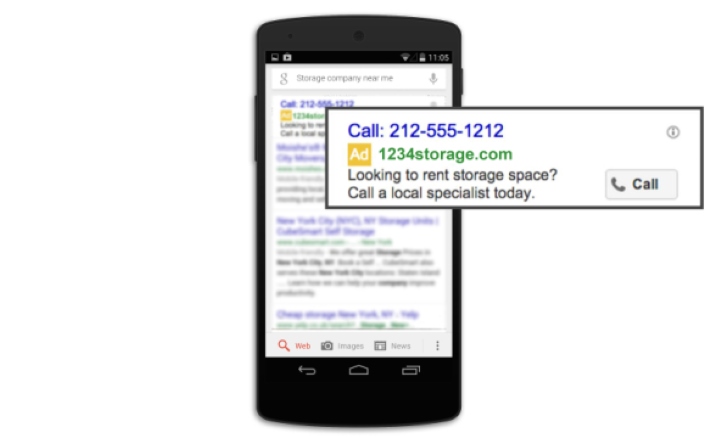
Call ads feature your business name, a concise description, and a prominently displayed phone number, making it easy for potential customers to contact you directly.
Here’s an example of a call ads example:
Important update: According to Google Ads Help, advertisers can no longer create new Call Ads as of February 2026. Existing Call Ads will stop receiving impressions in February 2027.
To continue generating phone calls from Google Search, advertisers should transition to Responsive Search Ads combined with Call Assets. This setup allows Google’s AI to test different headline and description combinations while still displaying a clickable phone number for high-intent searchers.
How do Google call ads work?
This is how Google call ads function:
- Someone submits a specific search query.
- Your ad wins an auction and is shown on the Search Network.
- Someone taps the ”Call” button in your ad.
- That person’s mobile phone dialer opens with the number set (either your own number or a Google Forwarding Number, depending on your settings).
- The person taps the call button to place the call, gets connected with you, and the conversion is recorded.
Call ads vs. Call extensions: What’s the difference?
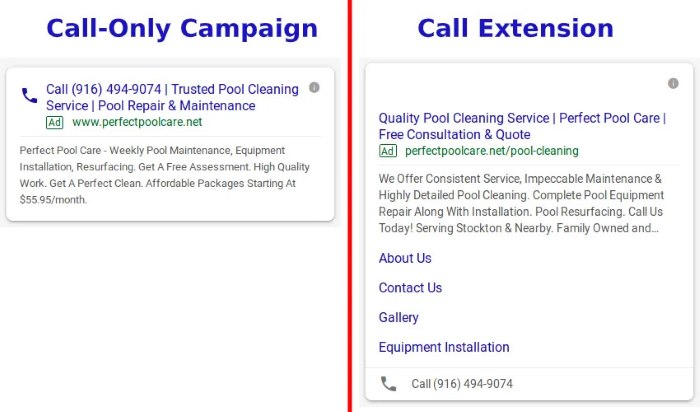
While both options allow customers to dial your number directly from the search results, they serve different primary goals and function differently within your campaign strategy.
| Feature | Google Call Ads | Call Extensions (Call Asset) |
| Primary Goal | To drive phone calls exclusively. | To drive website traffic and offer an alternative phone call option. |
| Ad Format Type | A standalone, distinct Search ad format. | An add-on (asset) attached to standard text ads (like RSAs). |
| Click Behavior | Clicking anywhere on the ad opens the user’s phone dialer. | Clicking the headline goes to your website; clicking the phone asset opens the dialer. |
| Device Visibility | Appears only on call-capable mobile devices. | Appears across various devices, including desktop and mobile. |
Benefits and drawbacks of Google call ads
Before allocating your marketing budget, it is essential to weigh the powerful advantages against the potential limitations of running a strictly call-focused campaign.
Benefits
This type of campaign can be particularly beneficial for businesses that rely heavily on phone calls for customer inquiries, consultations, appointments, or sales. Here are some of the benefits of running a call campaign:
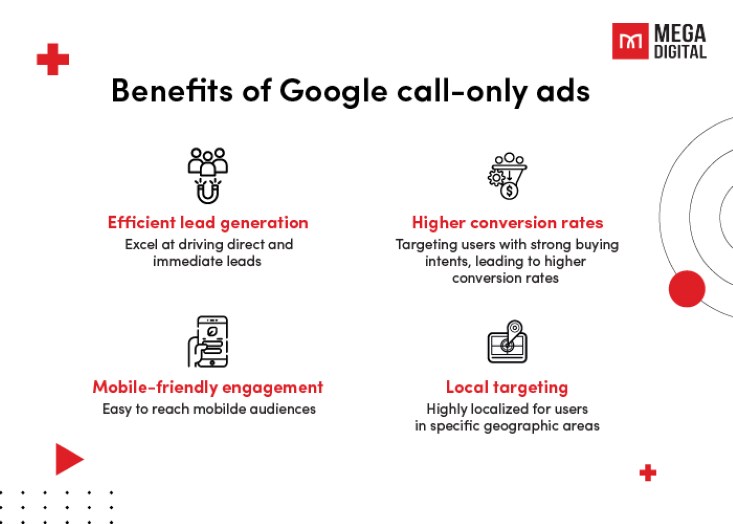
| Benefits | Details |
| Efficient lead generation | Call ads streamline the conversion process. According to Invoca’s 2025 benchmark report, 37% of digital marketing phone leads converted during the call, while Google Ads paid search generated the most calls and conversions among paid channels. |
| Higher conversion rates | People who phone businesses through call ads normally have high buying intent. By using this Google campaign type, you are targeting users who are already interested in your products or services. This can lead to higher conversion rates compared to traditional text ads that direct users to a website where they may drop off before converting. |
| Mobile-friendly engagement | Call campaigns are designed for mobile users, and the call button is prominently displayed in the ad. Since many users search on mobile devices, this format is especially effective for reaching mobile audiences. |
| Local targeting | Call campaigns can be highly localized, targeting users in specific geographic areas. This is beneficial for businesses with physical locations or those that serve a specific local market. |
Drawbacks
Google call ads can be a valuable marketing tool for businesses looking to generate phone calls from potential customers. However, like any advertising method, they have their own downsides and limitations.
| Drawbacks | Details |
|---|---|
| Limited engagement | Call ads are designed to drive phone calls rather than website visits. This means you may miss out on potential customers who prefer to learn more about your business or products by visiting your website before making a call. If your business relies heavily on website content or eCommerce, this limitation can be a drawback. |
| Call quality | While call ads can generate phone calls, the quality of those calls may vary. Some calls may be from people looking for general information, not necessarily ready to make a purchase. Managing call quality and filtering out irrelevant calls can be a challenge. |
How to set up a call campaign?
Generating a Google call ad involves several steps below:
Step 1: Set up a new campaign
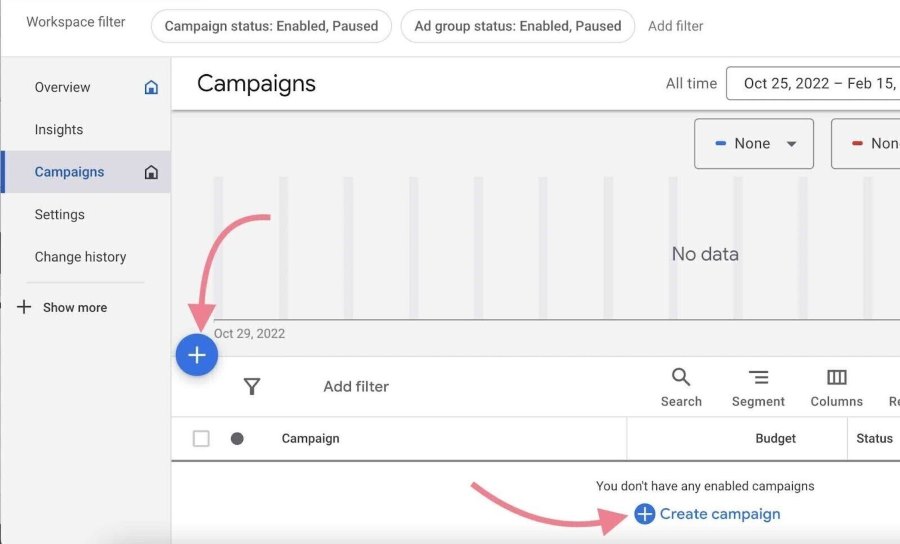
First, go to your Google Ads account and select “Create campaign”.
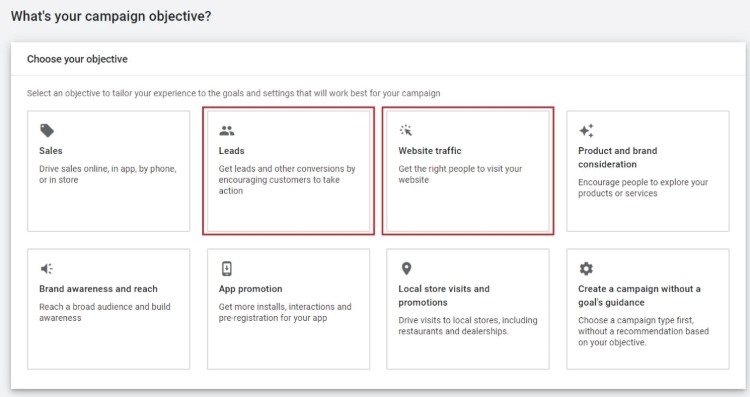
Select the campaign goal that aligns with your advertising objectives. For call ads, you might choose “Website traffic” or “Leads.”
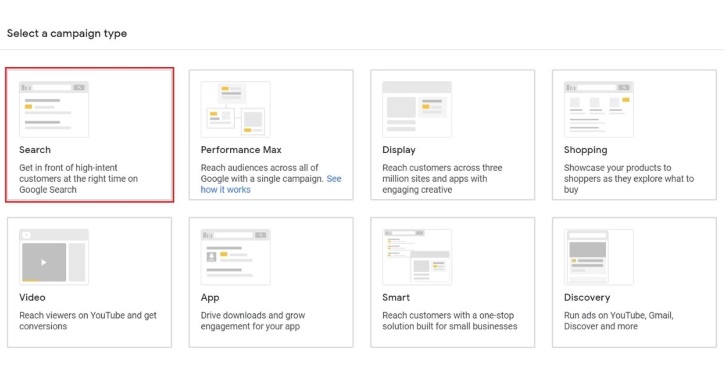
Select the “Search” campaign type.
Step 2: Create a call ad
Create an ad group that exclusively contains call ads to specify a different bid adjustment or bid strategy for your call ads.
Click on your ad group, then click the + button.
Choose the “Call ad” option.
Fill in the following ad components:
- Two headlines (optional, but recommended)
- Your business name and phone number (required)
- Two descriptions (the second description is optional)
- Your display URL and verification URL (optional)
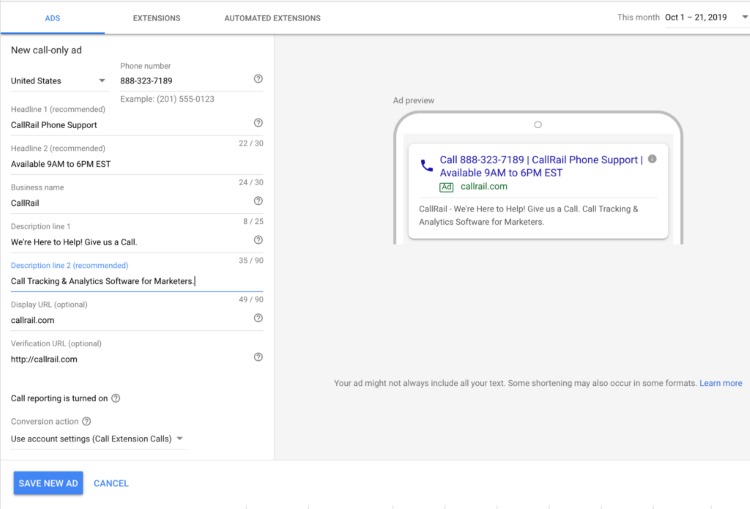
Enable “Call Reporting” if you want to collect data on the performance of your ad.
Under “Conversion action“, you can choose to count calls as conversions.
Pro Tip: Always use a Google Forwarding Number. This allows you to track not just the click, but the length of the call, ensuring you only count meaningful conversations as actual conversions.
How to optimize your Google call ad campaign?
Launching your campaign is only the first step. Use these five strategies to improve call quality and maximize ROI.
1. Target High-Intent Keywords
Focus on transactional searches that indicate an immediate need. Keywords containing terms such as “emergency”, “near me”, “book now”, or “hire today” are more likely to attract users ready to call.
2. Use Smart Bidding
Maximize Clicks can help collect initial data, but it does not prioritize conversions. Once you have reliable call conversion data, switch to Maximize Conversions with a target CPA to optimize bids toward callers who are more likely to convert.
Pro tip: Google Ads lets you set a minimum call duration before counting a call as a conversion. Start with 60 seconds, then adjust it based on the typical length of a qualified conversation.
3. Schedule Ads Around Business Hours
Set both the campaign schedule and the call asset schedule to run only when trained employees are available to answer, and confirm that both schedules use the correct account time zone. Review the Call Details report by day and hour, then reduce bids or pause time slots that repeatedly generate missed calls, voicemail interactions, or low-quality inquiries.
Industry insight: According to Invoca’s call answer benchmarks, only 61% of business calls across industries are answered by a live person. Running ads outside staffed hours therefore risks wasting ad spend and sending high-intent customers to competitors.
4. Add Negative Keywords
Exclude irrelevant searches such as “free”, “DIY”, “login”, or “customer service”. Regularly review your search terms to prevent support requests and low-intent users from consuming your budget.
5. Track Call Quality
Do not measure performance by call volume alone. Use call tracking or conversation intelligence tools to identify caller intent, qualified leads, sales outcomes, and the keywords that generate revenue.
Frequently asked questions
It can be attributed to various reasons, such as the low quality score of your ads, the bid and budget constraints, or the insufficient click rate on your ads. All of these factors affect your ad rank.
Try new ad copy, try bidding more, and add negatives or pause keywords so you are only showing for the most relevant searches.
It is because people might be clicking on your ads but not calling you since it is a two-step process. Google will charge the moment you click, and then it will prompt up the phone dialer. That is when the user needs to click the button to make a phone call.
Not always. CPC depends on keyword competition, bids, location, and Ad Rank, although call-focused campaigns may cost more when targeting high-intent searches.
Yes, but Google still requires a public verification page that clearly displays your business phone number. The page must also use the same domain as the ad’s display URL, so not every Facebook, Yelp, or directory profile will qualify.
>> Read more: All About Google Dynamic Search Ads and How to Use Them
Wrap-up
In summary, Google call ads have proven to be a powerful campaign type for businesses seeking to bridge the gap between online engagement and real-world connections.
With the power to turn a mere click into a direct conversation, these ads redefine advertising efficiency. By understanding their basics and implementing best practices, you can capitalize on this advertising tool’s full potential, helping businesses survive and thrive in the ever-evolving digital landscape.