

Creating Facebook video ads is easy, but getting them to perform is harder. The wrong setup, placement, or video format can quickly reduce engagement and waste ad spend. In this guide, Mega Digital breaks down how to set up Facebook video ads correctly and apply practical best practices for better performance.
Quick summary:
- Use the right video size and aspect ratio for each placement to avoid awkward cropping and improve the viewing experience.
- Choose a campaign objective that matches the business result you want Meta to optimize for.
- Show your product, key benefit, or main message within the first few seconds to capture attention quickly.
- Optimize your videos for mobile-first placements, especially Facebook Reels and Stories.
- Test different hooks, messages, and creative variations to identify which version delivers better campaign performance.
What are Facebook Video Ads?
Facebook video ads are one of the Facebook ad types that incorporate promotional content. Businesses use this ad type to reach, engage, and convert their target audience. They leverage the power of video content to tell a brand’s story, showcase products, or explain services in a more engaging and dynamic way than static images or text.
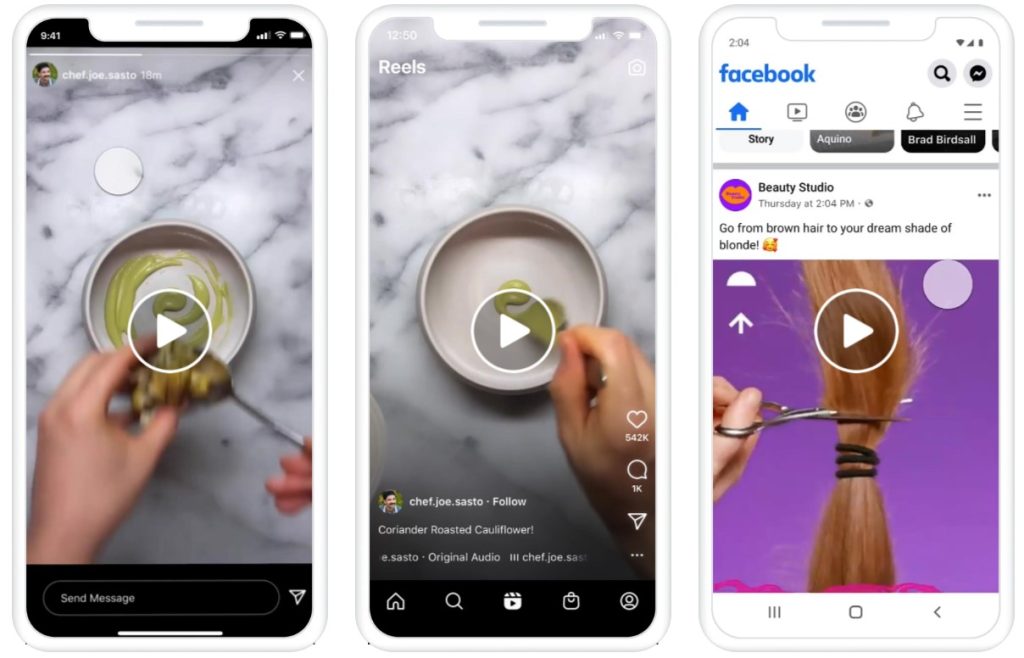
Facebook video ads can appear in several places within the Facebook platform, including the News Feed, Stories, and in-stream during longer videos. They can also appear in the Facebook Marketplace and in the Video Feeds section.
Why you should use Video Ads for your Facebook campaigns?
Video content is the king on Facebook. With over 2.8 billion monthly active users, Facebook offers a vast audience for your video ads. But why should you consider video ads on Facebook?
Higher engagement
Video content is inherently engaging. It combines visual and auditory elements that can convey a lot of information in a short amount of time. This makes it easier for viewers to absorb and retain the message. Moreover, videos can evoke emotions, making them more memorable than static images or text. As a result, video ads on Facebook often see higher engagement rates, including likes, shares, and comments.
Better storytelling
Videos offer a unique storytelling medium. They allow you to showcase your product or service in action, provide customer testimonials, or even tell a story about your brand. This can help to build a stronger emotional connection with your audience. With Facebook’s diverse ad formats, such as Stories or In-stream video ads, you can choose the best way to tell your story.
Increased eeach
Facebook’s algorithm favors video content, which means that your video ads are likely to reach a larger audience compared to other types of ads. Moreover, Facebook users tend to share videos more often than other types of content, further increasing your ad’s reach.
Improved conversion rates
Due to their engaging nature, video ads can lead to higher conversion rates. Viewers who find your video ad engaging and relevant are more likely to take the desired action, whether it’s visiting your website, making a purchase, or filling out a form.
Versatility
Video ads on Facebook are versatile. They can be used for a variety of marketing objectives, such as increasing brand awareness, driving website traffic, or boosting app installs. Whether you’re a small local business or a large multinational corporation, you can leverage the power of video ads to achieve your marketing goals. 84% of video marketers are using Facebook as one of their main video marketing channels.
Facebook Video Ads Specifications
Facebook video ad specifications vary depending on where your ad appears. Using the right aspect ratio for each placement helps prevent awkward cropping and makes better use of the available screen space.
| Placement | Recommended aspect ratio | Recommended size | Best practice |
|---|---|---|---|
| Facebook Feed | 4:5 or 1:1 | 1080 × 1350 px or 1080 × 1080 px | Use 4:5 for mobile-first campaigns to take up more vertical screen space. |
| Facebook Stories | 9:16 | 1080 × 1920 px | Keep important text and visuals away from the top and bottom UI areas. |
| Facebook Reels | 9:16 | 1080 × 1920 px | Use vertical video with audio and keep key messages inside the safe zone. |
| Facebook In-stream Video | 16:9 or 1:1 | At least 1080 × 1080 px | Keep the message concise and make the opening seconds immediately clear. |
For most Facebook video ads, Meta supports MP4, MOV, and GIF files, with a maximum video file size of 4 GB. Captions are also recommended, especially when your message needs to remain understandable without relying entirely on audio.
For Facebook Reels, using a 9:16 video alone is not enough. Buttons, captions, profile information, and other interface elements may cover parts of the creative. Keep your headline, product, logo, CTA, and other important elements inside the central safe zone rather than placing them close to the top, bottom, or right edge of the video.
Meta recommends Reels creative that combines 9:16 vertical video, audio, and key messages within the safe zone.
Mega Digital tip: If your campaign runs across several placements, avoid using one video file without checking how it is cropped. Create or customize separate versions for Feed and full-screen placements such as Stories and Reels whenever possible.
Standard Facebook Video Ads Length
When it comes to Facebook video ad length, it’s crucial to understand that the ideal length can vary depending on the type of ad and the audience you’re targeting. Here’s a detailed guide for each video ad type:
In-Feed Video Ads
In-feed video ads appear directly in users’ news feeds. These ads should be quick and engaging to grab the user’s attention as they scroll through their feed. The recommended length for in-feed video ads is between 15-30 seconds. This length is long enough to convey a meaningful message, but short enough to hold the viewer’s attention.
Stories Ads
Stories ads are designed for mobile and displayed in full-screen format. These ads are meant to be quick and engaging, fitting in seamlessly with other stories content. The recommended length for Stories Ads is under 15 seconds. This ensures that your message is delivered before the user taps to the next story.
In-Stream Video Ads
In-stream video ads appear in longer Facebook videos as short breaks. These ads can be up to 120 seconds long, but Facebook recommends keeping them between 5-15 seconds. This length is optimal for delivering a concise message without disrupting the viewer’s experience.
Long-Form Video Ads
For certain campaigns, you might want to use long-form Video Ads. These are typically longer than 2 minutes and are used when you need to provide more detailed information or tell a more complex story. However, it’s important to keep in mind that these types of ads require a higher level of interest from the viewer, so they may not be suitable for all audiences or campaigns.
How to Create a Facebook Video Ad Campaign?
Creating Facebook video ads is not as daunting as it might seem. With a clear understanding of your marketing objectives and a well-crafted video, you can set up an effective ad campaign. Here’s a step-by-step guide:
Step 1: Create a new ad campaign on Facebook Ads Manager
Creating a Facebook video ad is straightforward once you have your campaign goal and creative ready. Follow these steps to set up your campaign in Meta Ads Manager.
Step 1: Create a new campaign
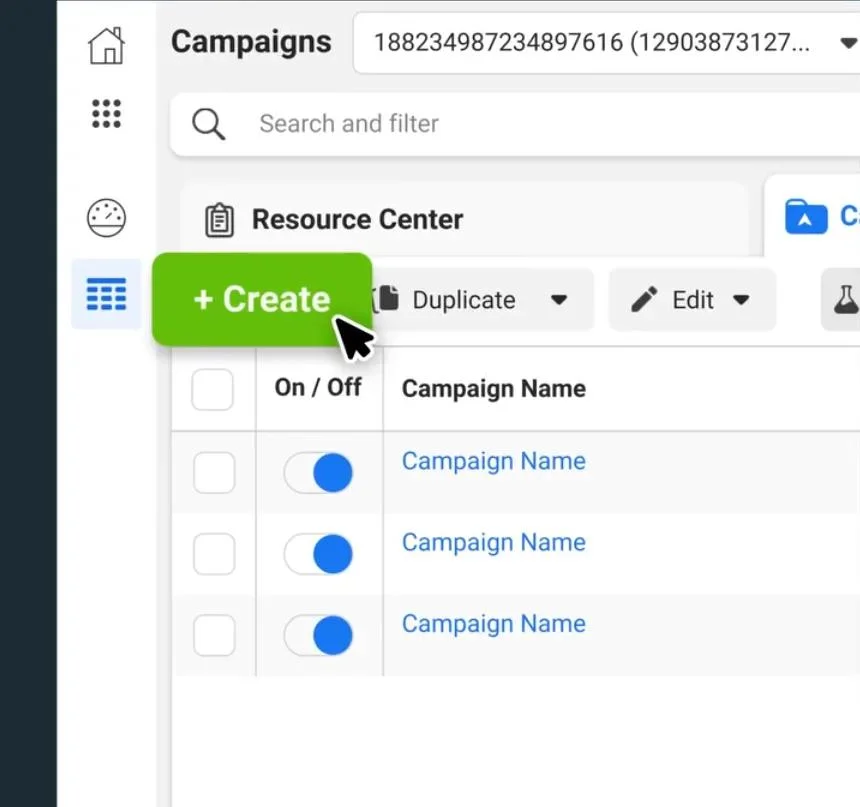
Go to Meta Ads Manager and click + Create to start a new campaign.
If you don’t have an ad account yet, check out our guide on how to create a Facebook ad account.
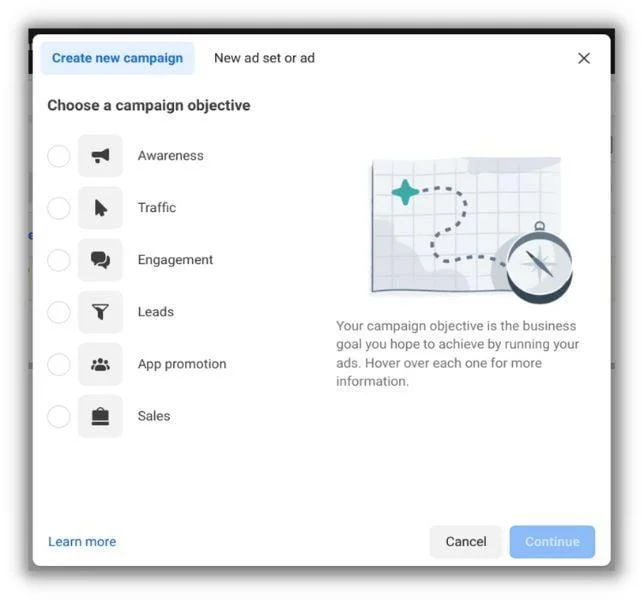
Step 2: Choose your campaign objective
Select the objective that best matches your campaign goal. Meta currently offers six main objectives:
- Awareness
- Traffic
- Engagement
- Leads
- App promotion
- Sales
For example, choose Engagement if your main goal is video views or Sales if you want to drive purchases.
Step 3: Set your audience, budget, and placements
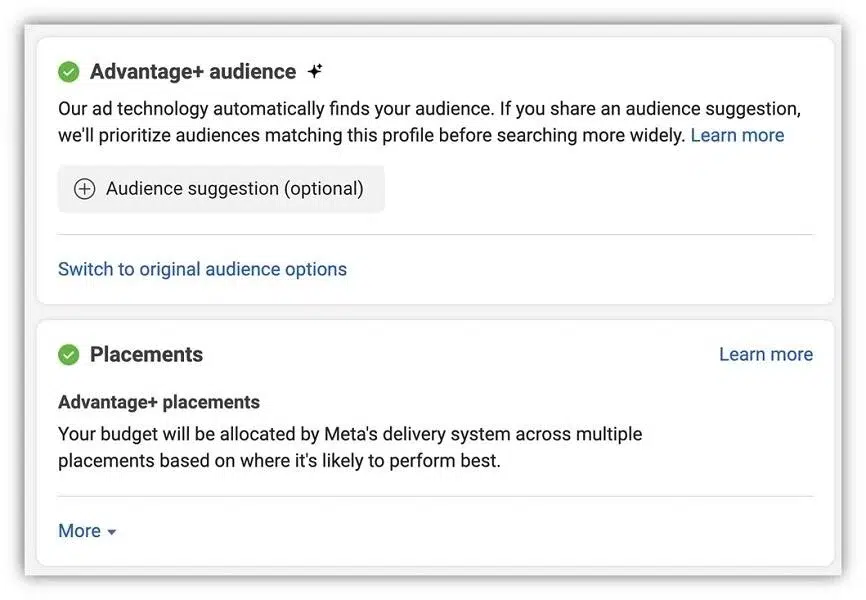
Define the audience you want to reach based on factors such as location, interests, behaviors, or existing customer data.
Then, set your budget and campaign schedule.
For placements, you can use Advantage+ placements to let Meta automatically distribute your ads or choose Manual placements for more control.
Step 4: Choose your video ad format
At the Ad level, choose whether to create a new ad or use an existing post.
For a new video ad, select Single image or video and upload your creative.
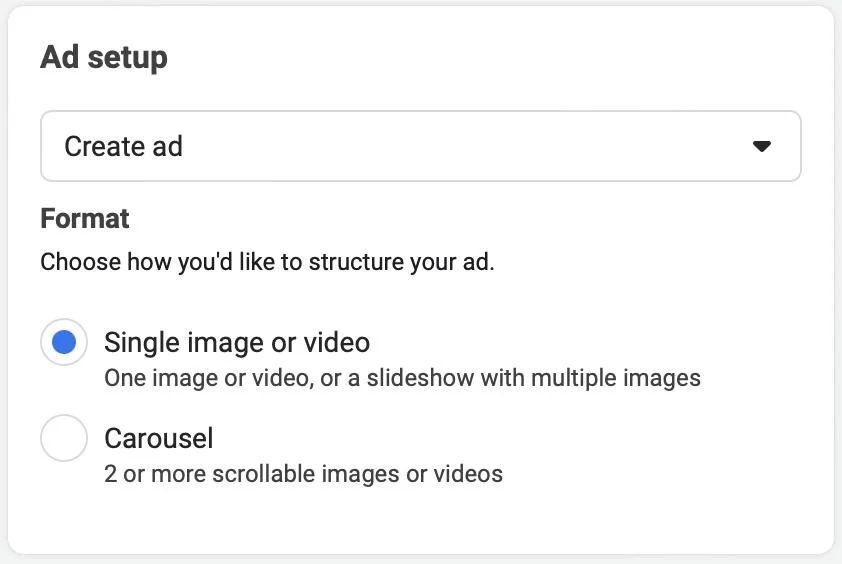
Make sure the video fits your selected placements. For example, a 9:16 vertical format is better suited to Reels and Stories.
Step 5: Add your ad copy and CTA
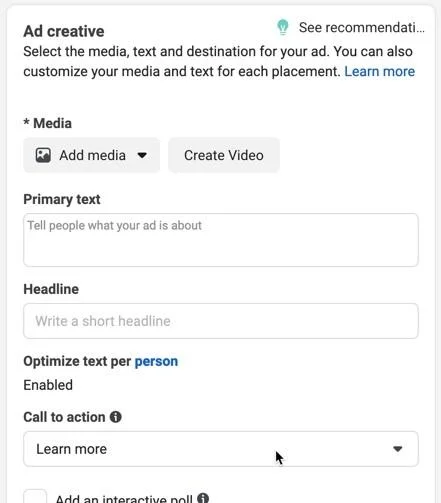
Complete your ad with:
- Primary text
- Headline
- Destination URL
- Call-to-action
Keep your message concise and make the main benefit clear early in the ad.
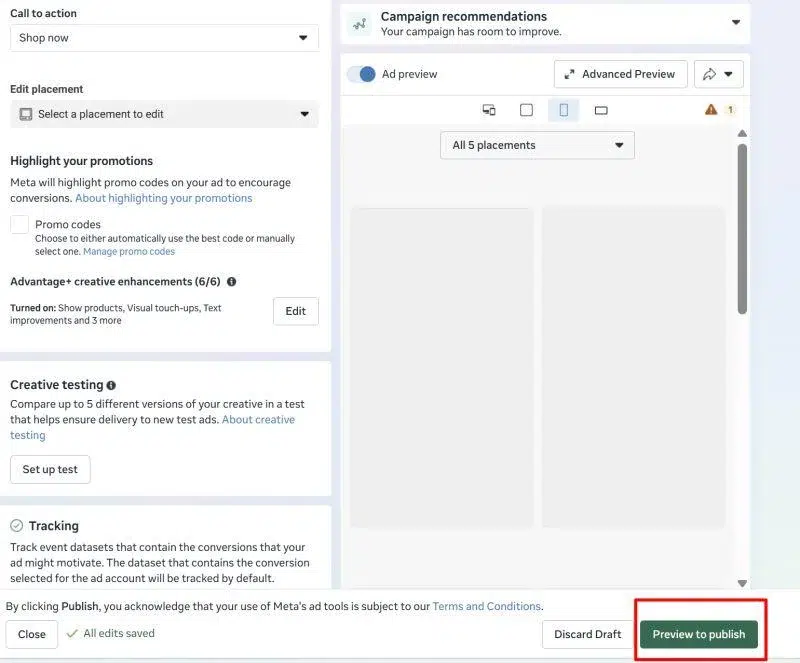
Step 6: Review and publish
Preview your video across placements and double-check your audience, budget, creative, copy, CTA, and destination URL.
Once everything looks correct, click Publish to submit your Facebook video ad for review.
Pro Tips to Create an Engaging Facebook Video Ad
A successful Facebook video ad needs to earn attention quickly and make the message easy to understand on mobile. Use these practical best practices to improve both creative execution and campaign performance.
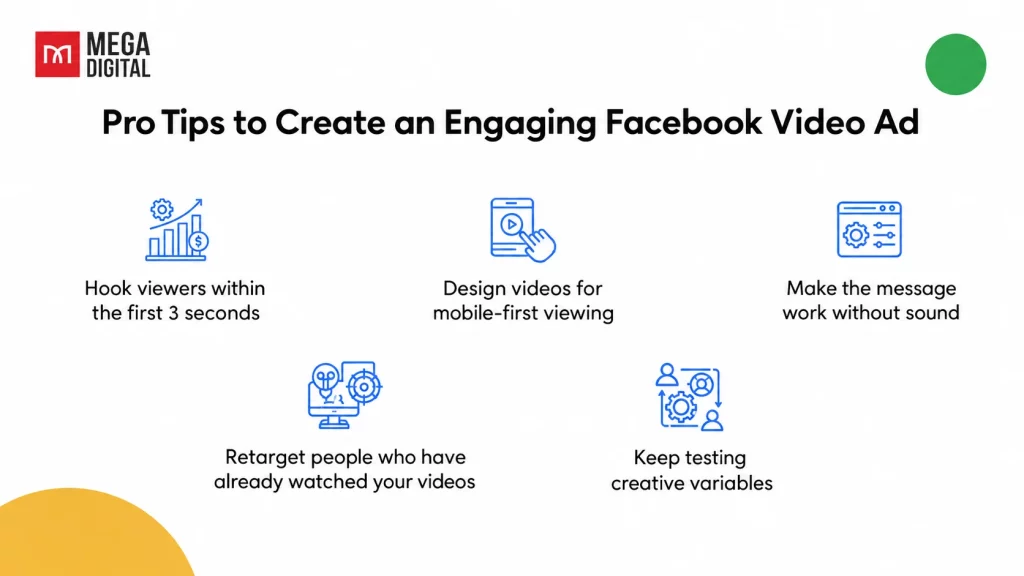
Hook viewers within the first 3 seconds
Treat the first three seconds as a separate creative asset rather than simply the beginning of your full script. Start with the customer’s pain point, a strong product visual, a surprising statement, or the final outcome instead of spending those seconds on a logo animation or company introduction.
Mega Digital tip: Test 3 – 5 hooks around the same body, offer, and CTA. If one opening consistently improves early retention, use that winning hook as the baseline before testing another creative variable.
Design videos for mobile-first viewing
Use vertical or square formats that occupy more screen space on mobile instead of relying on horizontal videos created for other channels. For Reels and Stories, prioritize 9:16 creative, while 4:5 or 1:1 formats are generally better suited to Feed placements.
Before publishing, preview your video on mobile to check product shots, subtitles, logos, and CTAs. You can also use an AI ad marketer to create and adapt multiple video variations more efficiently, but each version should still be optimized for the placement where it will appear.
Make the message work without sound
Build the video so viewers can understand the main point even if they never turn the sound on. Use captions, short on-screen text, product demonstrations, and visual cues to communicate the problem, benefit, and offer without relying entirely on voice-over.
Quick check: Mute the video and watch only the first five seconds. If you cannot identify the product, benefit, or context without hearing the voice-over, the creative still depends too heavily on sound.
Retarget people who have already watched your videos
Do not treat video views only as an engagement metric, because viewers can also become useful retargeting audiences. Meta allows advertisers to build audiences from people who have engaged with video content and use those warmer audiences in follow-up campaigns.
Instead of showing the same awareness video again, move these users to the next message in the funnel. For example, your first video can introduce the problem and product, while the retargeting ad focuses on testimonials, product comparisons, objections, offers, or a stronger conversion CTA.
Keep testing creative variables
Do not expect the first Facebook video ad to become the final winning creative, because hooks, formats, messaging, targeting, and CTAs can all affect performance. Mega Digital specifically recommends ongoing experimentation and A/B testing rather than relying on one creative approach.
Change one major variable at a time so the result is easier to interpret: test hooks first, then messaging angles, proof, offers, or CTAs. You can also review competitors’ active video ads for patterns and inspiration, but use those observations to develop your own angles instead of reproducing their creative.
Facebook Video Ad Examples That Work
Seeing how different brands structure their video ads can help you understand how to apply these best practices in real campaigns.
Puma
Puma uses a short, visually driven video to promote its NASA collaboration, showing the sneakers in a space-themed setting almost immediately. The product appears early and the concept is clear enough to hold attention without requiring a long explanation.
SleepBand
SleepBand uses a direct problem-solution structure, introducing a relatable sleep issue before positioning its headphones as the solution. The ad is easy to follow without sound and strengthens the conversion message with a clear promotional offer.
Frequently Asked Questions about Facebook Video Ads
Facebook video ad costs vary by audience, placement, competition, and campaign objective. As a benchmark, Strike Social reports that U.S. view-focused campaigns typically see a CPV of about 0.0074 – 0.0242 per view, although actual costs can vary significantly by campaign.
Only use music that you own or have permission to use commercially. For ads, choose properly licensed or royalty-free audio to reduce the risk of copyright restrictions or removal.
Blurry video can result from low-resolution footage, excessive compression, or using a creative that does not match the placement dimensions. Export your video at the recommended resolution and preview each placement in Meta Ads Manager before publishing.
Low delivery can result from a limited audience, restrictive settings, insufficient budget, strong auction competition, or an ad that is still under review or has delivery issues. Check the campaign’s Delivery status in Meta Ads Manager first before changing your targeting or creative.
Conclusion
Facebook video ads offer businesses a powerful way to engage their audience and drive conversions. Whether you want to increase brand awareness, drive traffic, or boost sales, video ads on Facebook can help you achieve your marketing goals.
At Mega Digital, we specialize in crafting compelling Facebook video ads tailored to your brand’s unique needs. Let us help you harness the power of Facebook advertising to drive your business forward. Reach out to Mega Digital today, and let’s create impactful ads together.