

Choosing between IAP vs IAA is the single most critical financial decision for your mobile game’s success. Choosing the wrong model can alienate players and cap your earnings, while the right strategy unlocks sustainable growth and maximizes Lifetime Value (LTV).
In this blog post, we break down the IAP vs IAA, the key differences, and tips for choosing which one fits your game’s mechanics and audience.
Quick Summary:
- IAP (In-App Purchase): Best for RPG, Strategy, and deep progression games. Generates ~$82 billion annually but relies on a small % of users.
- IAA (In-App Advertising): Best for Hypercasual, Puzzle, and short-loop games. Monetizes the 98% of non-paying users via volume.
- The “Hybrid Model” (IAP + IAA) is dominating, showing a 37% growth in revenue for top titles.
- Strategy: Start with the model that fits your core loop, then scale using specialized tools like TikTok Agency Accounts to lower CPI and boost volume.
What is In-App Purchase (IAP)?
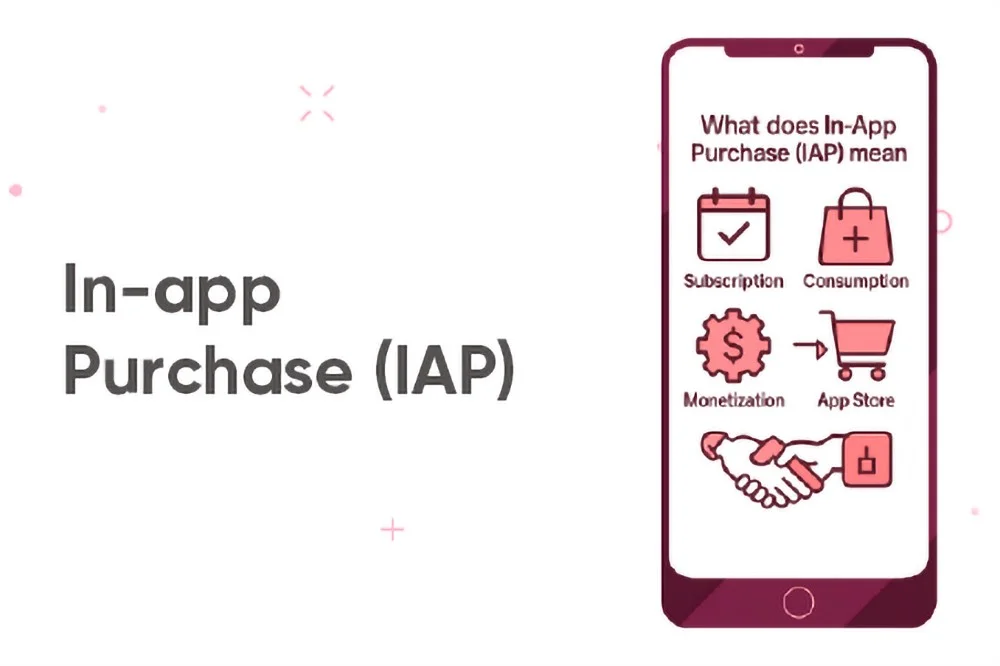
In-App Purchase (IAP) is a direct monetization model where users spend real-world money to acquire virtual goods, currency, or premium features within a mobile application. This model focuses on converting a specific segment of players into buyers, prioritizing high lifetime value over mass volume.
For example, in Genshin Impact, players spend money on “wishes” to unlock rare characters and weapons.
Benefits of IAP
The primary benefits of IAP is its potential for uncapped revenue per user. Unlike ads, which have a fixed earning potential per view, a single dedicated player can spend thousands of dollars in an IAP-driven economy.
- Clean User Experience: IAP games often feel more premium because gameplay is not interrupted by external ads.
- High Engagement: Players who invest money are psychologically more committed to the game, leading to higher retention rates.
- Brand Control: Developers have full control over the economy and aesthetics, without relying on third-party ad networks.
Challenges of IAP
While profitable, IAP is difficult to master and carries specific risks:
- Limited Payer Base: The biggest drawback is that it only monetizes a small fraction of your user base, typically just 2-5% of players are willing to spend money.
- Dependency on “Whales”: You rely heavily on a tiny group of high spenders to sustain the entire game’s revenue.
- Complex Economy Design: It requires sophisticated balancing. If the game is too generous, no one buys, but if it’s too stingy, it feels like “pay-to-win.”
IAP is not just about selling items.It’s about selling emotions, accomplishment, expression, and dominance. When executed well, it feels like a reward, not a transaction.
What is In-app Advertising (IAA)?
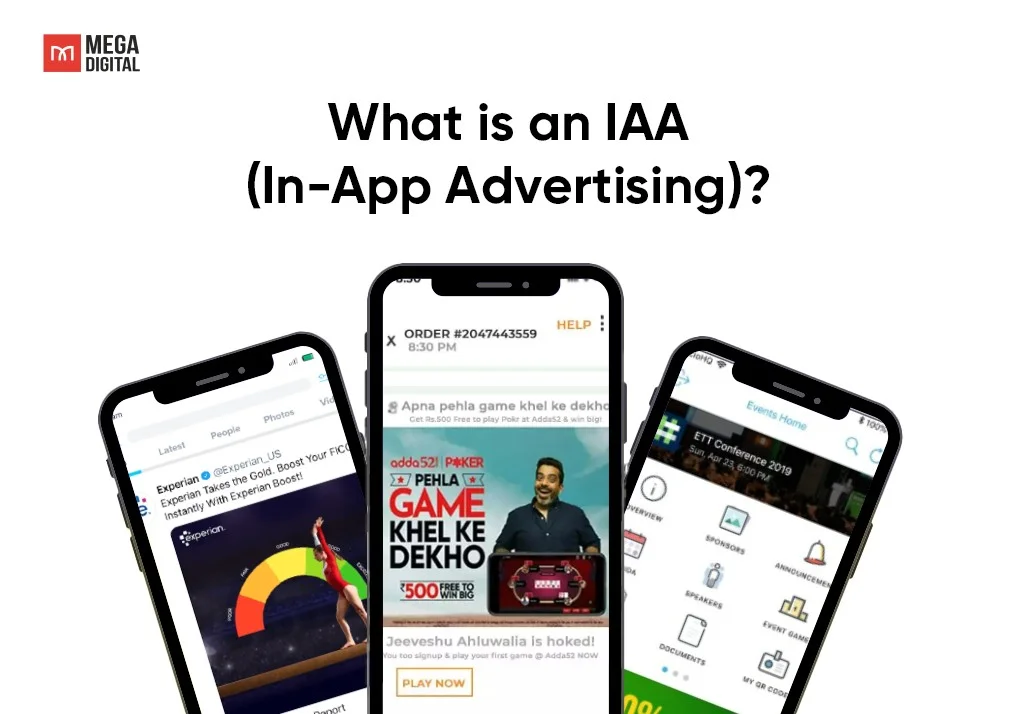
In-App Advertising (IAA) is an indirect revenue strategy that generates income by displaying third-party advertisements to users who play the game for free. Unlike IAP, which targets a small percentage of spenders, IAA monetizes the entire active user base.
For instance, in Subway Surfers, players can watch a video ad to revive after crashing and continue their run.
Benefits of IAA
IAA is the democratizer of monetization, allowing developers to earn from the 95% or more of users who never make an in-app purchase.
- Monetize Everyone: Every active user becomes a revenue source, regardless of their spending power.
- Simple Implementation: Easier to set up than a complex game economy required for IAP.
- Ideal for Casual Games: Perfect for games with simple mechanics where users may not feel the need to buy upgrades.
A classic industry example is Crossy Road by Hipster Whale. By relying almost exclusively on opt-in Rewarded Video ads for coins to unlock characters rather than forced ads, they generated over $10 million in revenue in their first 90 days.
Challenges of IAA
Relying solely on ads comes with trade-offs regarding experience and scale:
- User Annoyance: Displaying too many ads or interrupting the gameplay flow can frustrate users, leading to a negative experience.
- Disruption: If not implemented carefully, ads can break immersion, causing players to quit or uninstall the app.
- Volume Dependency: You need a large number of active users (High DAU) to generate significant revenue, as the earnings per individual view are relatively low.
If IAP is the engine of high-value growth, IAA is the fuel of consistency. It turns the vast ocean of non-paying players into a reliable stream of recurring revenue, ensuring that ‘free-to-play’ doesn’t mean ‘free-to-host’.
What are the key differences between IAP vs IAA?
Below is a comprehensive comparison table of IAP vs IAA.
Feature | In-App Purchase (IAP) | In-App Advertising (IAA) |
Revenue Source | Direct payments from users | Payments from advertisers (Third-party) |
Target Audience | Whales (High spenders) & loyal fans | The mass market (Free users) |
Game Design | Requires deep economy, progression, & difficulty balance | Requires short loops, high retention, & frequent sessions |
User Experience | Uninterrupted, premium feel | Interrupted by ads (unless Rewarded) |
Key Metrics | LTV, ARPU, Conversion Rate | eCPM, Impressions, Fill Rate |
Stability | High fluctuation, relies on a few users | More consistent, relies on total traffic. |
#1 Revenue Source
In-App Purchase (IAP)
IAP relies on direct transactions between the player and the developer. This model remains the industry powerhouse. According to recent Sensor Tower data, global mobile game IAP revenue reached approximately $82 billion in 2024, showing a resilient 4% year-over-year increase despite market saturation.
In-App Advertising (IAA)
IAA generates revenue indirectly. Advertisers pay ad networks to show ads, and ad networks pay the developer. You earn money based on impressions or views and actions like clicks or installs. This volume-based approach is crucial, as IAA revenue is projected to drive nearly 50% of hybrid game earnings in casual genres.
#2 Target Audience
In-App Purchase (IAP)
This model targets a small, elite segment of players known as Whales who are high spenders and Dolphins who are moderate spenders. Industry data consistently indicates that typically only 1.83% of users make an IAP, making this model highly dependent on a tiny fraction of your user base.
In-App Advertising (IAA)
IAA targets the remaining 95 – 98% of players who play for free. It monetizes the mass market by leveraging volume. The goal is to get as many eyes on the screen as possible rather than extracting deep value from a few individuals, ensuring you earn from the vast majority of your traffic.
#3 Game Design
In-App Purchase (IAP)
IAP games require complex economies, steep difficulty curves, and deep progression systems seen in RPGs and Strategy games. The game design must intentionally create pain points or friction, or foster desires that purchases can solve, such as waiting for upgrades or needing stronger gear.
In-App Advertising (IAA)
IAA games focus on short, addictive gameplay loops commonly found in Hypercasual and Puzzle games. The design prioritizes retention and high session frequency to maximize the number of ad opportunities. The gameplay must be simple enough to be interrupted without ruining the flow.
#4 User Experience
In-App Purchase (IAP)
Offers a cleaner and more premium feel. Gameplay is continuous and immersive, interrupted only by the player’s own choice to visit the store. This seamless experience often leads to longer, more focused session times.
In-App Advertising (IAA)
Inherently intrusive, though modern formats are changing this perception. While ads interrupt flow, modern players are increasingly accepting of value-exchange formats. Rewarded Video Ads, in particular, are often viewed positively because they offer premium currency or lives in exchange for time, creating a symbiotic relationship that can actually enhance engagement rather than driving users away.
#5 Key Metrics
In-App Purchase (IAP)
Success is measured by user value metrics like LTV which means Lifetime Value, ARPPU or Average Revenue Per Paying User, and Conversion Rate. You closely track how much specific cohorts of users spend over their lifetime.
In-App Advertising (IAA)
Success is measured by volume and inventory metrics like eCPM or Effective Cost Per Mille, Impressions, and Fill Rate. You track how many ads are shown and how much advertisers are willing to pay for that inventory space.
#6 Stability
In-App Purchase (IAP)
Revenue can be volatile and hit-driven. Income might spike during a new content update or event and then lull. Losing a few high-spending whales can significantly impact the bottom line, making revenue less predictable.
In-App Advertising (IAA)
Generally more consistent and predictable, but shifting to a Hybrid Model which combines both is increasingly the standard. Recent reports indicate that hybrid monetization strategies are seeing a 37% higher revenue growth compared to single-model games, offering both stability and high upside.
Which is better IAP vs IAA?
There is no single winner; the right choice depends on your business objectives. Use this checklist to decide:
Criteria | Choose IAP if… | Choose IAA if… |
Best Genres | RPG, Strategy, Battle Royale | Puzzle, Hypercasual, Arcade |
Player Engagement | Encourages long-term commitment & investment | Short sessions with repetitive, addictive loops |
Spending Behavior | Players willing to pay to protect progress/compete | Users play to kill time, unlikely to buy expensive items |
Instead of forcing a choice between two models, the industry is shifting to a Hybrid Model that works for everyone. This strategy uses IAP to monetize the small percentage of players willing to spend, while simultaneously using Rewarded Ads to earn revenue from the non-paying majority. By capturing value from every player type, you significantly increase your average revenue per user.
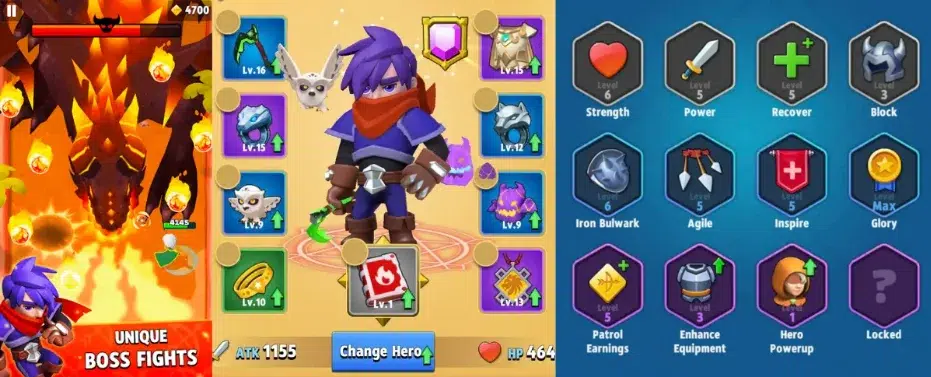
A textbook example is Archero by Habby. The game mastered the hybrid model by offering IAP for gems and battle passes, while simultaneously allowing non-spenders to watch ads to revive or earn extra energy. This dual-loop strategy resulted in an estimated ~$35 million in net IAP revenue in its first three months, demonstrating the power of monetizing both user segments.
Common Mistakes When Choosing IAP vs IAA
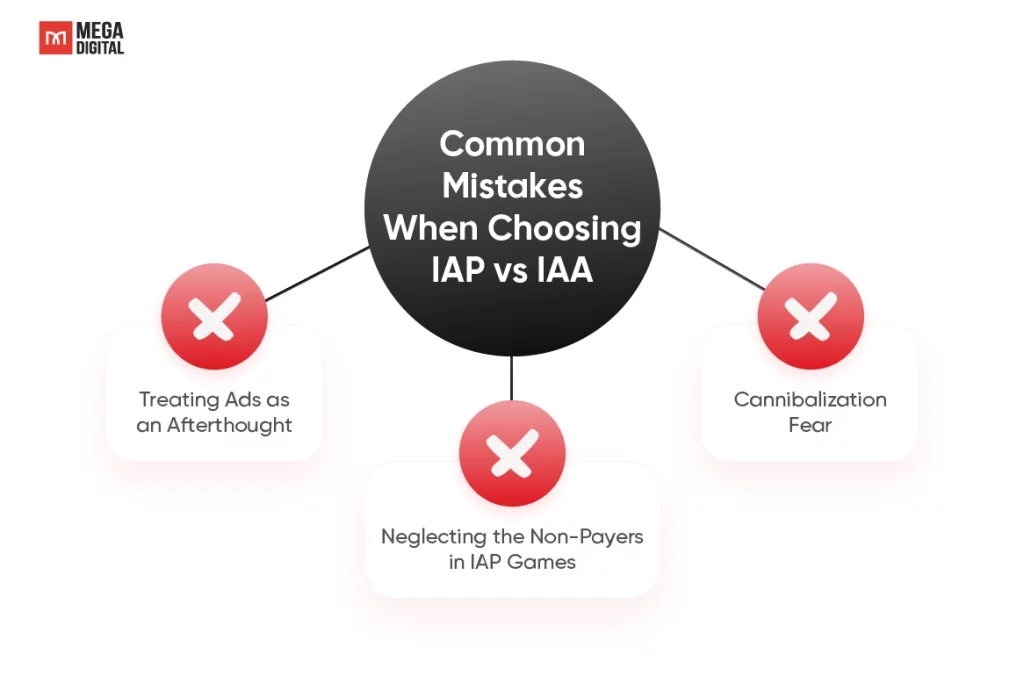
Even with the right model, execution is key. Avoid these common pitfalls that can kill your game’s revenue potential.
- Treating Ads as an Afterthought: Many developers build the game first and “slap on” ads at the end. This leads to poor placement and high churn. Ads should be integrated into the core loop. For example, a “Revive” button that feels like a natural part of the game UI).
- Neglecting the Non-Payers in IAP Games: If you only focus on the 2% of whales, you risk boring the 98% of free players who serve as content (in multiplayer games) or viral marketers. A lack of progression for free players leads to a dead ecosystem.
- Cannibalization Fear: Developers often fear that adding ads will stop IAP. Data shows the opposite: players who watch rewarded ads are often more engaged. The mistake is not testing this hypothesis and leaving ad revenue on the table.
4 tips for Choosing the Best Monetization Method
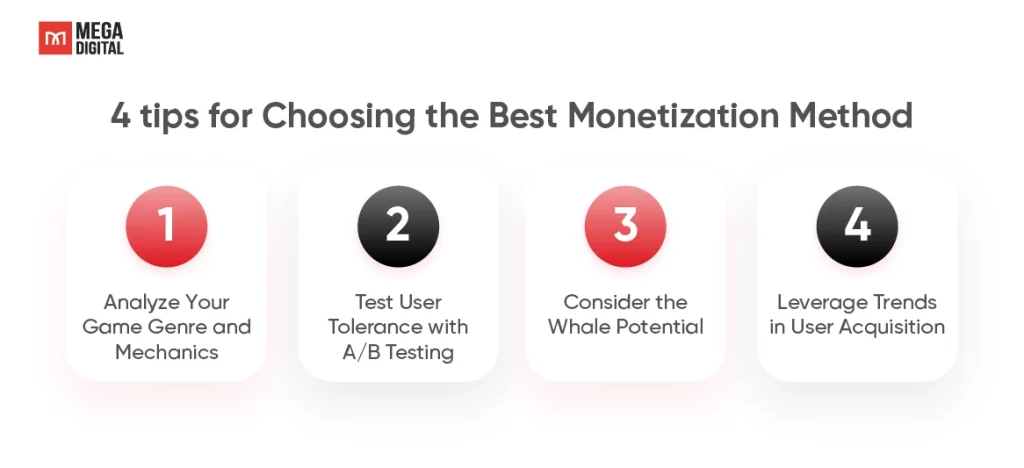
Here are 4 tips for choosing the best monetization method for your game or app.
Analyze Your Game Genre and Mechanics
Start by auditing the Core Loop of your game. Does your game rely on patience, resource scarcity, or competitive dominance? If yes, IAP is your primary engine because players will pay to remove friction like skipping timers or to gain power.
However, if your game is built on quick reflexes, skill-based repetition, and short sessions like Flappy Bird or Subway Surfers, IAA is safer. In these genres, the win condition is a high score rather than a permanent asset, making it harder to sell expensive items.
You can map out your gameplay loop duration. If a session lasts under 3 minutes, lean heavily towards IAA. If sessions are over 10 minutes with deep progression, focus on IAP economy design.
Test User Tolerance with A/B Testing
Never assume you know what your users will tolerate. Use A/B testing to find the sweet spot where revenue is maximized without causing churn.
- The Boiling Frog Method: Start with a low frequency of ads, for example one interstitial every 5 levels, and gradually increase it. Monitor your Day-1 and Day-7 retention rates closely. If retention drops significantly, you’ve hit the limit.
- Segmentation is Key: Don’t treat all users the same. Create a rule that automatically disables forced ads for any user who makes a real-money purchase. This protects your VIPs who generate IAP revenue while aggressively monetizing non-payers via IAA revenue.
Consider the Whale Potential
You can ask yourself: How much money can a single player realistically spend in my game?
- IAP Native: If your game has a deep economy where a player can spend $10,000 and still want more, such as collecting rare heroes or upgrading a base to level 100, you have Whale Potential. Focus 80% of your effort on IAP shop optimization.
- IAA Native: If the most a player can buy is a No Ads pack for $2.99 and a few cosmetic skins, your spending depth is shallow. In this case, you must rely on IAA to generate volume revenue, as you cannot sustain the business on small one-time purchases alone.
Leverage Trends in User Acquisition
Your monetization model dictates your marketing strategy.
- High Cost Per Install: If you are competing in expensive genres like RPG or Strategy where CPI can be $5 to over $10, you must use IAP. Ads alone, which generate pennies per view, will never cover the cost of acquiring a user.
- Low Cost Per Install: If your game is viral or highly shareable meaning Low CPI, you can thrive on IAA. To truly unlock this potential, many developers turn to TikTok Game Advertising. The platform’s algorithm is perfect for finding high-volume, low-cost users for hyper-casual and casual games.
- Scaling with Agency Support: For IAA models, volume is everything. Many studios struggle with spending limits on standard ad accounts, which bottlenecks growth. Using specialized TikTok Agency Ad Accounts can solve this by offering unlimited spending caps and priority support, allowing developers to scale user acquisition aggressively without fear of suspension.
FAQs about IAP vs IAA
No. It is a common myth that showing ads stops users from buying. In reality, Rewarded Video Ads often boost IAP revenue. By allowing users to taste premium currency through watching ads, they understand its value and are more likely to purchase bigger packs later. However, intrusive Interstitial ads can hurt retention, indirectly hurting IAP.
IAA requires volume. Generally, to generate significant revenue like $100+ per day, you might need 10,000+ DAU, depending on your eCPM which varies by country. IAP can generate the same revenue with just 50 dedicated players.
Yes, it is more complex than a single model. Technically, it requires integrating both Ad SDKs and Store APIs. Strategically, the challenge is segmentation. You must code logic that says: “If User X buys an item, stop showing them Interstitial ads.” Failing to do this can annoy your paying customers.
Final Word
Ultimately, choosing IAP vs IAA or a hybrid strategy is about aligning monetization with your game’s unique mechanics and user journey. If you are ready to optimize your game’s revenue potential with a tailored strategy, particularly by leveraging TikTok Agency Ad Accounts for massive user scaling, Contact Mega Digital today to transform your players into profitable partners.