

Are you pouring money into your campaigns but struggling to see a positive return, wondering if your ad spend is actually driving profitable growth? You are not alone, as many businesses burn through their budgets without a clear understanding of how to track and optimize their true profitability. In this article, I’ll explain everything you need to know about Google Ads ROI.
Quick summary:
- Understanding your Return on Investment reveals the actual profitability of your campaigns beyond surface-level metrics like clicks and impressions.
- The average business earns an 8:1 return on investment on Google Ads according to recent economic impact reports.
- Calculating this metric requires subtracting your total costs from revenue and dividing the result by your overall costs.
- Leveraging advanced AI features like Performance Max and Smart Bidding can significantly scale your campaign efficiency.
What is Google Ads ROI?
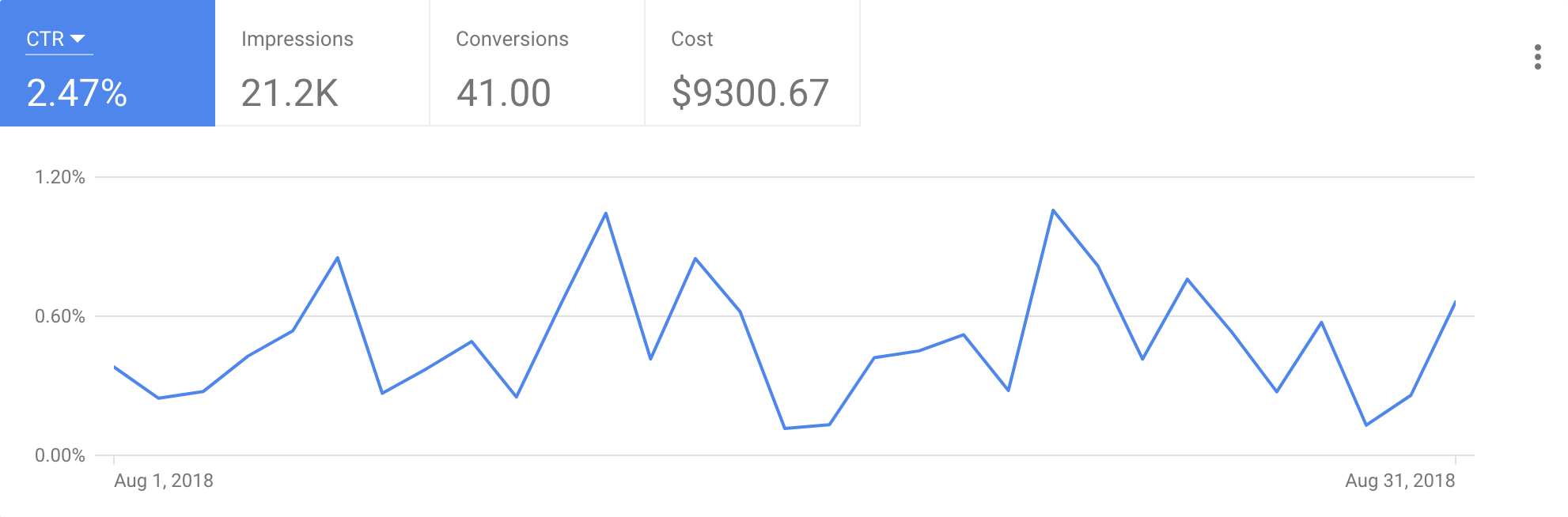
ROI, or return on investment, measures how much money you made from your advertising in relation to what you spent. Your return on investment (ROI), which is determined by your marketing objectives, enables you to assess the effect of your Google Ads campaigns on your company.
In other words, optimizing your website and Google Ads can boost your ROI. Even if the procedures to achieve this aim may be complicated, there are several ways that can assist you in making the most of Google Ads campaigns and properly evaluating the outcomes.
Tracking Google Ads ROI benefits
Every user should track ROI in Google Ads. The real impact of your ads on your company can be determined by looking at ROI rather than other measures like impressions and clicks. Measuring your ROI enables you to determine whether your campaigns are profitable and how much they aid in accomplishing your organization’s objectives.
Measure campaign effectiveness
Knowing your campaigns’ success is one of the most apparent advantages of ROI tracking. You can determine how many leads or sales your ads are generating by tracking conversions, and you can use this information to assess the effectiveness of your campaigns. This can aid in your decision-making regarding the allocation of your advertising budget and the focus of your campaigns.
Improve campaigns
ROI can also be used to improve your Google Ads campaign. You can devote more of your cash to an advertisement if, for example, you notice that it is producing an unusually high ROI. You can either quit running an ad if it is not producing a strong ROI or make it better by applying the knowledge you’ve gained from your more profitable advertising.
Make data-driven decisions
Finally, this is one of the most significant advantages of ROI tracking. You can use concrete statistics to guide your advertising plan rather than depending on intuition or educated guesses. By measuring and optimizing your Google Ads ROI, you can make more informed decisions about allocating your budget, prioritizing your campaigns, and improving your marketing strategies to achieve better results.

Measuring your Google Ads ROI is important because it helps you understand your advertising investment’s profitability and whether it’s worth investing in your campaigns. To ensure that your advertising budget generates a positive return on investment and drives growth for your business, keeping track of and improving your ROI by regularly monitoring and optimizing your campaigns is essential.
Google Ads’ average ROI
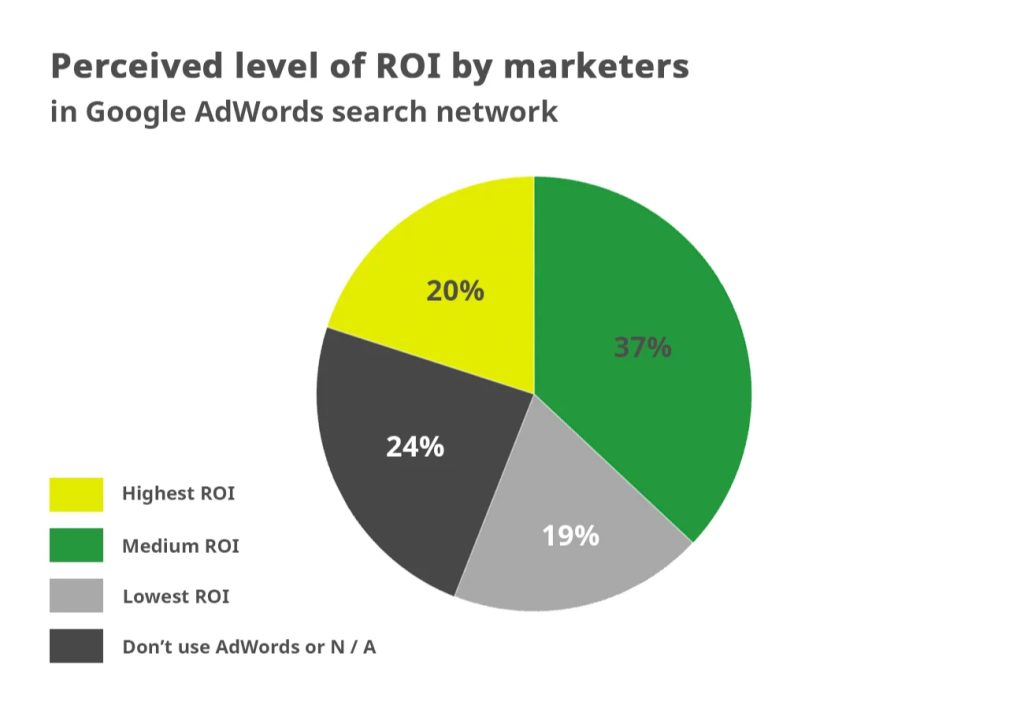
Determining the exact average ROI can be tricky, as the industry, the advertising technique employed, the campaign’s objectives, and other elements significantly affect these figures. However, recent data provides a very clear benchmark for advertisers.
Historically, Google estimated that businesses generated an average of $2 in profit for every $1 spent on Google Ads. According to the Google Economic Impact Report, businesses receive an estimated $8 in profit for every $1 spent on Google Ads when accounting for the combined economic impact of Google Search and Ads.
Furthermore, industry benchmarks from WordStream reveal that the average click-through rate (CTR) across industries sits at 6.64%, with an average conversion rate of 8.18%. These high conversion rates demonstrate that well-optimized search ads remain one of the most lucrative channels for businesses.
How to calculate Google Ads ROI
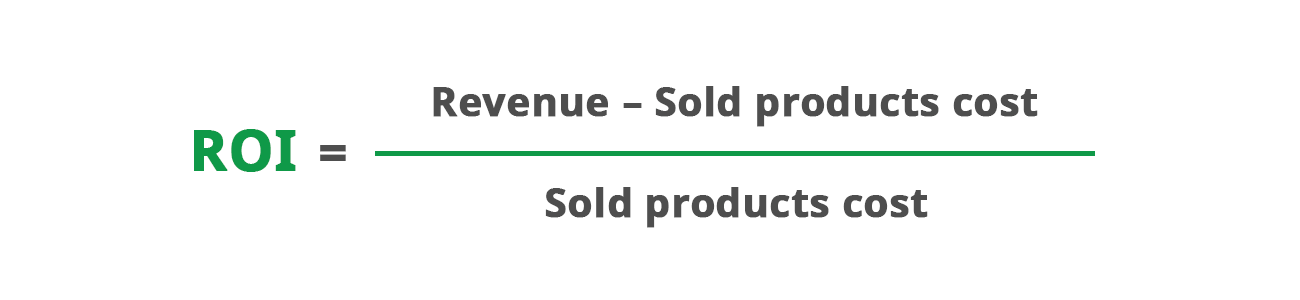
To determine your Google Ads ROI, you must subtract the overall cost of a campaign from the revenue generated as a result of that campaign. Then, divide that result by your total expenditure and multiply by 100 to get a percentage.
Here is the standard ROI calculation formula:
ROI = (Revenue – Total Cost) / Total Cost *100%
Example:
Imagine you are promoting a product valued at $200. The manufacturing of the goods (Cost of Goods Sold) is $100 per unit. Thanks to your Google Ads campaign, you sold 5 items, bringing the total sales revenue to $1,000. Your total manufacturing costs are $500, and your Google Ads spend was $200.
You would enter these numbers into the ROI formula in the following manner:
- Total Costs = $500 (Manufacturing) + $200 (Ad Spend) = $700
- Revenue = $1,000
ROI = (1000 – 700) / 700 * 100% = 42.8%
In this scenario, your ROI is 42.8%, meaning for every dollar you invested, you made a net profit of about 43 cents. The figures you use in your calculations will rely on the objectives of your campaign and the particular expenses your company faces.
Methods to increase ROI on Google Ads

Improving Google Ads ROI requires tighter control over bidding, traffic quality, and post-click conversions, not simply a larger budget.
Use Smart Bidding Based on Your Goal
Use Target CPA for lead generation and Target ROAS when conversion values are tracked accurately. Start with targets close to recent performance, then adjust gradually to avoid limiting traffic and conversions.
Mega Digital Expert Tip: If an aggressive CPA or ROAS target limits campaign volume, bring it closer to your recent performance. Once conversion data becomes more stable, adjust the target gradually toward your profitability goal.
Expand Reach with Performance Max
Use Performance Max to reach customers across Google’s channels after your conversion tracking and creative assets are ready. Separate asset groups by product or service and add first-party audience signals to guide optimization.
Google reports that non-retail advertisers adopting Performance Max achieved 27% more conversions or conversion value at a similar CPA or ROAS.
Optimize Landing Pages for Conversions
Send users to a landing page that closely matches the keyword, ad message, and search intent. Use one clear CTA, shorten forms, improve mobile speed, and remove unnecessary distractions.
Tip: Test one landing page element at a time, such as the headline, CTA, or form, to isolate its impact on conversion rate and make data-driven decisions.
Build a Strategic Negative Keyword List
Review the Search Terms report regularly and exclude queries that generate clicks without qualified conversions. Use specific negative keywords and avoid broad exclusions that may block valuable long-tail searches.
Is ROI and ROAS the same?
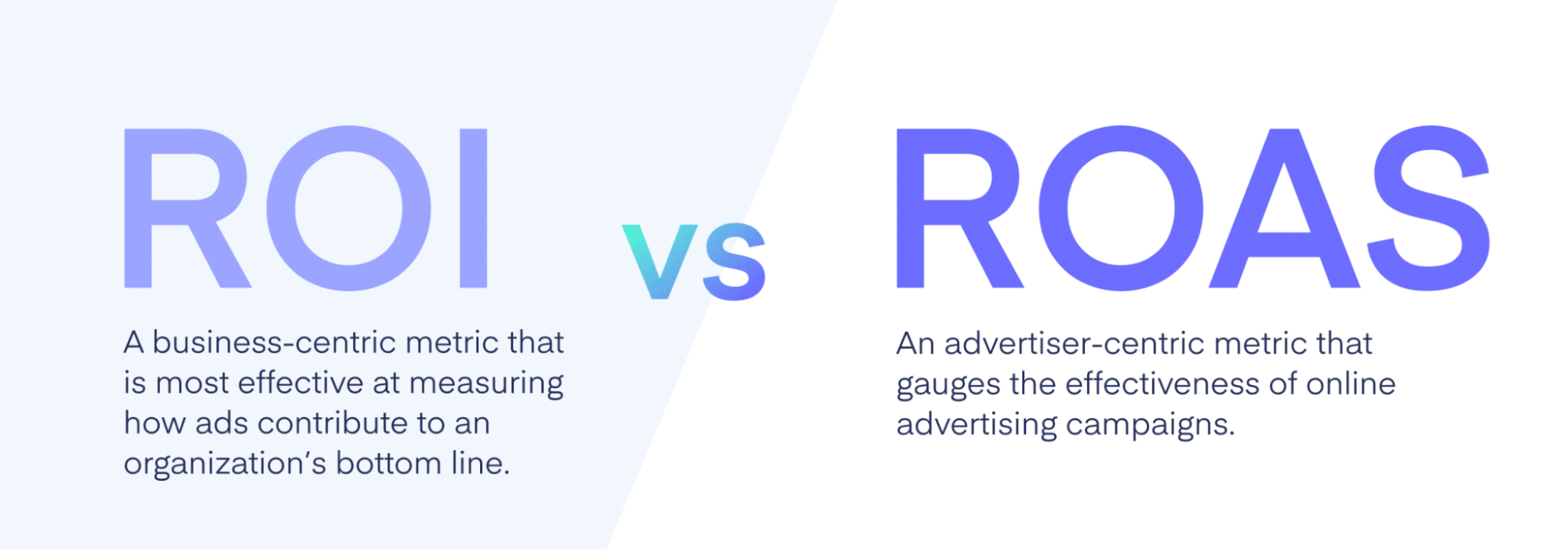
ROI and ROAS are both essential metrics to measure the effectiveness and profitability of a Google Ads campaign. However, they are not directly comparable.
Here is a comparison table to illustrate the differences between ROI and ROAS:
| Metric | Definition | Calculation |
| ROI (Return on Investment) | A measure of profitability that compares the amount of money gained or lost on an investment relative to the amount of money invested. | ROI = (Revenue – Cost) / Cost |
| ROAS (Return on Ad Spend) | A measure of the effectiveness of advertising spending that calculates the revenue generated relative to the amount spent on advertising. | ROAS = Revenue / Advertising Spend |
As you can see from the table, the key difference between ROI and ROAS is in their definition and calculation. ROI takes into account all revenue and costs associated with an investment. ROAS only considers the revenue generated by advertising spend. They serve different purposes and should be used together to understand the campaign’s performance better.
Note: Many agencies report strictly on ROAS because it produces a higher, more impressive number. Always ask for your ROI or CPA metrics to understand how the campaign impacts your actual business profit.
FAQs about Google Ads ROI
There is no universal benchmark because a profitable ROI depends on your margins, operating costs, and business goals. Avoid confusing ROI with ROAS: a 4:1 ratio usually describes revenue generated per ad dollar, not net profit.
Google Ads can generate traffic and conversions soon after launch, but stable ROI usually requires enough conversion data and at least one full sales cycle. Smart Bidding may take up to three weeks or one to two conversion cycles to calibrate after major changes.
Low ROI often results from inaccurate conversion tracking, low-intent traffic, weak landing pages, poor offers, or misaligned bidding targets. Review search terms, conversion values, margins, and post-click performance before increasing your budget.
Performance Max can improve conversion volume or value by optimizing across Google’s channels, but results are not guaranteed. Its effectiveness depends on accurate tracking, realistic bidding targets, strong creative assets, and sufficient conversion data.
Final words
Google Ads ROI is a critical metric for determining whether your advertising spend is generating sustainable business value. By analyzing campaign data, tracking conversions accurately, and using automation strategically, you can make more informed decisions and scale performance with greater confidence.
As a Google Partner, Mega Digital supports businesses with Google Shopping and Search advertising strategies tailored to their goals and performance data.