

What are In-App Purchases (IAP) that allow many free apps to still generate millions of USD in revenue? From in – game items to utility upgrade packages, the in – app purchasing model is quietly changing the way we experience our phones every day. The article below, I will break down all the basics you need to know about IAP.
Quick Summary
- Definition: IAP allows players to purchase digital goods (extra lives, currency, battle passes) directly within a free-to-play mobile game.
- 4 Main Types: Consumable, Non-consumable, Auto-renewable Subscriptions, and Non-renewing Subscriptions.
- Mechanism: Transactions rely on Apple StoreKit and Google Play Billing to securely validate payments and unlock content.
- Dominance: IAP remains the primary revenue driver for casual, puzzle, and mid-core games, often outperforming ad revenue (IAA).
- Growth: Developers scale IAP revenue not just through game design, but by utilizing paid User Acquisition (UA) channels to acquire high-value players.
What is an In-App Purchase (IAP)?
IAP (In-App Purchase), is a strategic monetization model that allows users to buy additional content, services, or enhanced functionalities right within the application or game they are using. This is an extremely popular business model in mobile applications on the Android and iOS platforms, especially in games, educational, work, and entertainment applications.
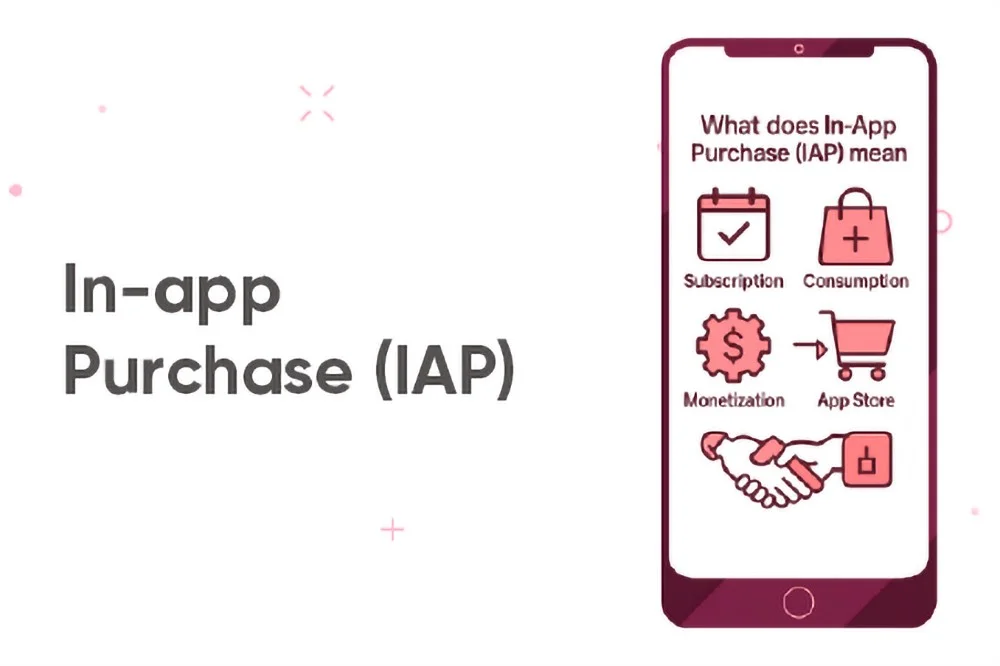
The magic of IAP lies not in the sale itself, but in the removal of friction. It allows value capture at the exact moment of user need.
Today, Free-to-Play + IAP is the industry standard, allowing developers to monetize a user base over a long period rather than just a single transaction.
Why In-App Purchases Matter in Mobile Games
IAP is not just an option, it is the financial backbone of the modern app economy. Here is why it dominates the mobile gaming landscape:
- Market Dominance: IAP accounts for the vast majority of global consumer spend on mobile. According to the Sensor Tower, global mobile game IAP revenue reached approximately $82 billion in 2024 (a 4% YoY increase). It remains the primary revenue driver for RPG and Strategy games, though Casual genres are increasingly adopting Hybrid Monetization (combining IAP with Ads).
- Superior Revenue Ceiling vs. IAA: Unlike In-App Advertising (IAA), which relies on massive volume for pennies per view, IAP relies on depth. A single dedicated player can generate thousands of dollars in lifetime revenue, far outperforming ad views. In fact, the whale phenomenon, where a small percentage of players contribute large revenues, continues to be important (Gaming Industry Report 2025 của Udonis).
- High Lifetime Value (LTV): Although only 2% to 5% of players typically convert to payers (a widely accepted industry benchmark), the LTV of these users is exceptionally high. This small fraction of the player base effectively funds the game’s development and maintenance for everyone else.
- Versatility Across Genres: IAP flexibly adapts to any game type, driving revenue through extra moves in Casual & Puzzle games, equipment upgrades in Hybrid-Casual titles, and deep gacha economies in Mid-core/Hard-core games.
>>> Read more: In-App Advertising (IAA) done right: The Complete Guide 2026
Types of In-App Purchase
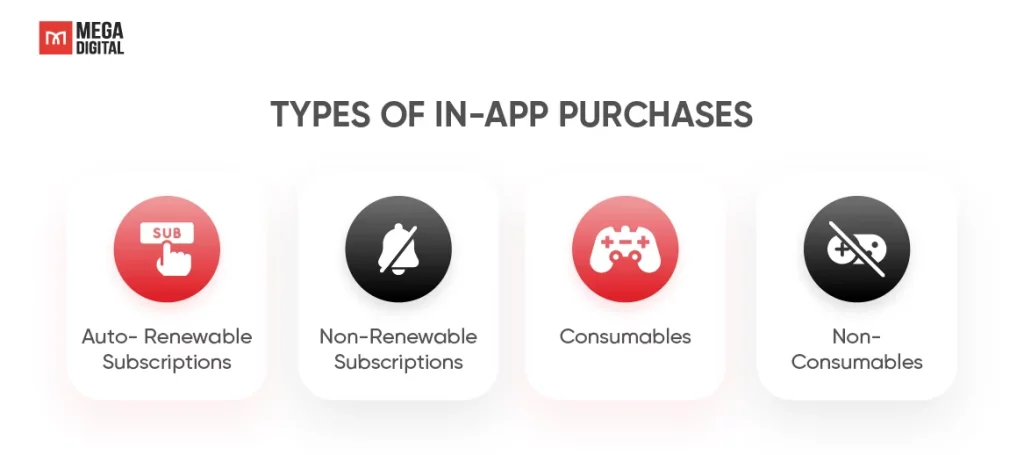
There are four common types of IAP: Consumable, Non-consumable, Auto-renewable Subscriptions, and Non-renewing Subscriptions. Detail information that you should follow below:
Consumable
These are items that a player purchases, uses, and depletes. To use them again, the player must repurchase them. This is the primary revenue driver for many games.
- Examples: Virtual currency (Gems, Coins, Gold), Extra Lives, Boosters (e.g., “Hammer” in Match-3 games), or Gacha tickets.
- Use Case: Highly effective in Casual, Puzzle, and Strategy games. They are often tied to “fail states” (e.g., running out of moves in Candy Crush) or progression speed.
Non-consumable
Items that are purchased once and remain permanently associated with the user’s account. They do not expire.
- Examples: Removing Ads (No-Ads package), unlocking a full level pack, or permanent cosmetic skins.
- Use Case: Common in Puzzle and Casual games that rely heavily on ads (IAA) for revenue. The “Remove Ads” IAP gives players the option to pay a premium for an uninterrupted experience.
Auto-renewable Subscription
This grants users access to premium content or buffs for a set duration, automatically renewing until canceled.
- Examples: Monthly VIP memberships, “Battle Pass” subscriptions that offer daily currency drops, or ad-free experiences for a monthly fee.
- Use Case: Increasingly popular in Hybrid-Casual and Live-Ops heavy games to create a recurring, predictable revenue stream (ARR).
Non-renewing Subscription
These allow access to content for a fixed period but do not automatically renew.
- Examples: A “Season Pass” for a specific e-sports league or a specialized “Event Pass” that lasts only 30 days.
- Use Case: Used frequently in Event-based games (Battle Royales, MOBAs) where content is seasonal.
How does In-App Purchase work?
The IAP process involves a secure, multi-step interaction between the App Store/Google Play, the user’s device, and the developer’s server to validate payment and deliver content securely.
Here’s how it works in detail:
- User initiation: The user taps a “Buy” button within your app.
- Store request: Your app contacts the platform’s StoreKit (iOS) or Billing Library (Android).
- Payment processing: The platform takes over the UI, asking the user to confirm via FaceID, TouchID, or password. The platform charges the user’s credit card.
- Receipt generation: Upon success, the platform returns a digital “receipt” to the app.
- Verification (Crucial step): The app sends this receipt to the developer’s server. The server verifies with Apple/Google that the receipt is valid and hasn’t been forged.
- Content delivery: Once verified, the server signals the app to unlock the content.
A common mistake developers make is performing receipt validation locally on the device. This makes the app vulnerable to ‘receipt spoofing’ hacks. Always validate on a secure server.
Key Platforms Powering In-App Purchases in Mobile Games
Understanding the nuances of the two major platforms is vital for monetization strategy.
Apple App Store (iOS)
iOS users statistically have a higher Average Revenue Per User (ARPU) and are more willing to spend on IAPs, making the App Store ideal for Tier-1 markets like the USA, UK, and Japan. Developers often leverage StoreKit’s robust tools for subscriptions and restore functions to focus on high-ticket items and subscription models in these regions.
Google Play (Android)
With its massive global market share in download volume, Google Play is crucial for scaling Hyper-casual and Hybrid monetization strategies. Although individual spending may be lower compared to iOS, the sheer volume of users, especially in dominant emerging markets like SEA, India, allows developers to achieve significant revenue scaling through Google Play Billing.
While Apple App Store and Google Play handle the transaction layer, monetization performance ultimately depends on user acquisition quality. Platforms like TikTok Ads have become a key growth channel for mobile games.
To fully leverage this, many developers partner with experienced agencies like Mega Digital to attract high-intent users who are statistically more likely to convert through in-app purchases.
Benefits and challenges of In – App Purchases
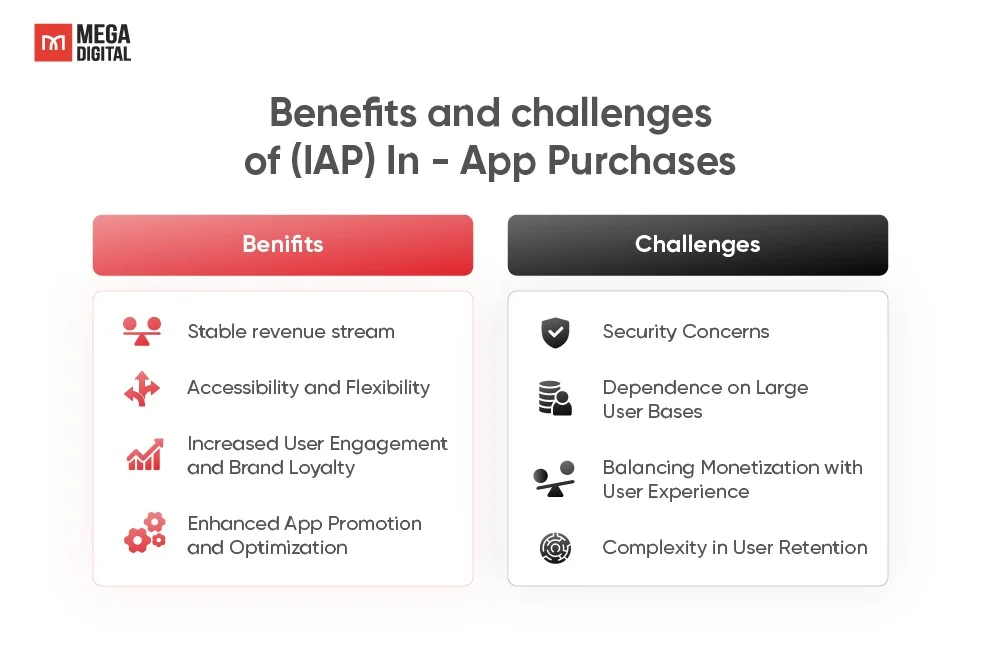
In-App Purchase (IAP) is a popular monetization strategy across many app categories. Here are the benefits and challenges:
The Benefits
- Stable revenue stream: Unlike the unpredictable spikes of paid apps, IAPs provide a steady, recurring income flow. This financial stability allows developers to reinvest in innovation and continuously expand the app’s features.
- Accessibility and Flexibility: By keeping the core app free, you lower the barrier to entry, attracting a broader user base and encouraging higher download volumes. Users can enhance their experience through purchases without obligation, allowing you to monetize engagement rather than just the initial install.
- Increased User Engagement and Brand Loyalty: Optional purchases allow users to customize and tailor their app experience to their specific needs. This personalization boosts satisfaction, making users less likely to abandon the app and more likely to become loyal, repeat customers.
- Enhanced App Promotion and Optimization: IAP transactions generate rich data on user preferences. This insight helps developers identify which features are most popular, allowing for data-driven optimization to further increase user satisfaction.
The Challenges
- Security Concerns: Handling financial transactions brings responsibility. Managing user data and payment information securely is vital, as any security breach can result in significant trust issues and potential financial losses.
- Dependence on Large User Bases: Since only a small percentage of users typically convert to payers (conversion rate), IAP models generally require a sizable and active user base to be profitable. Building and maintaining this scale is often expensive, which is why developers often turn to specialized ad partners like Mega Digital to optimize acquisition costs.
- Balancing Monetization with User Experience: Striking the right balance between free content and premium offerings is crucial. Aggressive monetization, too many restrictions, or perceived high costs can lead to user dissatisfaction and app abandonment.
- Complexity in User Retention: Retaining users is a continuous challenge for developers and marketers. To justify continued investment from users, apps cannot remain static; they must consistently introduce new features and regular updates to maintain value.
How Game Developers Use IAP to Scale Mobile Games
Success in mobile gaming monetization isn’t just about the product; it is about the entire ecosystem connecting the game to the player. Scaling IAP revenue requires a precise three-step formula:
IAP Needs User Volume (Traffic)
The best in-game store is useless if the game is empty. Since only a small percentage of players (2-5%) ever make a purchase, developers need a massive and constant inflow of new users to find those “whales.” Organic traffic is rarely sufficient to support this scale.
Users Come From Paid Ads (User Acquisition)
To get that volume, developers must invest in Paid User Acquisition (UA). Running aggressive ad campaigns on platforms like TikTok, Facebook, and Google is the only reliable way to target high-intent gamers who are likely to spend money.
Ads Require Account Stability & Scale
This is the critical bottleneck. To run high-volume campaigns without interruption, developers need robust Ad Accounts. Standard personal ad accounts often face spending limits, random bans, or slow support, which can kill a game’s momentum. Scaling IAP effectively demands Agency Ad Accounts, a core service provided by authorized partners like Mega Digital, that offer stability, unlimited spending caps, and priority appeal support to ensure the revenue engine never stops.
Best strategies for IAP monetization and revenue growth
- The Decoy Effect & Price Anchoring: Offer a “high price” item to make the middle option look like a great deal (e.g., 100 Gems for $5 vs. 1000 Gems for $20).
- Personalized Offers: Segment users based on behavior. If a player is stuck on level 50, offer a “Level 50 Rescue Pack.”
- Optimize the FTUE (First Time User Experience): Don’t ask for money immediately. Let players enjoy the “Aha!” moment first. Delaying the paywall often significantly improves retention and LTV compared to asking immediately upon install, as shown in various AppsFlyer Gaming Trends studies.
- Leverage Analytics Tools: Use platforms like Firebase, AppsFlyer, or RevenueCat to track which items sell best and A/B test your store layout.
In-App Purchase Metrics That Matter for Mobile Games
To evaluate the health of an IAP strategy, developers must move beyond simple revenue totals and focus on granular Key Performance Indicators (KPIs). The “North Star” metrics for any mobile game include:
- ARPU (Average Revenue Per User) & ARPPU (Average Revenue Per Paying User): Crucial for measuring the spending efficiency of the player base.
- Conversion Rate: The percentage of free players who convert into buyers.
- Retention Rate: How long players stay in the game, which directly impacts their lifetime spend.
- LTV (Lifetime Value): The ultimate metric. If a player’s LTV exceeds the cost to acquire them (CPI), the game is profitable and scalable.
Frequently Asked Questions
No. Apple and Google strictly require that IAP mechanisms (StoreKit/Billing Library) be used only for digital goods consumed within the app. If you are selling physical goods (like Uber rides, Amazon products, or food delivery), you must use a third-party credit card processor (like Stripe or PayPal) and you do not pay the 30% platform fee.
If a user requests a refund through Apple or Google and it is granted, the money is deducted from your next payout. Crucially, the platforms do not always automatically inform your app to “revoke” the item. You must implement server to server notifications to detect refunds and remove the digital goods from the user’s account to prevent fraud.
Yes, but it depends on the type. Apple and Google allow “Family Sharing” for Non-consumable purchases and some Subscriptions. However, Consumable items (like coins or health potions) are strictly tied to the individual account that bought them and cannot be shared across a family group.
>>> Read more: TikTok Game Ads: A Winning Strategy for Boosting Downloads
Conclusion
Mastering In-App Purchases is essential for mobile game revenue, but success ultimately depends on a steady stream of high-quality users. Mega Digital empowers developers to scale effectively with optimized TikTok Ads services and high-trust TikTok ad agency accounts. Partner with us to turn your IAP strategy into chart-topping success. Contact Mega Digital today!