

More traffic, bigger discounts, and higher ad spend don’t always lead to better Black Friday results. With shoppers comparing countless offers, brands need more than promotions to stand out and turn interest into purchases. In this guide, I’ll walk you through 12 proven Black Friday marketing strategies to help you reach the right audience, improve conversions, and maximize your marketing ROI.
Quick summary:
- Black Friday 2026 trends: U.S. Cyber Week online spending is forecast to reach $47.5 billion, highlighting growing opportunities for eCommerce brands.
- 12 marketing strategies: From VIP early access and personalized offers to TikTok creator partnerships, Google Ads, retargeting, and email automation.
- Campaign planning: Set clear KPIs, choose profitable offers, and allocate budgets across marketing channels.
- Performance optimization: Track ROAS, CAC, AOV, and conversion rates to identify issues, reduce wasted spending, and improve profitability.
What is a Black Friday marketing strategy?
A Black Friday marketing strategy is a coordinated plan for promoting products or services during Black Friday and Cyber Monday (BFCM), the shopping period following Thanksgiving. It combines channels such as email, social media, paid advertising, and influencer marketing to attract shoppers, stand out from competitors, and drive purchases.
Key Black Friday Marketing Trends for 2026
Black Friday continues to grow, but shoppers are changing how they discover deals and make purchases. According to Adobe, U.S. consumers spent $44.2 billion online during Cyber Week 2025, up 7.7% year over year. For 2026, Adobe forecasts spending will reach $47.5 billion, a further 7.4% increase.
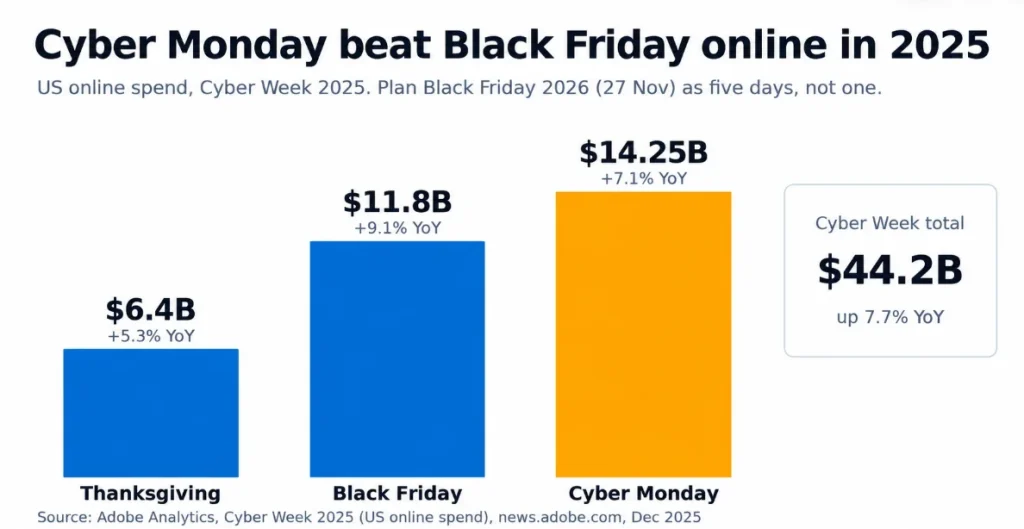
Here are four key trends to consider when planning your Black Friday marketing strategy for 2026.
| Key trend | Supporting data | What it means for marketers |
| Black Friday is growing faster | Adobe forecasts Black Friday 2026 online sales of $12.9B (+9.2%), compared with Cyber Monday’s $15.1B (+6.2%). | Plan distinct campaigns for both shopping days to capture different buying opportunities. |
| eCommerce demand remains strong | Shopify merchants generated $14.6B in global sales during BFCM 2025, up 27% year over year. | Prepare your online store, inventory, and marketing channels for increased seasonal demand. |
| Email and SMS play a major role | Klaviyo reported that email and text messaging drove 42% of BFCM GMV across its customer base in 2025. | Combine email and SMS to engage existing customers and encourage purchases. |
| AI-assisted shopping is expanding | Adobe predicts AI-driven traffic to U.S. retail websites will increase 130% YoY during the 2026 holiday season. | Keep product information accurate and easy to discover as AI becomes part of the shopping journey. |
These trends highlight the importance of reaching customers across multiple touchpoints. Rather than relying on discounts alone, businesses should coordinate their marketing channels to engage shoppers throughout the Black Friday shopping period.
How to build a profitable Black Friday marketing plan
Before launching your campaigns, you need a clear plan for what to promote, who to target, and how much to spend. These three steps will help you build a Black Friday marketing strategy that balances sales growth with profitability.
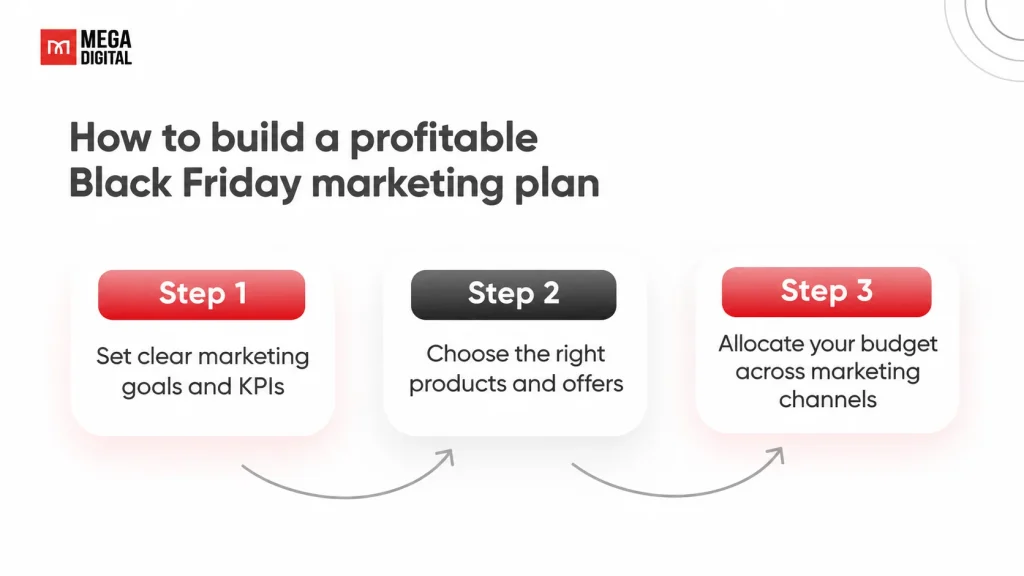
Step 1: Set clear marketing goals and KPIs
Start by identifying your priorities, whether it’s acquiring new customers, increasing revenue from existing shoppers, or clearing seasonal inventory.
Choose measurable KPIs such as conversion rate, customer acquisition cost (CAC), average order value (AOV), and return on ad spend (ROAS). Use previous campaign results as benchmarks to set realistic targets based on your budget and inventory capacity.
Step 2: Choose the right products and offers
Review your bestsellers, profit margins, inventory levels, and customer demand to identify which products are worth promoting.
Instead of applying storewide discounts, consider tiered discounts, product bundles, or gifts with purchase. Calculate your break-even ROAS before finalizing offers to ensure your campaigns remain financially sustainable.
For example, with a 40% contribution margin before advertising, your break-even ROAS is 2.5x. This means you need at least $2.50 in revenue for every $1 spent on advertising to cover your costs.
Step 3: Allocate your budget across marketing channels
Allocate your budget based on each channel’s role in the customer journey and previous campaign performance rather than splitting it equally.
| Marketing channel | Primary purpose | Budget consideration |
| TikTok & paid social | Attract new audiences and generate product interest. | Test creatives early and scale high-performing ads. |
| Google Search & Shopping Ads | Reach shoppers actively searching for products. | Prioritize high-intent keywords and relevant products. |
| Retargeting ads | Re-engage visitors who haven’t purchased. | Focus on qualified audiences and control ad frequency. |
| Email & SMS | Engage existing customers and encourage purchases. | Account for platform and messaging costs. |
Keep part of your budget flexible so you can adjust spending based on campaign performance throughout Black Friday and Cyber Monday.
12 Black Friday marketing strategies to stand out in 2026
Standing out during Black Friday takes more than great deals. Here are 12 practical strategies to capture shoppers’ attention and turn more of that interest into purchases.
1. Build your email list early
Your Black Friday emails won’t do much if you don’t have enough interested subscribers. Start collecting signups weeks before the sale with VIP popups, early-access invitations, or exclusive offers.
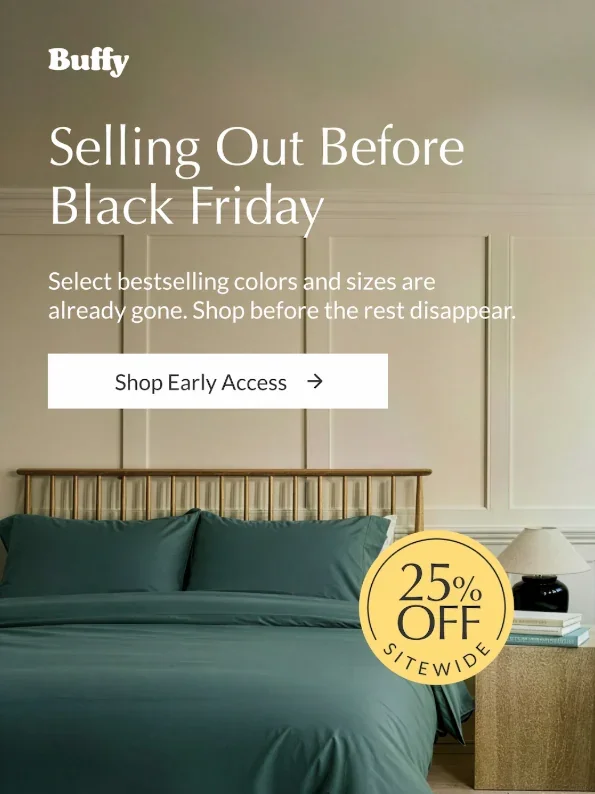
Take Buffy, for example. The bedding brand gave its VIP subscribers early access to Black Friday deals while highlighting that popular colors and sizes might sell out. You can use a similar approach with a benefit-driven CTA like “Unlock Early Access” to make signing up worthwhile.
2. Experiment with your timing
Why wait until Friday when everyone else is launching their biggest promotions? Starting earlier can help your campaign reach shoppers before their inboxes become crowded.
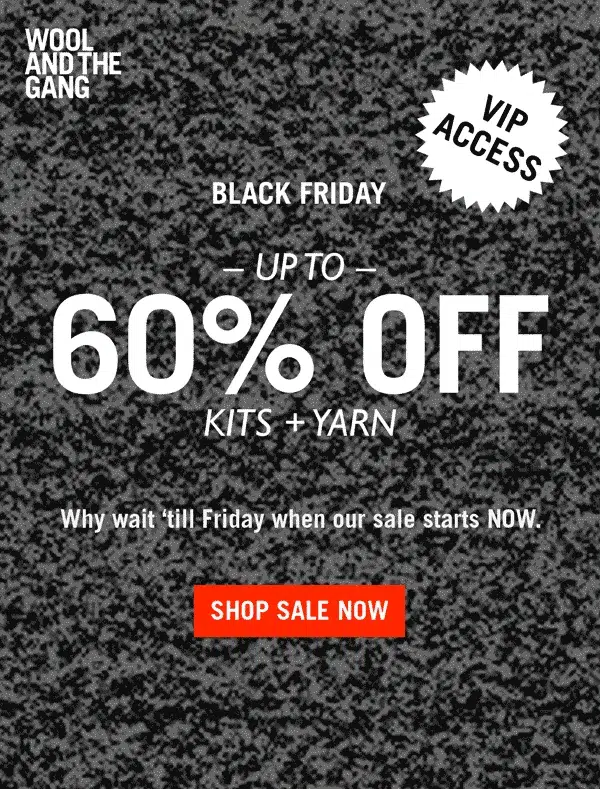
Wool and the Gang took this approach with Black Thursday, launching its sale a day early. The brand also recommended specific discounted products in its emails, helping subscribers find something worth buying.
Consider testing early-access sales or adjusting your promotional schedule to stand out from competitors.
3. Offer more than discounts
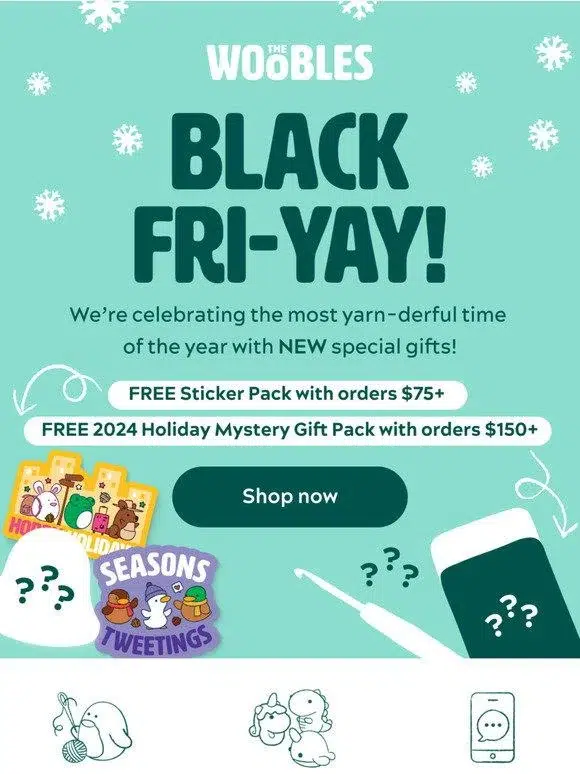
Big discounts aren’t the only way to win over Black Friday shoppers. Free shipping, loyalty points, and complimentary gifts can make your offers more attractive without cutting prices further.
Shinesty used a gift-with-purchase promotion that rewarded customers with different gifts depending on how much they spent. Each gift also had a stated value to highlight the benefit.
Try offering rewards above your usual average order value (AOV), but calculate the additional costs before launching.
4. Personalize your offers
Not every customer wants the same Black Friday deal. Someone buying for the first time may respond differently from a loyal customer who already knows your products.
Segment your audience using purchase history, browsing behavior, and engagement. For example, give VIP shoppers early access, recommend bestsellers to new visitors, and remind cart abandoners about products they’ve considered.
The more relevant your messaging, the less you’ll need to rely on sending the same promotion to everyone.

5. Partner with TikTok creators
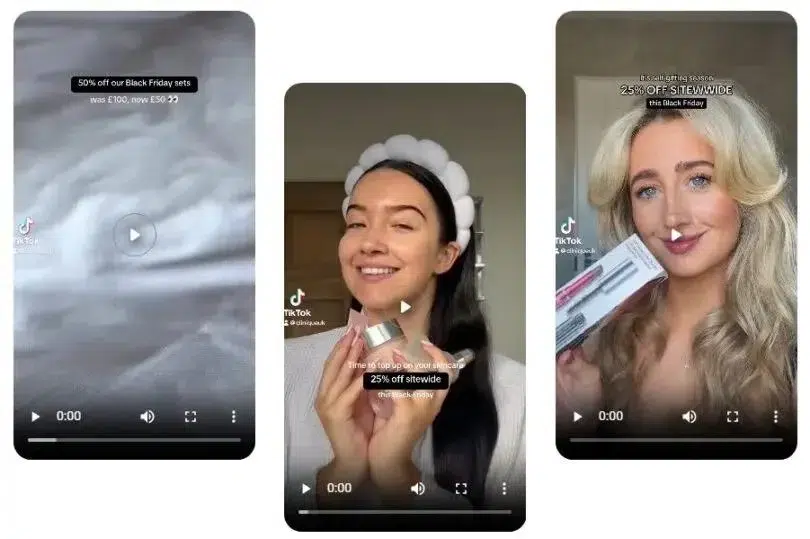
Shoppers don’t always want another promotional graphic in their feeds. Sometimes, seeing someone demonstrate a product is far more engaging.
Work with relevant TikTok creators on gift guides, unboxing videos, or product reviews that introduce your Black Friday offers naturally.
You can also turn eligible creator posts into TikTok Spark Ads with their authorization. Focus on creators whose audiences match your customers, and test different video hooks before increasing your budget.
6. Capture shoppers with Google Ads
Some Black Friday shoppers already know what they want. They’re searching for specific products, comparing prices, and looking for the best available offers.
Use Google Search Ads to reach these high-intent customers, while Shopping Ads can showcase your products with images and prices directly in search results.
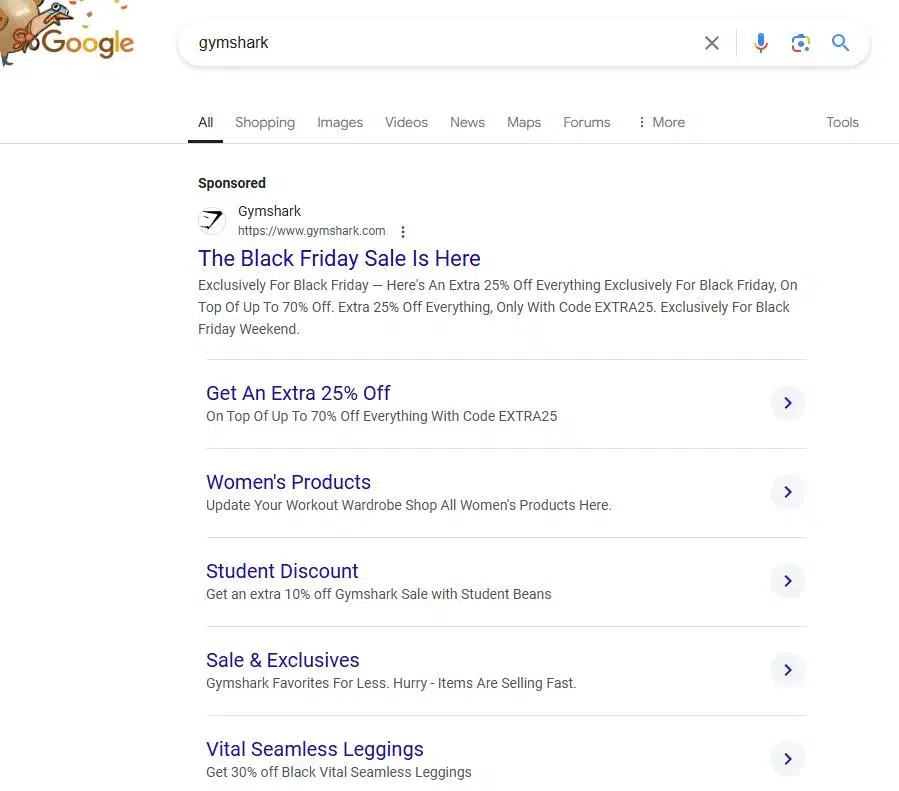
Effective Black Friday Google Ads strategies also require accurate product feeds, promotional prices, and inventory information to ensure shoppers see the right offers.
7. Bring interested shoppers back
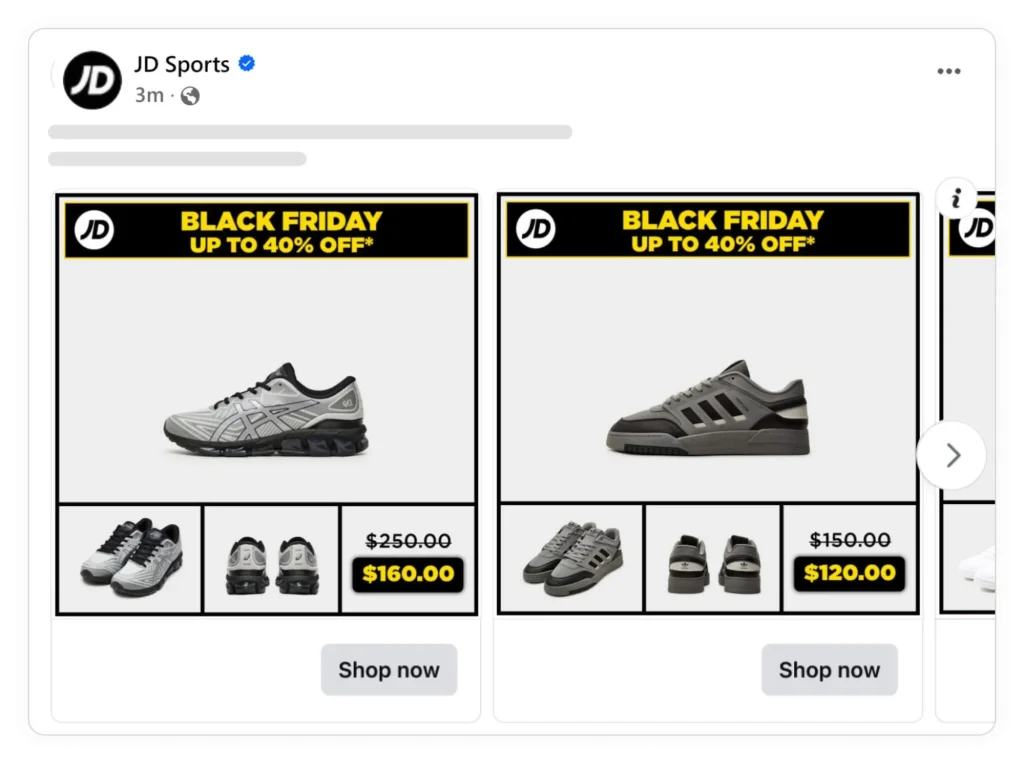
A shopper who leaves your website isn’t necessarily a lost customer. They may simply be comparing deals or waiting to make a decision.
Use retargeting ads to reconnect with visitors who viewed products, added items to their carts, or engaged with your content.
When running Black Friday Facebook Ads, tailor your retargeting messages with relevant products, customer reviews, or genuine offer deadlines. Remember to exclude recent purchasers when appropriate and monitor ad frequency to avoid overwhelming your audience.
8. Make your emails worth opening
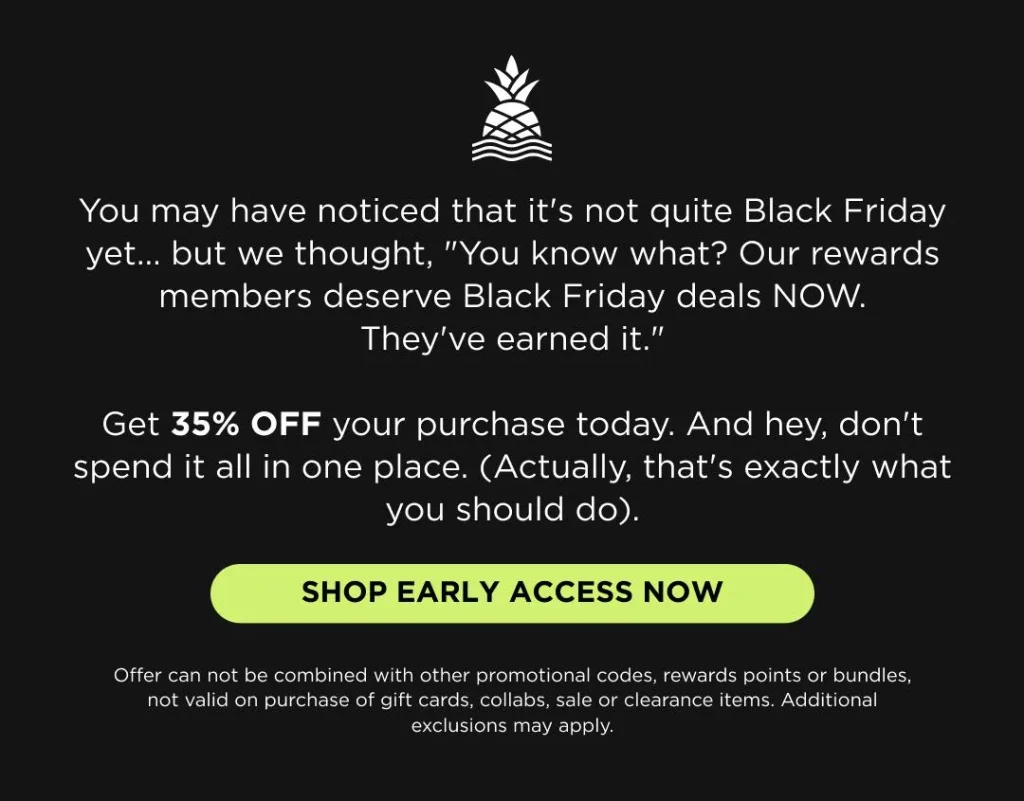
During Black Friday, shoppers receive countless emails promising the biggest deals. A familiar subject line can easily disappear into the crowd.
Sunski stood out in 2025 with a more conversational approach. Its subject line, “Thank god our sale ends tomorrow”, sounded like a real person rather than another generic promotion.
Among the most effective Black Friday email marketing ideas are personalized subject lines, early-access announcements, and timely reminders. Combine these with selective SMS messages to keep customers engaged throughout the sale.
9. Make your landing pages convert
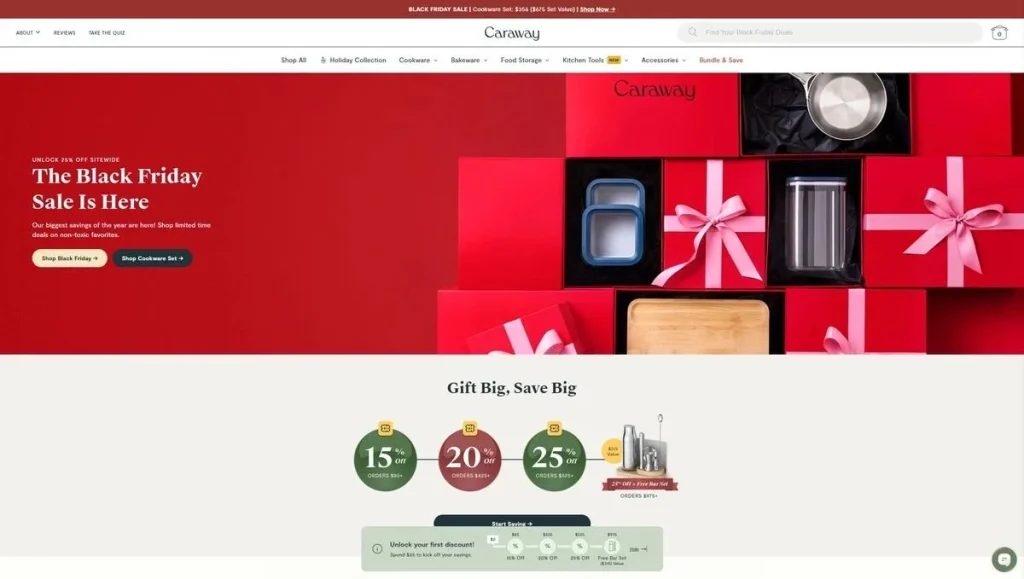
You’ve paid to bring shoppers to your website. Don’t lose them because they can’t find the offer they clicked on.
A Black Friday landing page should make the promotion immediately clear, with visible prices, relevant product recommendations, and an easy-to-find CTA.
Keep your pages mobile-friendly, simplify checkout, and display shipping costs and promotion conditions upfront. Most importantly, make sure your landing page delivers exactly what your ads promise.
10. Automate your cart recovery
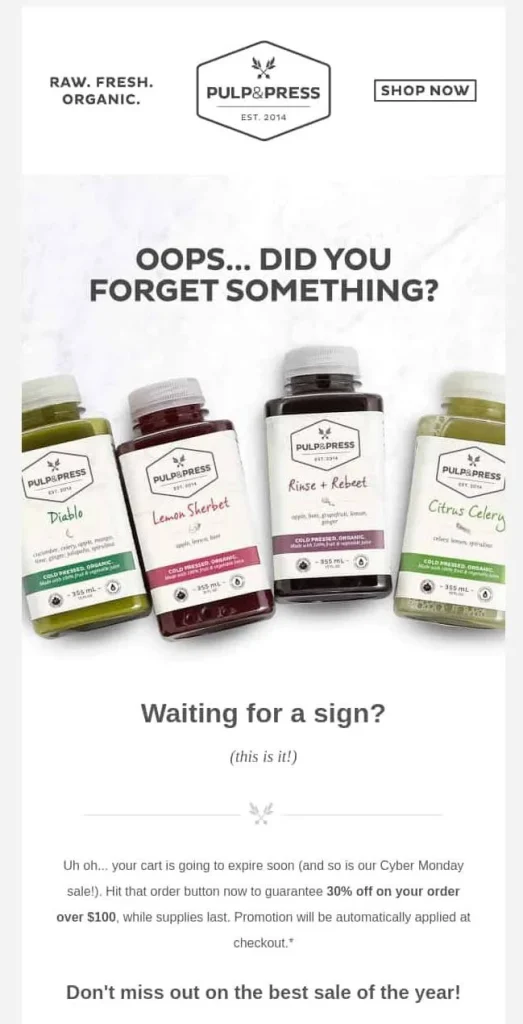
Black Friday shoppers often add products to their carts, only to leave while comparing other offers. That’s where abandoned cart automation comes in.
Set up a short email sequence that reminds shoppers about their products, addresses common concerns, and links directly back to checkout.
You can also use browse abandonment and post-purchase workflows to follow up at different stages. Just make sure cart reminders stop once someone completes their purchase.
11. Make your promotion memorable
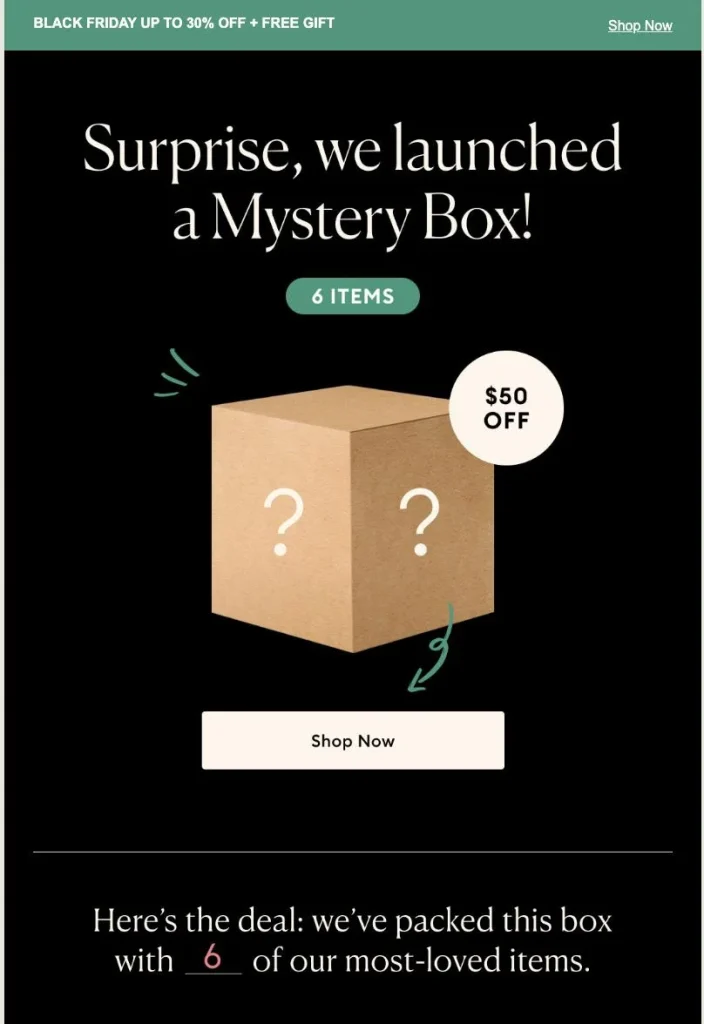
When every brand is shouting about discounts, a little creativity can go a long way.
Death Wish Coffee created curiosity with a Black Friday email featuring a mystery gift code. Customers had to visit checkout to discover the value of their surprise.
You could try mystery gifts, exclusive product reveals, or a branded Black Friday event. Give customers something worth remembering beyond the discount percentage, while keeping offer conditions clear.
12. Tease your next campaign
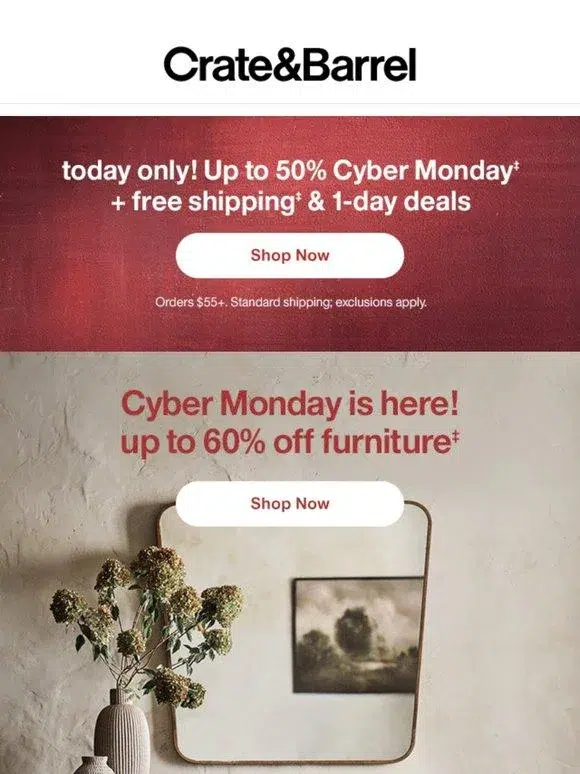
Black Friday may end on Friday, but your marketing shouldn’t. Cyber Monday offers another opportunity to reach shoppers who haven’t purchased yet.
Man Crates kept the momentum going by teasing its upcoming Cyber Monday promotion immediately after Black Friday.
Try introducing a fresh offer, highlighting different products, or giving your next campaign a new angle. Send targeted reminders to interested shoppers, then transition into post-purchase engagement once the sale ends.
How to measure and optimize your Black Friday marketing performance
Track key metrics like conversion rate, CAC, AOV, and ROAS to evaluate your Black Friday campaigns. Use these insights to identify performance issues and make timely adjustments.
Here are some common performance signals and how to respond:
| Campaign signal | What you should do |
| High CTR, low conversion rate | Review landing page speed, pricing, offer clarity, and checkout experience. |
| High ROAS, low profitability | Recalculate margins after discounts, advertising costs, and fulfillment expenses. |
| Rising customer acquisition cost (CAC) | Refine audience targeting, refresh ad creatives, and review bidding strategies. |
| High traffic, low AOV | Test product bundles, upsells, or free-shipping thresholds. |
| High cart abandonment rate | Check unexpected shipping fees, payment issues, and checkout friction. |
Review performance throughout Black Friday and Cyber Monday, adjusting budgets based on results. Focus on profitable conversions rather than revenue alone to ensure your marketing efforts deliver sustainable returns.
Common Black Friday marketing mistakes to avoid
Even a well-planned campaign can underperform if small details are overlooked. Here are six common mistakes to watch out for:
- Launching campaigns too late: Prepare your offers, creatives, and target audiences early to build anticipation before Black Friday.
- Offering excessive discounts: Calculate profit margins and break-even ROAS before setting promotional prices to avoid sacrificing profitability.
- Ignoring audience segmentation: Tailor your offers and messages to new shoppers, loyal customers, and returning visitors.
- Using inconsistent messaging: Ensure prices, offers, and promotion terms match across ads, emails, and landing pages.
- Overlooking inventory and fulfillment: Check stock availability, shipping capacity, and customer support readiness before launching.
- Neglecting post-sale engagement: Follow up with customers through order updates, personalized recommendations, and loyalty incentives to encourage repeat purchases.
FAQs about Black Friday marketing strategy
Ideally, start planning 4 – 6 weeks before Black Friday to prepare offers, build audiences, and test campaigns. Begin promoting your deals 1–2 weeks ahead to generate interest before the main shopping event.
It depends on your audience and products. TikTok and paid social help generate product interest, Google Ads captures high-intent shoppers, while email and SMS are effective for engaging existing customers and encouraging purchases.
There’s no fixed budget for every business. Base your spending on profit margins, campaign goals, historical performance, and target ROAS. Reserve some budget for scaling campaigns that perform well.
Both audiences matter. Use paid advertising to attract new shoppers and personalized email or loyalty offers to re-engage existing customers. Balance your efforts based on acquisition costs, customer value, and campaign goals.
Conclusion
Getting Black Friday right takes more than great deals. It’s about reaching the right shoppers, giving them a reason to buy, and making every marketing dollar count. We hope these 12 strategies help you plan a more successful and profitable Black Friday campaign in 2026.
If you’re looking to reach more customers through TikTok, Mega Digital can help. As a TikTok Premier Partner, we help businesses create targeted ad campaigns, improve performance, and turn more potential customers into buyers.