

Is your marketing not delivering the same results despite trying new strategies? You’re in the right place! Refresh your campaigns and break the plateau with TikTok Ads behavior targeting. This tool helps you reach new potential customers more likely to engage and take action. Let’s explore how TikTok ads behavior targeting can impact your campaign!
QUICK SUMMARY
- Explains what TikTok Behavior Targeting is and how it uses recent in-app actions (video interactions, creator engagement, hashtag activity) to reach higher-intent users.
- Breaks down the three behavior types with use cases, intent levels, and examples to help advertisers target more accurately than with interest targeting alone.
- Highlights key benefits including better audience testing, higher engagement, improved conversion rates, and more cost-efficient ad spend.
- Provides setup steps, real-world case studies, and the latest 2026 best practices to maximize your ROAS.
What is TikTok Ads Behavior Targeting?
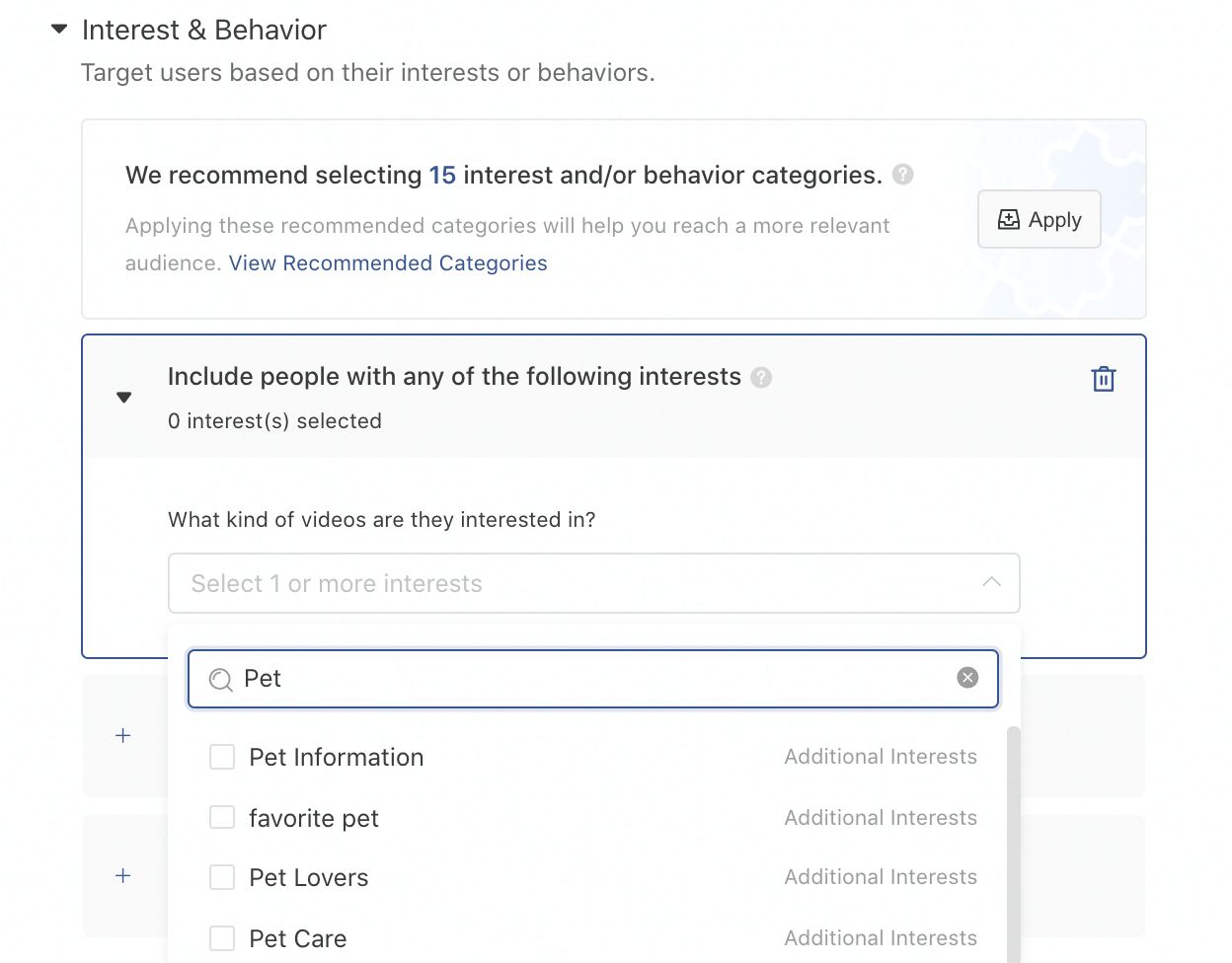
Behavior targeting on TikTok allows advertisers to deliver ads based on a user’s recent in-app behavior. Unlike interest targeting, which focuses on long-term content consumption, behavior targeting focuses on a viewer’s recent interactions with content on TikTok.
According to TikTok’s internal benchmarks, optimized targeting approaches (including behavior signals and Smart expansions) can reduce CPA by 15% on average compared to narrower setups, while capturing higher immediate user intent.
There are three main behavior categories that advertisers can use for targeting:
- Video-related Interactions: They refer to actions that show users’ engagement with organic video content. These actions are limited in video completion, like, comment, and share within 7 or 15 recent days.
- Creator Following Interactions: This category includes two types of engagements: Following and Viewing Homepage. Advertisers can target users that follow specific types of creators or users who have viewed the profile pages of specific creators in the last 30 days.
- Hashtag Interactions: This category allows advertisers to target users who watched TikTok videos with certain hashtags.
3 Types of Behavior Targeting on TikTok
TikTok Behavior Targeting is built around three key behavioral signal groups. Each reflects how users recently interact with content on the platform. Understanding how these categories work will help you reach audiences with higher intent and improve campaign performance.
Below is a clear breakdown of each type, including practical examples and recommended use cases.
| Type | Based on | Intent Level | Best For |
|---|---|---|---|
| Video Interactions | Recent video actions | Medium–High | Content-heavy verticals (beauty, lifestyle, fashion) |
| Creator Interactions | Following or visiting creators | High | Influencer-driven niches |
| Hashtag Interactions | Videos containing specific hashtags | Medium | Niche communities (fitness, cooking, hobbies) |
1. Video Interactions
Video Interactions let advertisers target users based on how they engaged with specific types of videos within the last 7 or 15 days.
TikTok tracks four main actions:
- Watched to the end – completed the video
- Liked – tapped “Like”
- Commented – left a comment
- Shared – shared the video
Pro Tip: If your goal is pure conversion, prioritize the “Watched to the end” and “Shared” behaviors. These actions require the highest active engagement from the user and typically yield the strongest purchase intent compared to just leaving a “Like”.
When to use it
- You want to reach users who showed stronger engagement than general interests.
- You are optimizing for video views, engagement, or conversions.
- You operate in content-driven verticals like beauty, fashion, lifestyle, cooking, or home products.
Pros
- Helps build an audience with higher engagement rates.
- Recent behavior signals → better targeting accuracy than Interest Targeting.
Cons: Targeting too many interaction types at once may dilute audience quality.
Example: A fashion brand wants to reach users who recently watched outfit try-on videos.
→ Select “Watched to the end” + category “Fashion & Style” for better performance.
2. Creator Following Interactions
Creator Following Interactions focus on users who followed or visited creators’ profiles within the past 30 days.
You can target two behaviors:
- Followed – users who followed creators in selected categories
- Viewed Profile – users who checked creators’ profile pages
Creators can be categorized by niche such as:
- Beauty creators
- Fashion creators
- Gaming creators
- Food & cooking creators
- Tech creators
- Micro / mid-tier influencers
When to use it
- You want to target highly engaged communities around specific creator niches.
- You run verticals with strong influencer impact (beauty, skincare, lifestyle, food).
- You’re optimizing for conversions driven by creator-powered trust.
Pros
- Very precise when paired with the right creator category.
- Users who follow creators usually demonstrate higher purchase intent.
Cons: Selecting too many creator types at once can reduce targeting accuracy.
Example: A skincare brand can target users who follow beauty creators—a group already interested in skincare routines and product reviews.
3. Hashtag Interactions
Hashtag Interactions help you reach users who watched videos containing specific hashtags in the last few days. Common examples include:
- #skincare
- #tiktokmademebuyit
- #homecooking
- #petcare
- #fitness
- #running
When to use it
- Your products belong to a niche supported by strong hashtag communities.
- You want to target users based on content themes rather than creator types.
- You’re refining your audience toward specific interests or hobbies.
Pros
- Highly effective for niche audiences.
- Great for A/B testing multiple content themes quickly.
Cons: Broad hashtags (#foryou, #viral) → low-quality traffic.
Example: If you’re promoting kitchen tools → Target users who watched videos with #kitchenhacks or #easyrecipes in the past 7–15 days.
Behavior Targeting vs Interest Targeting: What’s the Difference?
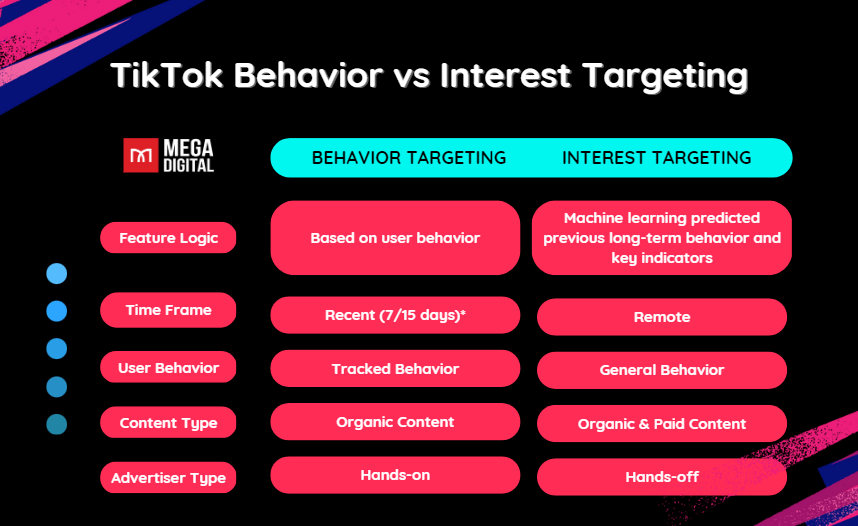
TikTok Ads Behavior and Interest Targeting are both based on user behavior. However, they are still different to some extent. Let’s make a comparison in the following table.
Benefits of TikTok ads behavior targeting option
Behavior targeting is a vital tool for TikTok advertisers, providing a variety of advantages that can help you reach your target audience more efficiently and get better results.
- Audience Testing: Quickly identify your ideal audience and test behavior hypotheses during the initial campaign stages.
- Overcome Ad Fatigue: Unlock a fresh source of high-intent users when your existing targeting criteria reach a plateau.
- Cost-Effective Advertising: Minimize wasted ad spend by focusing your budget strictly on users actively showing interest in your niche.
- Higher Engagement & Conversions: Target users with immediate purchase intent to naturally boost engagement, conversion rates, and overall revenue.
For example, Mega Digital helped Chelghoum (an e-commerce dropshipping brand) leverage customer behavior analysis and targeted TikTok Ads strategies to achieve outstanding results:
- Maintained a highly stable cost-per-acquisition (CPA) of $4.09.
- Boosted their overall ROAS to 2.8x.
- Successfully aligned product selection with high-intent audiences.
How to set up TikTok ads behavior targeting
Setting up behavior targeting for your TikTok advertisements campaign can help you reach a more targeted audience and achieve better results. However, understanding the procedures required in setting up behavior targeting is necessary to ensure the success of your campaign.
Video Interactions
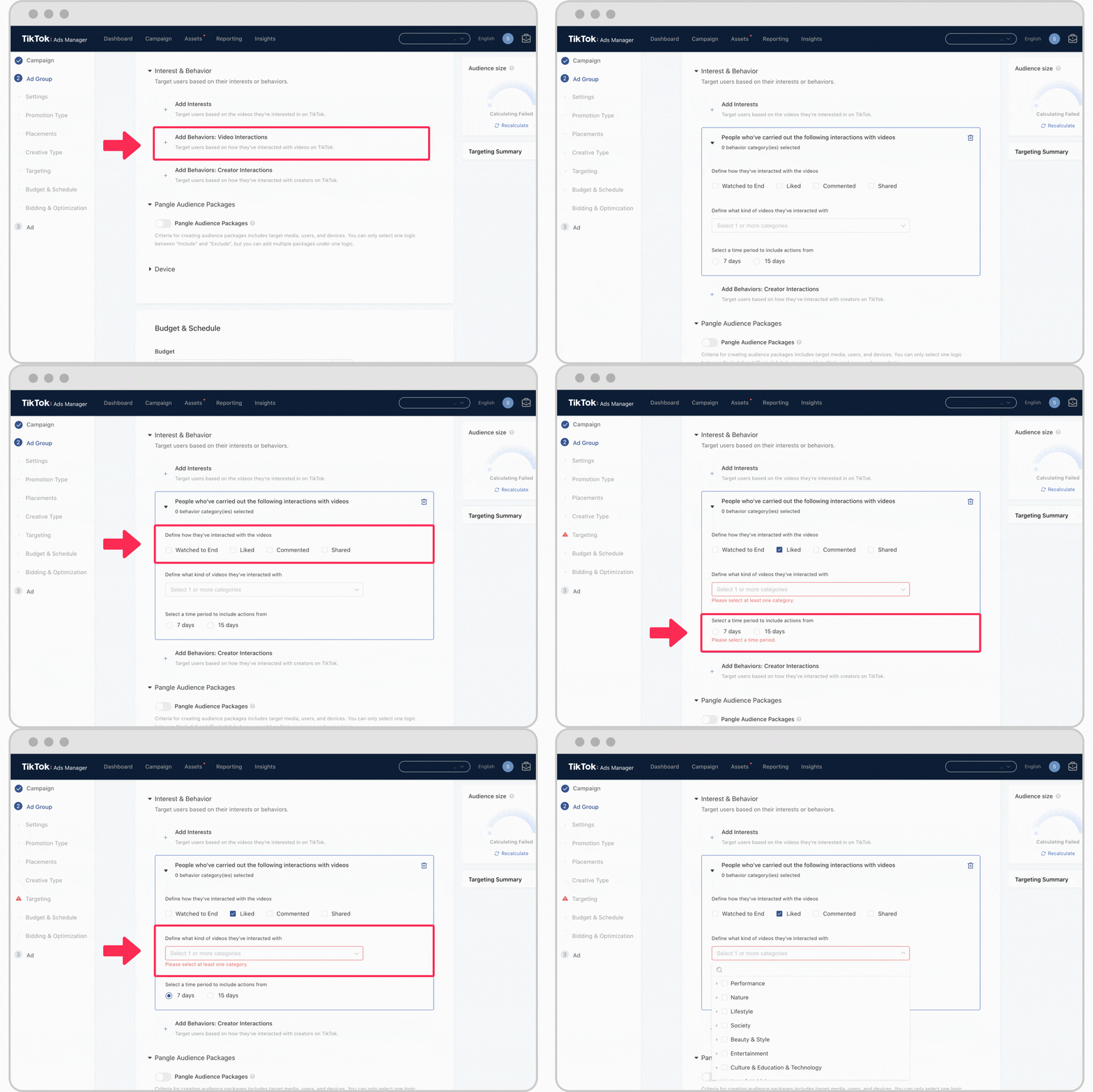
To target audiences who interact with your content, you can follow these steps:
- Step 1: Click Add Behavior: Video Interaction
- Step 2: Select the desired user behavior you want to target: watched to the end, liked, commented, or shared
- Step 3: Determine the look-back time: 7 days or 15 days.
- Step 4: Search for and select the content Category you want to target at the box “Define what kind of video they’ve interacted with”.
Creator Following Interaction
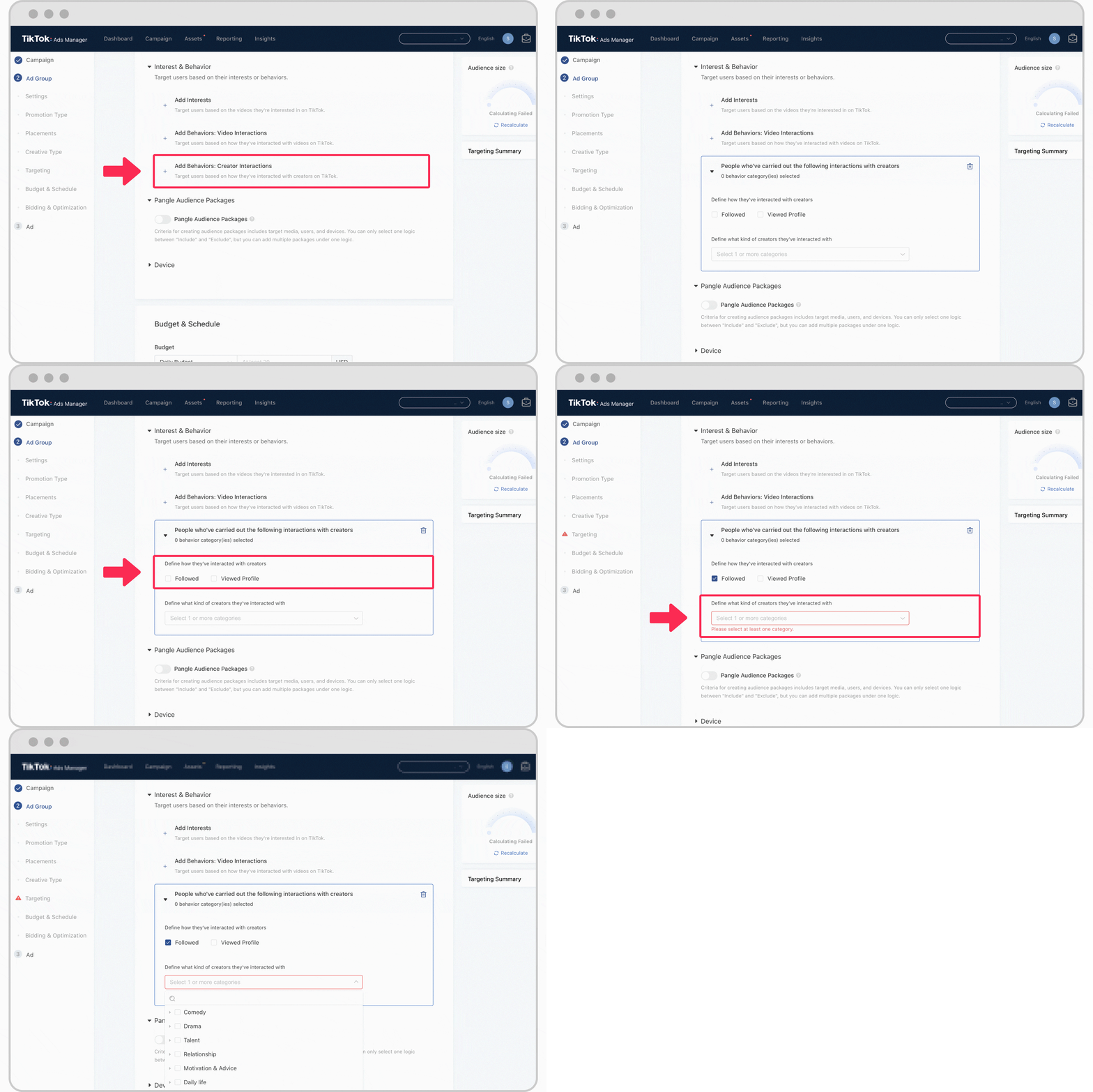
Preferring users who followed certain types of Creators on TikTok or those who viewed the homepage of certain types of Creators on TikTok, let’s do as follows:
- Step 1: Click Add Behaviors: Creator Interactions
- Step 2: Check the box to select either Followed or Viewed Profile
- Step 3: At the ‘Define what type of creative they’ve interacted with’, a drop-down list shows up, and you can choose the one that fits your requirement.
Hashtag Targeting
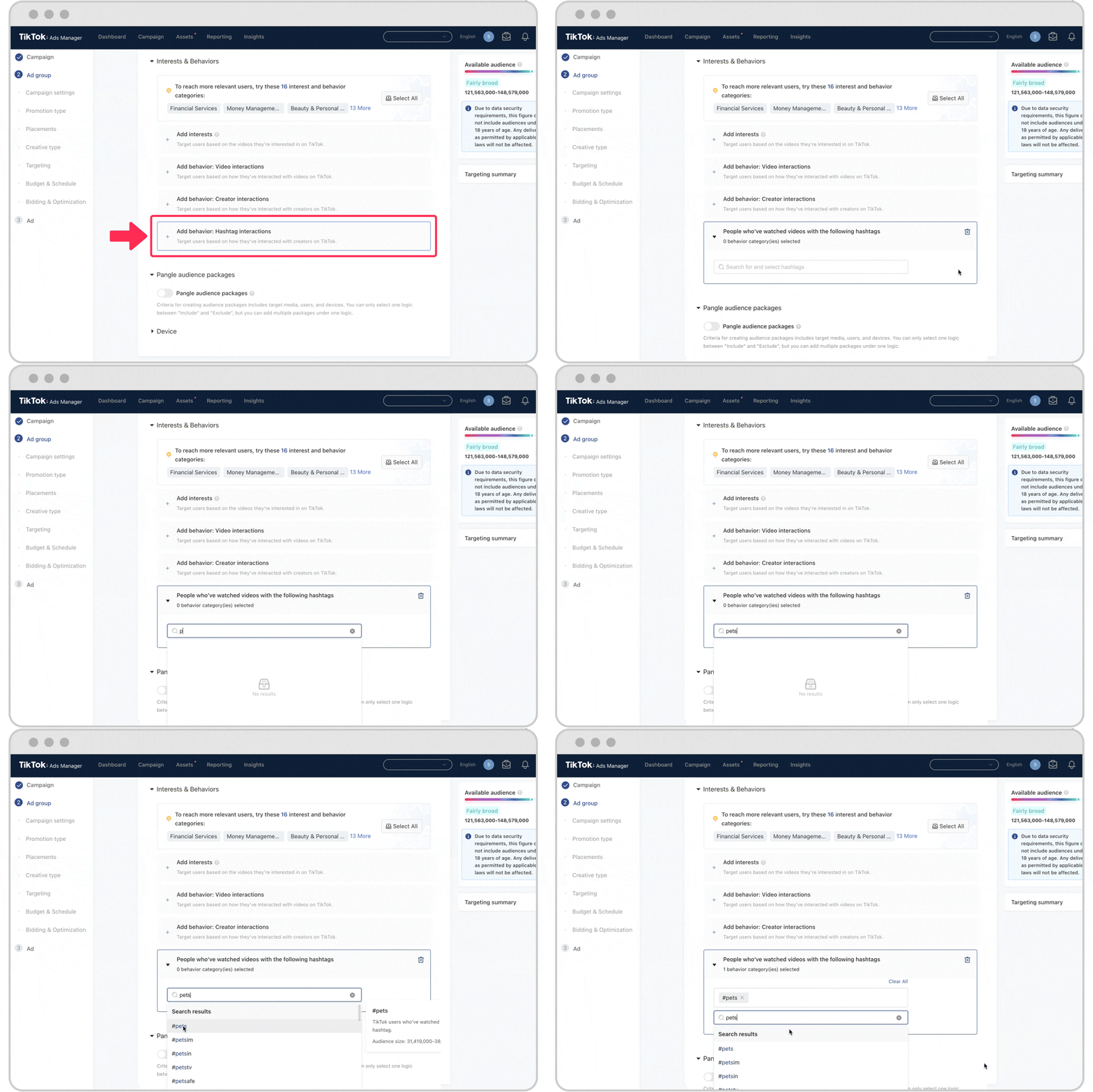
With Hashtag Targeting, you can target users who watched TikTok videos with certain hashtags. To enable Hashtag Targeting:
- Step 1: Click on the section Add Behavior: Hashtag interactions.
- Step 2: Find relevant hashtags in the segment ‘People who’ve watched videos with the following hashtag’.
- Step 3: Select the hashtags to target.
Important Note: When combining multiple behavior categories in one Ad Group, be careful not to make your audience size “Too Narrow”. A hyper-specific audience might restrict the algorithm from exploring and finding the cheapest conversions for you.
Best Practices to Improve Performance
Behavior Targeting works best when it’s configured and refined correctly. To stay ahead of the competition this year, follow these key strategies:
- Pick the right look-back window: Start with 15 days (broader reach, testing), then narrow to 7 days (smaller audience, stronger intent) once you identify high-intent patterns.
- Embrace Smart+ & AI Expansion: In 2026, TikTok’s algorithm is heavily AI-driven. Use manual behavior targeting to provide strong initial signals, then turn on Smart Targeting expansion to let the AI find similar high-intent users outside your predefined rules.
- Avoid stacking too many behaviors: Choosing too many actions (like + comment + share + follow) dilutes the audience and weakens signals. Use one or two behaviors per ad group.
- Match behavior signals with the right objective: Conversions → Watched to End, Followed. Engagement → Video Interactions. Leads → Hashtag + Profile Views.
- Stabilize learning with high-trust Agency Ad Accounts: Behavior signals work best when your account has stable delivery. High-trust accounts (like Mega Digital’s TikTok Ads Agency Accounts) provide faster learning, better pattern recognition, and lower risk of sudden performance drops.
FAQs about TikTok Ads Behavior Targeting
Yes, you can. However, doing so will narrow your audience significantly because users must meet BOTH criteria. It is highly recommended to test them in separate ad groups first to evaluate which targeting type performs better.
Aim for at least a “Fair” or “Broad” rating on the TikTok Ads Manager audience indicator. If your audience is too “Narrow”, the ad delivery algorithm won’t have enough data points to optimize your campaigns effectively.
If you are at the Top of Funnel (TOF) or just starting to test an audience, use the 15-day window for a broader reach. If you are running Bottom of Funnel (BOF) conversion campaigns and want to capture users with the highest immediate intent, narrow it down to the 7-day window.
>>> Read more: TikTok Ads Geo-Targeting 101: How to Reach Local Audience
Final word
TikTok provides advertisers with a variety of methods for targeting their desired audience that go beyond behavior targeting. These possibilities include interest, audience, and geo-targeting, which can be tailored to the campaign’s goals. While TikTok ads behavior targeting is a valuable tool for growing your customer base, it is critical to explore additional targeting choices to see which ones work best for your ads. We’ve collected a complete list of targeting options, as well as their associated benefits. Make sure to have a look!