

App Store Optimization (ASO) is the ultimate strategy to combat skyrocketing user acquisition costs and drive consistent, high-quality organic installs. With millions of apps competing for visibility, mastering ASO is what separates top-charting apps from the invisible ones. In this blog post, we break down the fundamental concepts, algorithm mechanisms, advanced execution strategies, and the best tools you need to master ASO in 2026.
Quick Summary
- App Store Optimization drastically reduces user acquisition costs and drives sustainable organic downloads.
- App store algorithms in 2026 rely heavily on artificial intelligence and semantic search to understand user intent.
- Apple and Google process keywords differently and demand completely separate optimization strategies.
- Publishers must leverage advanced tactics like AI-generated metadata and custom product pages to remain competitive.
- Synchronizing organic ASO with paid TikTok ads generates massive install velocity to boost top-chart rankings.
What is App Store Optimization?
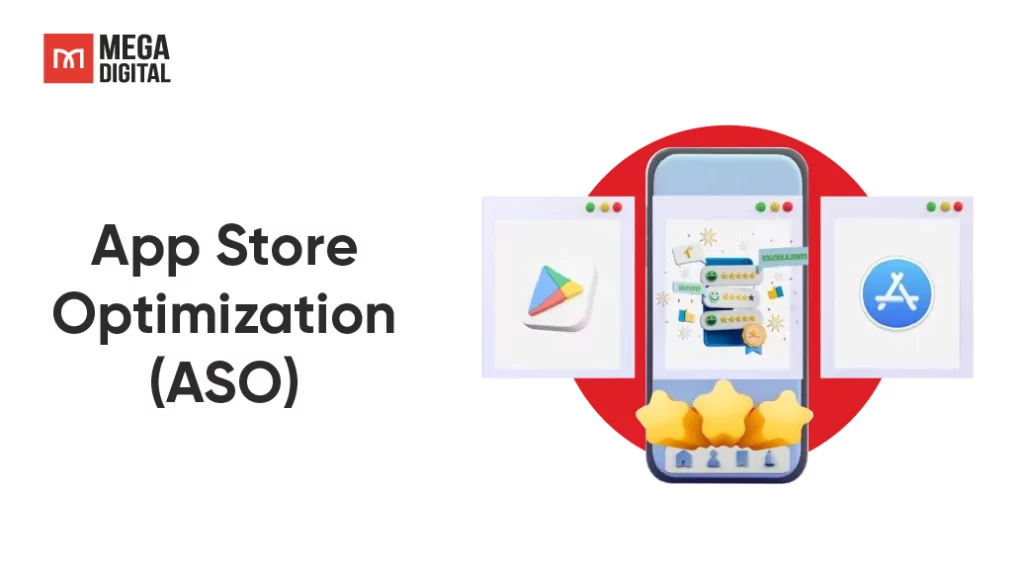
App Store Optimization (ASO) is a specialized digital marketing strategy originating from traditional SEO principles, featuring the continuous improvement of an app’s search visibility and download conversion rates on major mobile platforms.
ASO involves tweaking various elements of an app’s listing, such as titles, keywords, and screenshots, so that when a user types a specific query into the search bar, your app appears at the top of the results. The primary goal is not just to get seen, but to persuade the user to hit the “Get” or “Install” button.
According to Apple Search Ads data, over 65% of all app downloads occur directly immediately after a user performs a search, highlighting the immense power of search intent.
Why is app store optimization important?
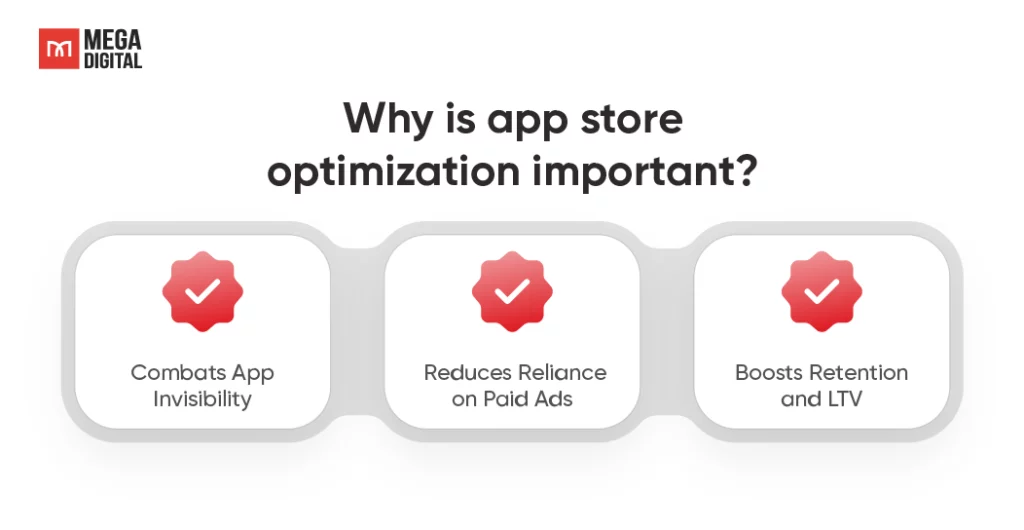
In today’s highly competitive market of over 5 million apps, here is why ASO is matter for growth:
- Combats App Invisibility: Without ASO, your app is practically invisible. A strong strategy acts as an organic engine, driving high-quality, free traffic to your listing 24/7.
- Reduces Reliance on Paid Ads: Relying solely on paid advertising is unsustainable for most indie developers and even large studios, as bidding costs continue to rise.
- Boosts Retention & LTV: Users who discover apps organically through search tend to have higher retention rates and lifetime value (LTV) compared to those acquired through aggressive ad placements.
According to industry data, including insights from the AppTweak ASO Benchmarks, search drives the majority of organic downloads, with top-ranking apps capturing the bulk of traffic for key terms.
ASO differences between the App Store vs. Google Play
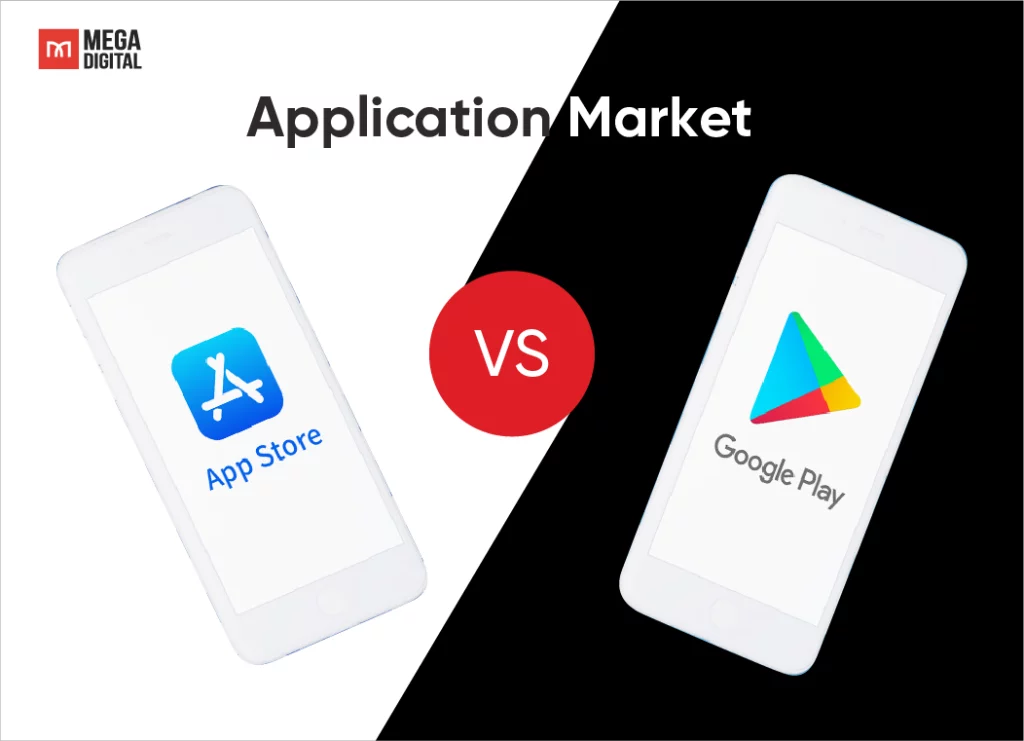
The Apple App Store relies on a hidden keyword field, while Google Play scans your entire long description for relevance. This fundamental difference requires distinct, separate optimization strategies for iOS and Android.
| Optimization Feature | Apple App Store | Google Play Store |
| Keyword Field & Scanning | Provides a specific 100-character hidden field where developers input target keywords. The algorithm relies strictly on this, alongside the App Name and Subtitle. | No hidden keyword field. It functions like web SEO, crawling the Short Description and the 4,000-character Long Description to identify keywords and context. |
| Visuals in Search Results | High visual priority. Autoplay App Preview videos and the first three screenshots are highly visible directly in the search results page | Generally only shows the App Icon and Title in search. Screenshots are usually only seen once the user clicks into the specific app listing. |
| Specific Requirements & Processes | Famously strict manual review process, meaning metadata updates take longer to be approved by Apple. | Requires a Feature Graphic, which acts as a billboard at the top of your app page, playing a major role in the conversion rate. |
How App Store Algorithms Work
App store algorithms function by evaluating a combination of text relevancy, user engagement metrics, and historical performance data to determine an app’s precise ranking position for a specific query.
For example: When a user searches for “puzzle game”, the algorithm first scans its database for apps containing that exact or related keyword. Once the relevant apps are filtered, it ranks them based on performance, primarily focusing on “Install Velocity”, how many downloads an app receives within a specific timeframe.
In 2026, algorithms have heavily shifted toward AI-powered semantic search and Natural Language Processing. They now understand user intent beyond exact keywords. For instance, if your user reviews frequently mention an “easy checkout” or “relaxing music”, the algorithm can rank your app for those specific phrases even if you never explicitly wrote those words in your metadata.
Furthermore, the algorithm monitors what happens after the install. If users uninstall immediately or the app crashes frequently, the algorithm will penalize the ranking to protect the user experience.
Key Elements of App Store Optimization
ASO elements fall into 2 main categories: On-metadata and Off-metadata. Here is how they impact your app’s discoverability and conversions:
On-Metadata Elements
- App Name/Title: The most heavily weighted ranking factor. It must contain your core brand name and the most important, high-volume keyword.
- Subtitle/Short Description: A brief hook used to explain the app’s value proposition while incorporating secondary target keywords.
- Visual Assets: While they do not directly help you rank for keywords, they are the absolute most important factors for Conversion Rate Optimization (CRO). A visually appealing icon and screenshots highlighting UI features turn impressions into installs.
Off-Metadata Elements
- Download Volume & Velocity: The total number of installs and the speed at which you acquire them. A sudden spike in downloads signals to the algorithm that your app is trending.
- Ratings and Reviews: High average ratings (above 4.2 stars) significantly boost algorithm favorability and user trust. The actual text within these reviews now also acts as a keyword source.
- Crash Rate and ANRs: Google, in particular, will drastically downrank applications that have high bug rates or drain battery life, as it creates a poor user experience.
How does App Store Optimization work?
Implementing ASO is a continuous 4-step cycle: keyword research, listing optimization, A/B testing, and performance monitoring. Here is how to execute it practically:
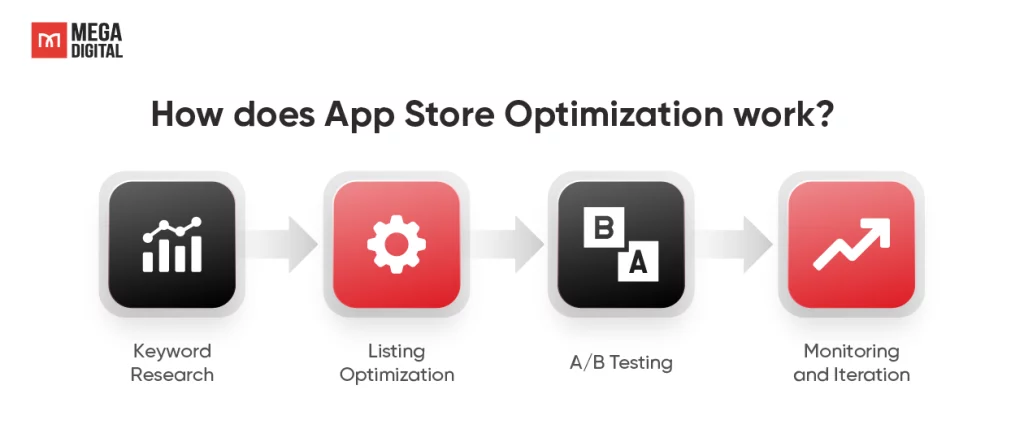
Step 1: Keyword Research
You must identify what terms your target audience uses. Use ASO tools to find long-tail keywords that have decent search volume but low competition. Brainstorming synonyms, competitor names, and feature-related terms is essential.
Pro Tip: For indie developers with a user acquisition budget of < $10k/month, prioritize ranking for specific long-tail keywords and aggressively A/B testing visual assets rather than wasting resources trying to rank for highly saturated, broad terms.
Step 2: Listing Optimization
Once you have your keyword list, strategically place them. Put the most important ones in your App Title. Distribute secondary keywords in the subtitle/short description, and naturally weave them into the Google Play long description or Apple’s hidden keyword field.
Step 3: A/B Testing
Never guess what users like. Utilize features like Google Play Console’s A/B testing tool or Apple’s Product Page Optimization to run two versions of an icon or screenshot simultaneously to see which one yields a higher install rate.
Step 4: Monitoring and Iteration
ASO is not a “set it and forget it” task. Rankings fluctuate daily based on competitor actions and algorithm updates. Monitor your keyword positions weekly and adjust your metadata every 4 to 6 weeks to maintain momentum.
According to SplitMetrics, iterative A/B testing on visual metadata drives significant organic growth in mobile game marketing. For instance, Papaya Gaming achieved a 31% increase in installs through continuous optimization, proving that data-driven updates vastly outperform stagnant listings.
Advanced ASO Strategies for 2026
There are 4 advanced ASO strategies dominating 2026. Below, we detail how to implement these game-changing tactics effectively to outpace competitors.
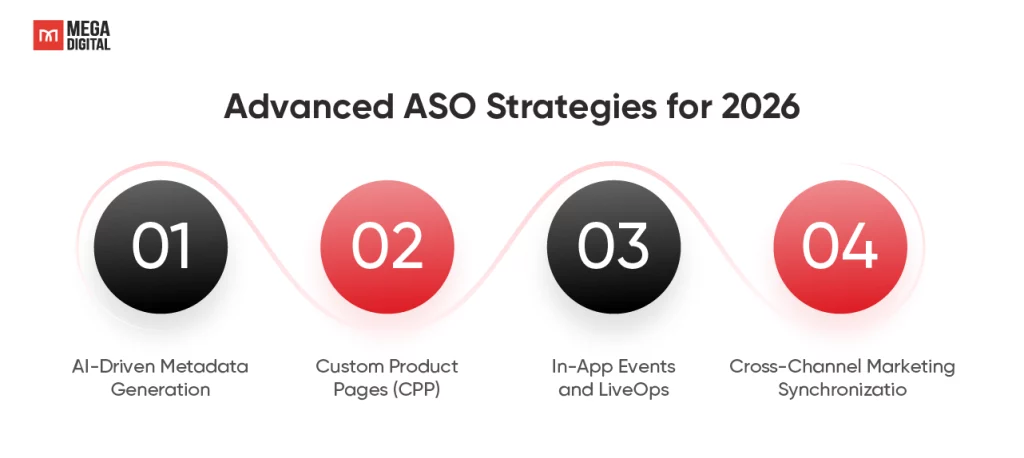
1. AI-Driven Metadata Generation
In 2026, relying purely on manual keyword research is outdated. Top publishers are leveraging specialized AI tools to rapidly generate keyword combinations.
These tools can also write highly localized descriptions for dozens of languages simultaneously. Furthermore, they analyze competitor metadata at scale with unprecedented accuracy.
This intelligent automation allows developers to execute faster A/B testing cycles. Ultimately, it helps identify niche keywords that human analysis might easily miss.
2. Custom Product Pages (CPP)
Both Apple and Google now heavily prioritize personalized user journeys. By utilizing Custom Product Pages (CPP), developers can create multiple tailored versions of their app listing.
These variations can perfectly match specific target audiences, paid ad creatives, or seasonal events. For example, if a user clicks an ad highlighting a “multiplayer feature”, they are directed to a CPP showcasing screenshots of exactly that feature. This targeted approach dramatically increases the conversion rate compared to sending them to a generic landing page.
3. In-App Events and LiveOps
App stores now prominently display live events, challenges, and major updates directly in the search results. Leveraging In-App Events (Apple) or Promotional Content (Google) gives your app massive extra visibility real estate.
Regularly updating your app with LiveOps events signals to the algorithm that your game or app is actively maintained and engaging. This strategy not only attracts new organic downloads but also acts as a powerful re-engagement tool to win back lapsed users.
4. Cross-Channel Marketing Synchronization
To truly win in 2026, publishers must integrate their organic ASO efforts with high-impact paid traffic. Mastering the basics of keywords and icons is no longer enough in a saturated market.
This is where the synergy between ASO and platforms like TikTok Ads becomes a game-changer. Driving massive, targeted traffic via paid ads creates an immediate spike in “Install Velocity”.
This sudden surge tricks the app store algorithm into recognizing your app as “trending”, pushing it higher in organic search results. At Mega Digital, an official TikTok Agency, we provide premium ad accounts and execute campaigns that directly fuel this synergy.
For example, when promoting the game Mini Games: Calm Relax by XGame Studio, Mega Digital synchronized TikTok ads with ASO efforts to manipulate install velocity:
- The Goal: Scaling up the user base efficiently in a crowded market.
- The Execution: We deployed a robust TikTok ad strategy utilizing highly engaging gameplay creatives through our premium agency ad accounts.
- The Result: The massive surge in paid installs provided the exact Off-metadata momentum the Google Play algorithm needed, resulting in a dramatic, sustained increase in organic keyword rankings for “relaxing games” and “mini games”.
Best ASO Tools for Developers in 2026
Having the right software stack is non-negotiable for making data-driven decisions. Here are 4 top-tier ASO tools considered essential for developers in 2026:
- AppTweak: Known as the most accurate keyword volume estimator. It provides actionable insights into which keywords competitors are using and calculates the exact “chance” your app has to rank in the top 10 for a specific term.
- Sensor Tower: The industry standard for enterprise-level app intelligence. It helps developers understand category trends, estimate competitor revenue and downloads, and discover macro-market opportunities.
- Mobile Action: Excellent for ASO, but uniquely powerful for its Apple Search Ads (ASA) and ad intelligence capabilities, allowing you to see exactly what visual creatives your competitors are running across networks.
- AppFollow: The ultimate tool for review and reputation management. It allows you to track user sentiment, automate review replies using AI, and monitor your app’s ratings across both stores.
How to Measure ASO Success
You can accurately measure ASO Success by tracking 4 primary Key Performance Indicators. Ultimately, measuring these metrics ensures your optimization efforts are profitable and moving in the right direction:
- Keyword Ranking Positions: Monitor where your app ranks for target keywords to evaluate the effectiveness of your text-based metadata.
- App Store Impressions: Track how many times your app appears in search results. High impressions combined with low installs indicate that your keywords are working, but your visual assets are failing to persuade users.
- Conversion Rate (CVR): Measure the percentage of users who install after seeing your listing. Conversely, if your CVR is excellent (e.g., above 5%) but total installs are low, your visual assets are strong, but your keyword strategy is too weak to get you seen.
- Organic Install Volume: The total number of free downloads generated from search. It is vital to separate this acquisition metric from visibility metrics to accurately diagnose growth bottlenecks.
FAQs about App Store Optimization
No, ASO is a continuous cycle. You must constantly monitor keyword rankings, update visuals through A/B testing, and adapt to algorithm changes to maintain organic growth.
ASO is the foundation for organic growth, but it works best alongside paid channels like TikTok Ads. Paid traffic boosts install velocity, which directly triggers higher organic search rankings.
The App Title is the strongest ranking signal for keywords. However, your visual assets are the most critical factors for converting that visibility into installs.
Yes. High ratings and positive reviews improve your app’s conversion rate and signal quality to the store algorithms, which leads to higher placement in search results and charts.
Conclusion
In 2026, mastering App Store Optimization is non-negotiable for sustainable mobile growth. While optimizing keywords and visuals builds your organic foundation, the ultimate game-changer is synchronizing ASO with high-impact paid traffic.
By combining App Store strategies with viral TikTok Ads, you create an unstoppable loop of install velocity and top-chart rankings. If you want to dominate the app stores and scale your user base, contact Mega Digital today to unlock your app’s true growth potential!