

Are your visual ads getting views but not enough conversions? As Google Demand Gen replaces Discovery campaigns, marketers need a sharper way to reach high-intent buyers across Google’s visual inventory. In this blog post, we will break down exactly what Demand Gen is and provide actionable tips to optimize your campaigns for maximum ROI.
Quick summary:
- Google Demand Gen is an AI-powered campaign type designed to capture top-of-funnel and mid-funnel audiences across YouTube, Discover, and Gmail.
- This format completely replaced Video Action Campaigns and Discovery Ads to become the sole conversion-focused video campaign type in Google Ads.
- Advertisers must provide high-quality natively formatted video assets and first-party customer data to feed the machine learning algorithm effectively.
- Success requires setting realistic daily budgets and understanding that this channel builds awareness rather than capturing direct bottom-funnel search intent.
What is Google Demand Gen campaign?
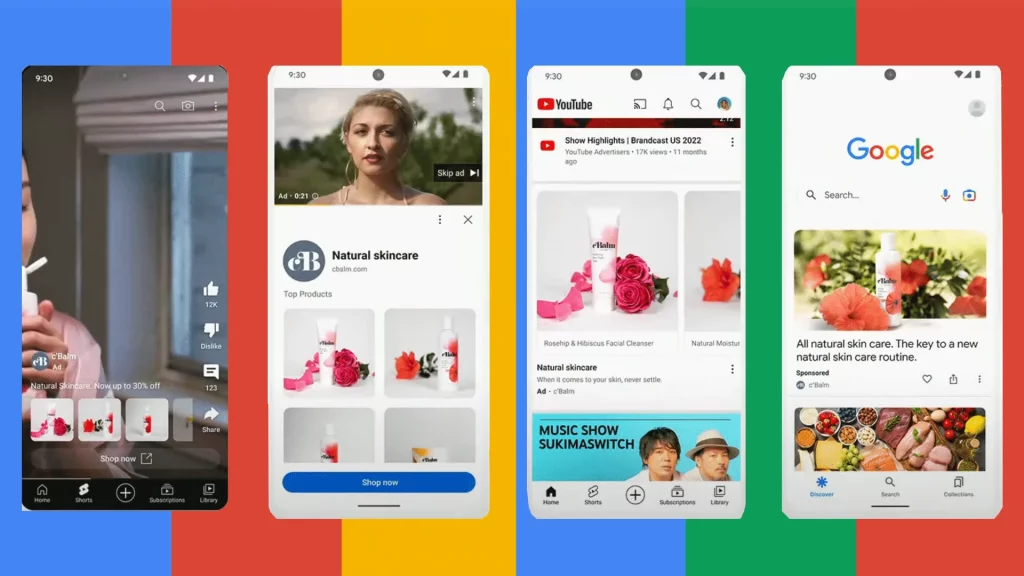
Demand Gen campaigns combine both image and video ads into a single location, enabling them to promote conversions, website visits, and actions such as sign-ups and adding items to the cart across YouTube, Discover, and Gmail.
Demand Gen campaigns provide a range of distinctive attributes tailored to the requirements of modern social marketers. Studies indicate that 91% of consumers take swift action upon encountering new products or brands on Google feeds, such as Discover or Gmail.
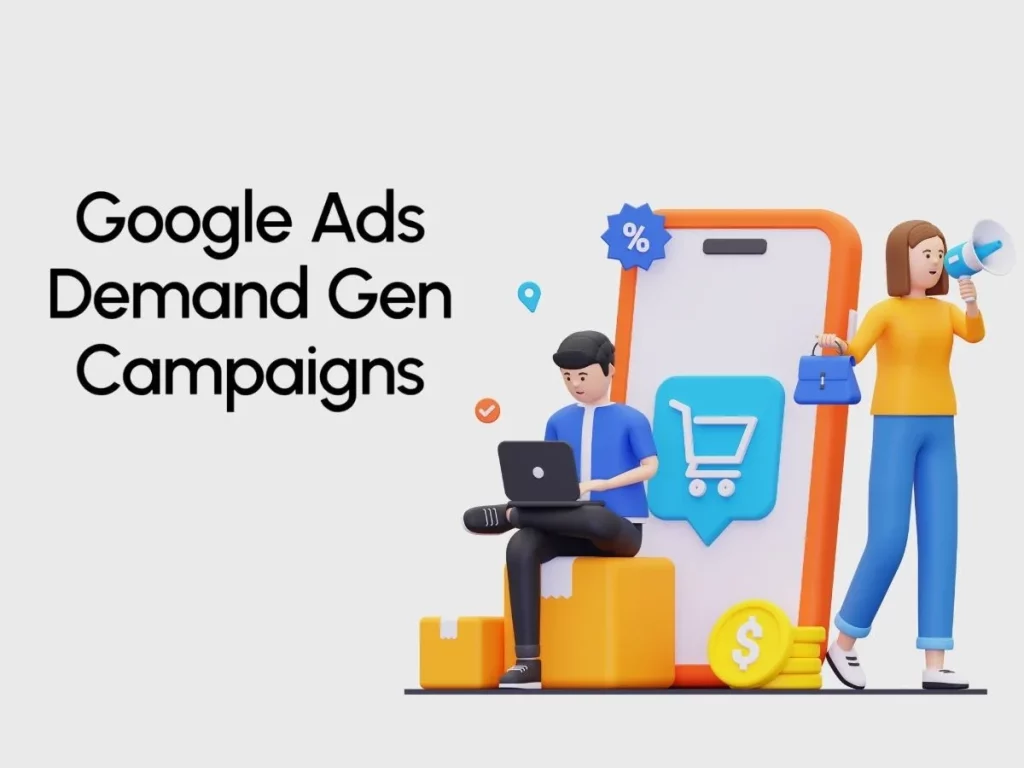
With Demand Gen, your most effective video and image resources are seamlessly integrated across our visually engaging touchpoints, including YouTube, YouTube Shorts, Discover, and Gmail. These platforms engage over 3 billion users every month as they browse, watch, and interact.
How Demand Gen Works
Demand Gen uses machine learning to optimize placements, creative rotation, and audience targeting. You provide the assets (videos, images, headlines), your audience signals (lookalike audiences, customer lists), and your budget, while the algorithm handles the heavy lifting.
The workflow operates on three main pillars:
- Creative Rotation: The system automatically tests different combinations of your provided images, videos, and headlines to learn what drives conversions, ultimately allocating more budget to the winning assets.
- Placement Optimization: The algorithm determines the most effective placements across Google’s visual network (YouTube, Discover, Gmail) based on where your specific audience is most likely to convert.
- Audience Expansion: By leveraging your seeded audience signals, the campaign identifies and targets net-new users who exhibit similar purchasing behaviors.
Do not confuse Demand Gen’s tROAS (Target Return on Ad Spend) bidding with bottom-funnel intent. Even with conversion-focused bidding, you are still interrupting people who are browsing visually, not actively searching for a solution. Treat this as an intelligent top-of-funnel channel.
Why More Advertisers Are Adopting Demand Gen
While Google heavily marketed the AI features and expanded reach of Demand Gen, the biggest driver of its massive adoption was actually necessity.
Google completely sunsetted Video Action Campaigns (VAC), which was the historical go-to campaign type for running conversion-focused video ads on YouTube. When VAC was eliminated, Demand Gen became the sole conversion-focused video campaign type available in Google Ads.
However, forced migration aside, Demand Gen genuinely introduced significant benefits that make it a powerful tool in your advertising arsenal:
- Expanded Reach: It seamlessly combines the power of short-form video (YouTube Shorts), long-form video (In-Stream), and static images (Discover/Gmail) into a single, cohesive campaign.
- Advanced Lookalike Modeling: It allows advertisers to create highly specific Lookalike audiences based on their absolute best first-party data, offering far more precision than traditional audience expansion.
- Dynamic Product Ads: The native integration with Google Merchant Center allows the algorithm to show dynamic, personalized product carousels to users based on their browsing behavior.
- Value-Based Bidding: It offers robust bidding options like Maximize Conversions, Target CPA, and Target ROAS, giving advertisers strict control over profitability targets.
Where Demand Gen Ads Show Up
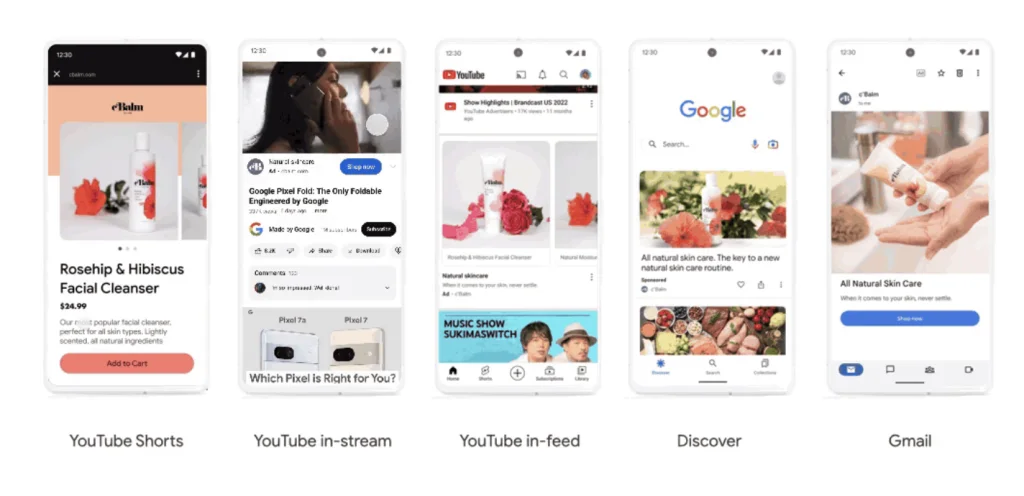
Placement quality varies wildly depending on user intent, so understanding exactly where your budget goes is critical for setting performance expectations.
- YouTube (In-Feed, In-Stream, Shorts): Your ads appear before, during, or alongside video content. YouTube typically provides the highest-quality traffic for ecommerce, though CPMs (Cost Per Mille) can be higher.
- Discover Feed: This carousel of content appears on the Google app and mobile browsers. Users here are in a browsing mindset, leading to high ad impressions but generally lower conversion rates compared to YouTube.
- Gmail Promotions Tab: Ads appear directly in user inboxes. While the audience size is massive, the Promotions tab is often ignored, requiring incredibly strong copywriting and offers to generate meaningful clicks.
What’s the Difference Between Demand Gen and Discovery Ads?
While Demand Gen is essentially the evolution of the old Discovery Ads format, it brings a massive upgrade in terms of available inventory, video capabilities, and audience control. Here is a quick breakdown of how the two formats compare:
| Feature | Discovery Ads | Google Demand Gen |
| Primary Placements | Discover feed, Gmail, YouTube Home feed | YouTube (In-Stream & Shorts), Discover, Gmail |
| Video Capabilities | No native video support (static/carousel only) | Full support for Short-form and Long-form video |
| Audience Targeting | Standard Google audiences and remarketing | Advanced Lookalike segments with adjustable reach |
| Product Feeds | Limited | Fully integrated with Google Merchant Center |
| Primary Goal | Mid-funnel engagement and website traffic | Top-to-mid funnel conversions and brand demand |
How to Optimize Your Google Demand Gen Campaigns?
Since the transition to this campaign type is fully complete, your focus must shift from basic setup to feeding the algorithm the best possible inputs. Here are practical, battle-tested strategies to maximize your ROI.
Feed the Algorithm High-Quality Lookalikes
Generic website visitor lists are no longer sufficient for training advanced AI. You must seed your Lookalike audiences with high-intent, first-party data to get the best results.
Upload lists of your highest LTV customers, repeat buyers, or users who abandoned high-ticket carts. This premium data helps the algorithm identify new users with identical purchasing behaviors, directly lowering your CPA.
Pro Tip: Do not rely on “All Website Visitors” as a seed list. Segment your CRM data to isolate top spenders before building your Lookalike segments for maximum profitability.
Adapt Creatives Natively for Specific Placements
Recycling horizontal TV commercials across all Google placements is a guaranteed way to waste ad spend. You must natively tailor your visual assets to fit each specific platform environment.
For YouTube Shorts, shooting natively vertical (9:16) video is an absolute non-negotiable requirement. Because skip rates are incredibly high, you need a highly disruptive visual hook immediately.
State your core value proposition within the first three seconds. This instantly qualifies the viewer and prevents wasted budget on passive scrollers.
Expert Note: If your conversion volume is too low for the AI to learn initially, set up micro-conversions, like “Time on Site > 2 mins” or “Scroll Depth 75%”, to feed the machine learning algorithm.
Integrate and Optimize Your Product Feed
Linking your Google Merchant Center feed is absolutely critical for any e-commerce brand running Demand Gen. Without it, your campaign flies blind using only generic brand creatives.
An optimized feed allows the algorithm to dynamically showcase specific products based on user context. It matches real-time pricing and availability to the user’s browsing behavior, driving much higher click-through rates.
Pro Tip: Ensure your product titles and descriptions in the Merchant Center feed are heavily optimized to match the exact search intent and demographic vocabulary of your target audience.
Set Realistic Budget Thresholds for Machine Learning
Demand Gen campaigns are inherently data-hungry and require robust volume to optimize delivery. Experimental campaigns on minimal budgets will simply starve the algorithm.
This stalls the machine learning process and leads to highly erratic ROAS. You must give the system enough financial runway to properly test multiple creatives and placements over a sustained period.
FAQs about Google Demand Gen Campaign
Here are quick answers to common questions about when to use Demand Gen, how much to spend, and how it differs from other Google Ads campaign types.
Use Demand Gen when you want to reach new audiences before they search for your brand or re-engage mid-funnel users. It works best for visual-first brands, eCommerce stores, and businesses that want to scale beyond Search traffic.
There is no fixed minimum budget. However, a budget of around 15x–20x your target CPA is often recommended to give Google enough data to optimize, especially if your goal is to reach around 50 conversions per month.
Performance Max is more automated and focuses on capturing demand across all Google channels. Demand Gen gives advertisers more control over visual placements like YouTube, Discover, and Gmail, making it better for awareness, consideration, and mid-funnel engagement.
Not always. Lead generation campaigns can run without a product feed, but eCommerce brands should connect their Google Merchant Center feed to show relevant products dynamically and improve ad relevance.
>> Read more: Types of Google Ads: How to Choose Right Campaigns
Conclusion
Google Demand Gen helps both B2B and B2C businesses reach new audiences beyond traditional Search traffic. To make it work, focus on strong visual creatives, relevant audience signals, first-party data, and realistic budgets that give Google’s algorithm enough room to optimize. For businesses that need support, Mega Digital can help set up, audit, and optimize Demand Gen campaigns for stronger mid-funnel growth.