
With the ability to showcase multiple images and videos in a single ad unit, Facebook carousel ads offer a dynamic way to tell your brand’s story, highlight products or services, and drive action from potential customers. So, how does it work? Is this ad type suitable for your objectives? What are its requirements? Check it out here with Mega Digital and receive some tips to optimize for better results!
Quick summary:
- Facebook carousel ads let you showcase multiple products, features, or messages within one ad.
- Use consistent card sizes, strong first-card creative, and a clear role for each card.
- Match each card with the most relevant destination page to reduce post-click friction.
- Review card-level performance alongside CTR, CPC, conversions, and ROAS to improve future campaigns.
What is a Facebook Carousel Ad?
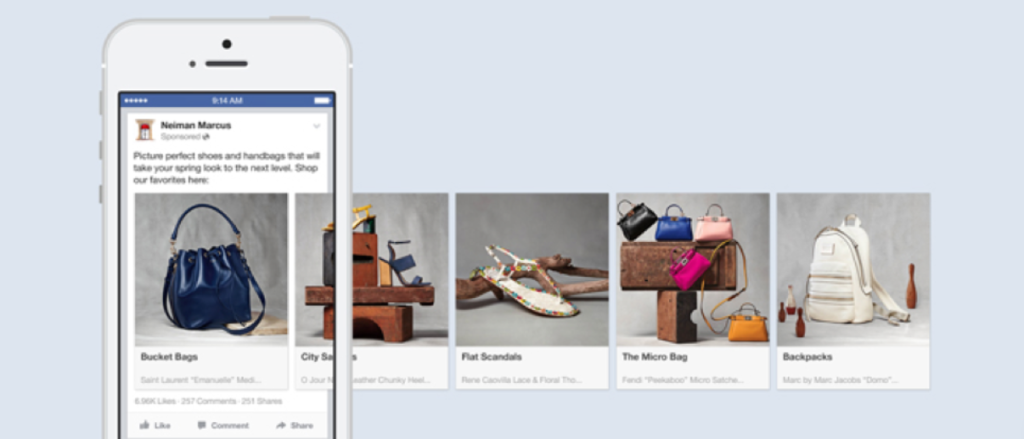
A Facebook carousel ad is a type of advertising format that allows businesses to showcase multiple images or videos within a single ad unit. This interactive ad format lets advertisers tell a story, demonstrate product features, or highlight various offerings using a swipeable card carousel. Each carousel card can feature its own image or video, headline, description, and destination URL, while the ad uses a shared call-to-action button.
Because of the ability to include up to 10 cards in a single ad, advertisers no longer struggle to decide which product to showcase. Facebook carousel ads deliver a visually compelling and interactive user experience, making them an effective tool for driving engagement and conversions.
Why You Should Use Carousel Ads on Facebook?
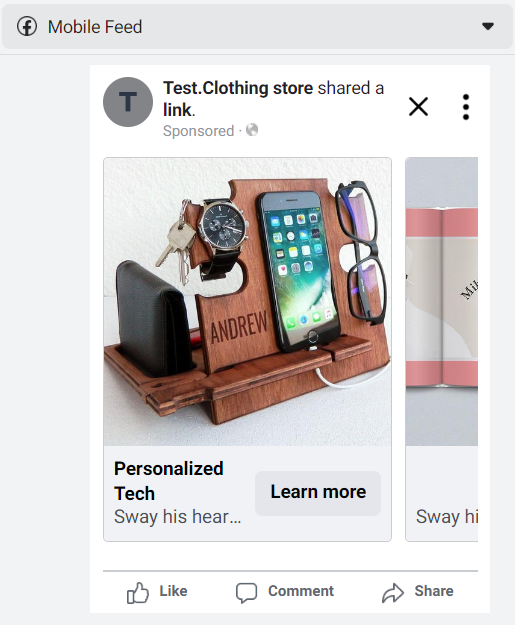
Using Carousel Ads on Facebook can offer several advantages for advertisers looking to create dynamic and engaging campaigns, like:
- Tell A Story Visually: With up to 10 images, this format is ideal for demonstrating a step-by-step process or conveying a brand story in a more immersive way.
- Showcase Product Variety or Features: If you have a range of products or services to promote, Carousel Ads provide an opportunity to showcase multiple items within a single ad.
- Increase Engagement: The nature of Carousel Ads encourages users to swipe through the cards, compared to traditional static ads. This provides a more engaging and enjoyable experience where audiences can explore different offerings.
- Showcase Relevant Products or Features: Highlight different products, features, or benefits in one ad to give users more relevant options and increase the chance of engagement.
- Mobile-Friendly Design: Carousel Ads are designed with a mobile-first approach, making them visually appealing and easy to navigate on mobile devices.
- Drive Clicks and Conversions: With a call-to-action button on each card, Carousel Ads provide multiple opportunities to drive clicks and conversions. You can guide audiences through the customer journey with specific CTAs.
- Rich Performance Insights: Facebook provides detailed analytics for Carousel Ads, allowing you to track the performance of each card to optimize and refine your advertising strategy.
- Cost-Efficient: Carousel Ads provide a cost-efficient way to showcase multiple products or messages within a single ad unit. This can be especially beneficial because advertisers don’t need to create multiple campaigns for A/B testing.
Note: Recent ecommerce data shows that Meta carousel ads can generate 30 – 42% higher CTR and lower CPC than single image ads, making them a strong option for campaigns that need to showcase multiple products or messages.
How Much Does Facebook Carousel Ads Cost?
The cost of Facebook carousel ads can vary depending on several factors, including: Pasted text
- The competitiveness of your target audience
- Your campaign objective and placements
- The quality and relevance of your ad creative
- Your bidding strategy and campaign budget
However, recent ecommerce benchmarks show that carousel ads can cost around 0.68 – 1.09 per click across Meta platforms, depending on the product category and campaign setup.
Facebook Carousel Ad Specs & Sizes
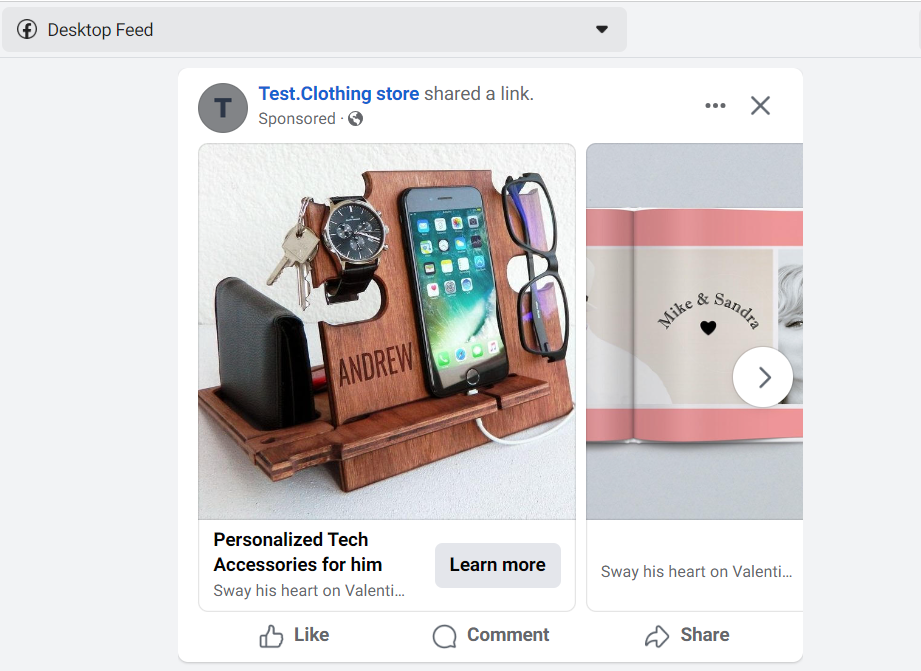
Before setting up a campaign with Carousel ads, advertisers need to know Facebook ads sizes of this ads clearly to acquire the correct display for the audiences and avoid Facebook ad issues.
- Minimum: 2 cards
- Maximum: 10 cards
- Recommended aspect ratio: 1:1
- Aspect ratio tolerance: 3% (applicable to Facebook only)
- Recommended resolution: 1080 x 1080 pixels
- Supported image file formats: .jpg and .png
- Maximum file size for an image: 30 MB
- Video length allowance: Up to 240 minutes (15 seconds recommended)
- Supported video file formats: Refer to the complete list of approved video formats
- Maximum file size for a video: 4 GB
- Text: up to 125 characters
- Headline: up to 40 characters
- Link description: up to 25 characters
How to Create a Facebook Carousel Ad?
There are two ways to create an advertising campaign with Carousel ads on Facebook, through:
- Meta Ads Management
- Facebook Business Page
Note: Don’t forget to create a Facebook Ad Account before setting up ad campaigns.
Create Facebook Carousel Ads with Meta Ads Management
- Step 1: Go to Meta Ads Manager.
- Step 2: Select + Create in the top left corner to start a new campaign.
- Step 3: Opt for an objective compatible with the carousel format. Be aware that the Engagement objective is not compatible with the carousel format.
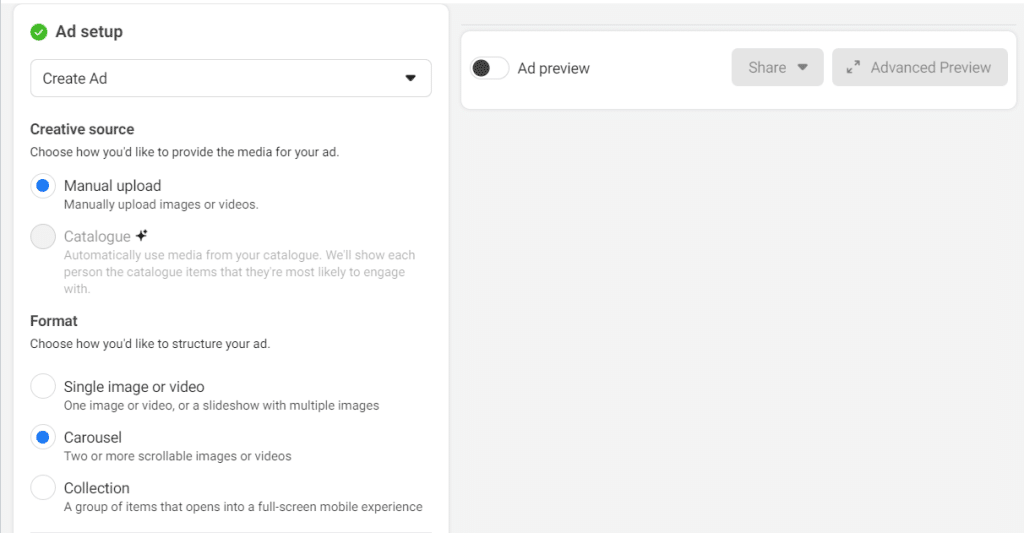
- Step 4: Fill in all the information about your advertising campaign like normal (Bidding, Targeting,…). Within the Identity section, choose the Facebook Page you wish to associate with your carousel ad.
- Step 5: Opt for Manual upload or Catalogue to dynamically generate a carousel using your products in the Ad setup section. Subsequently, select Carousel.
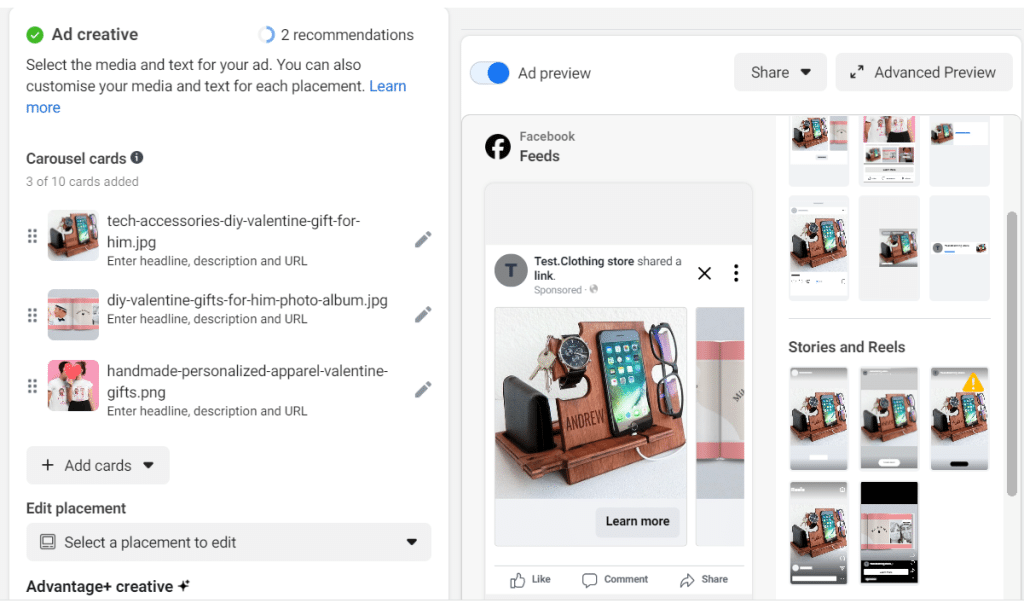
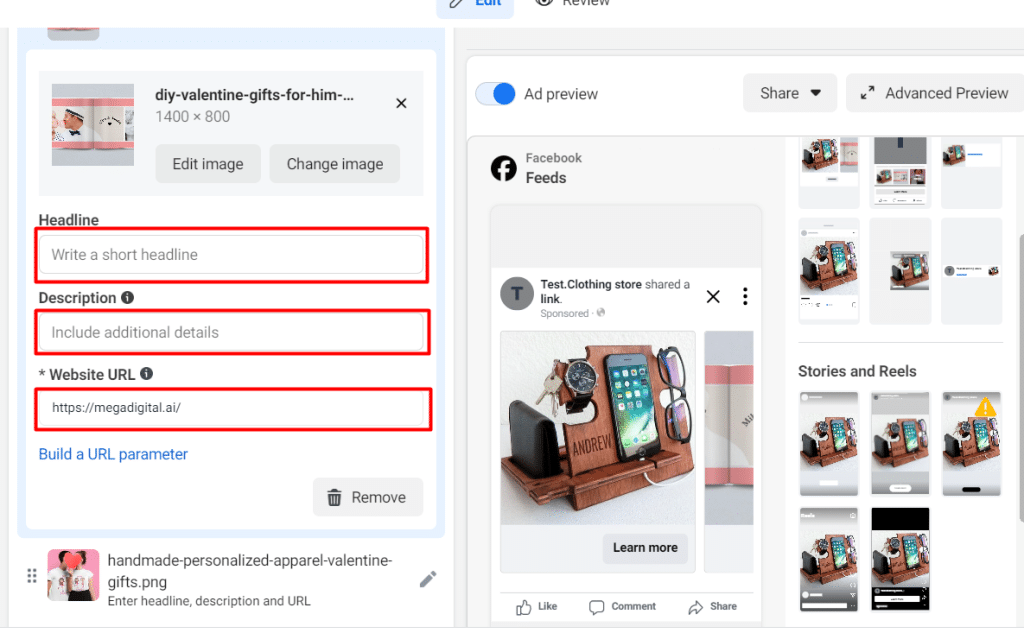
At this stage, you will have the option to add, edit, and optimize each segment shown on the cards:
- Headlines
- Description
- Redirected URLs
- Call to actions
Facebook allows advertisers to optimize carousel ads with its recommendations like:
- Profile End Card: Add a card with your Page profile picture at the end.
- Relevant Comments: Display the most relevant comment below your ad on Facebook.
- Music Add-Ons: Add music to your ad to match the look and feel of platforms that use sound.
- Dynamic Description: Facebook chooses when to show your carousel description.
- Highlight Carousel Card: Automatically show the best-performing card first.
Create Carousel Ads with Facebook Business Page
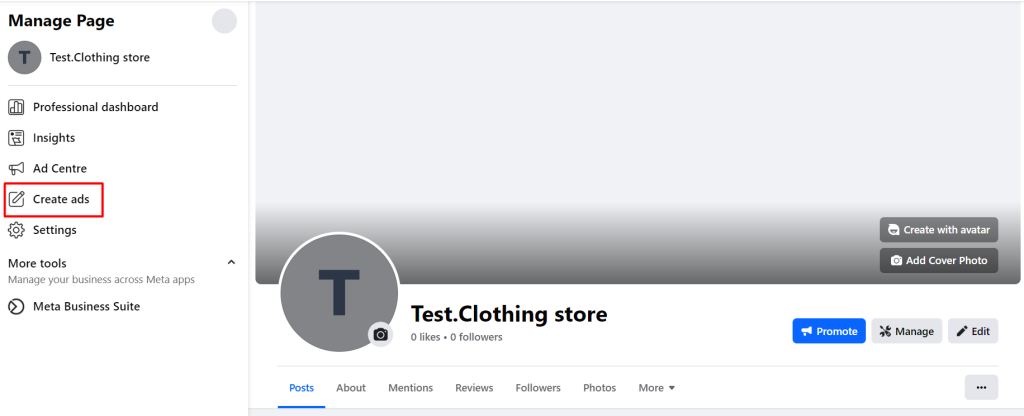
- Step 1: Select Create Ads on your Page.
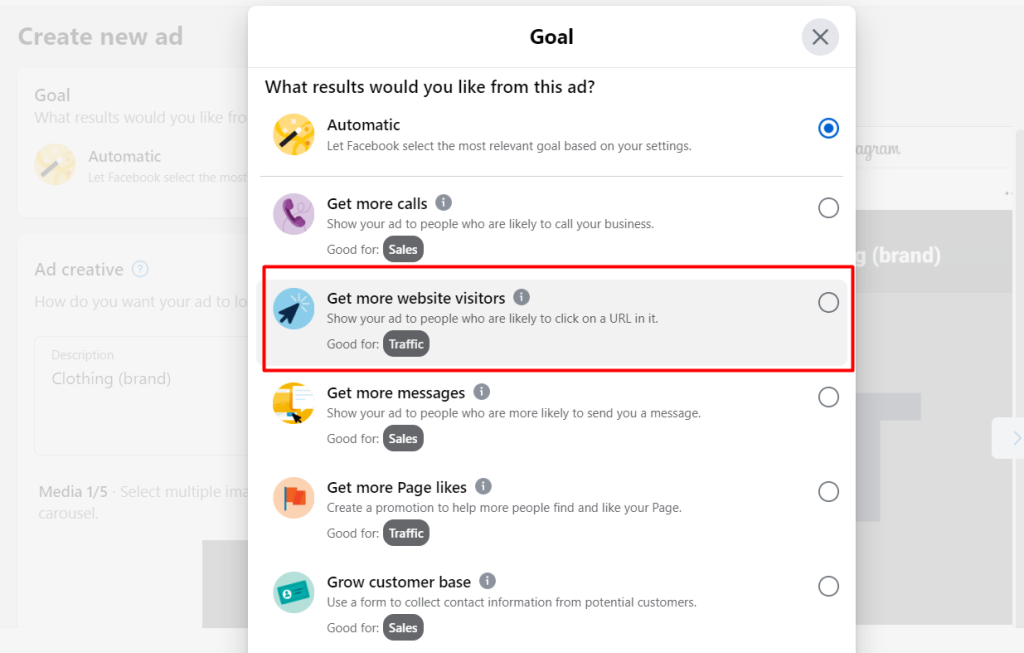
- Step 2: Opt for Get more website visitors.
- Step 3: Input an optional description for your ad in the Description box.
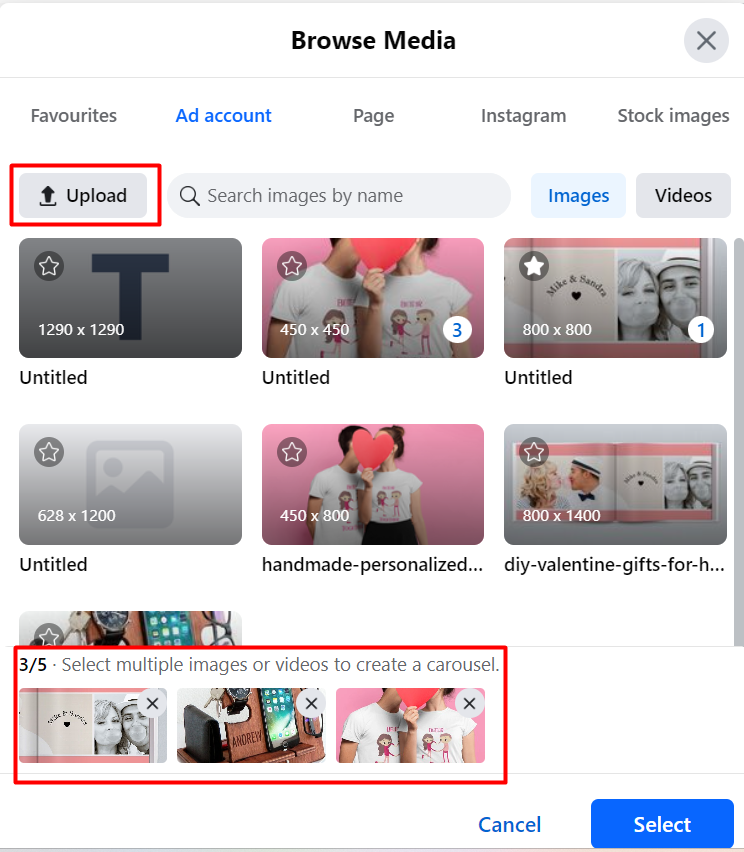
- Step 4: Choose Select media. On the Browse media page, upload your images or videos or select existing ones. Arrange them in the desired order for your carousel and click Select. Note that you can include up to five images or videos.
- Step 5: Input optional text into each Headline box. Use the arrows to navigate through your carousel cards.
- Step 6: Click the Button label drop-down and pick a phrase for your button.
- Step 7: In the Website URL box, provide the URL you want people to visit upon clicking your ad.
- Note: If you wish each carousel card would direct people to a different URL, create your ad in Ads Manager.
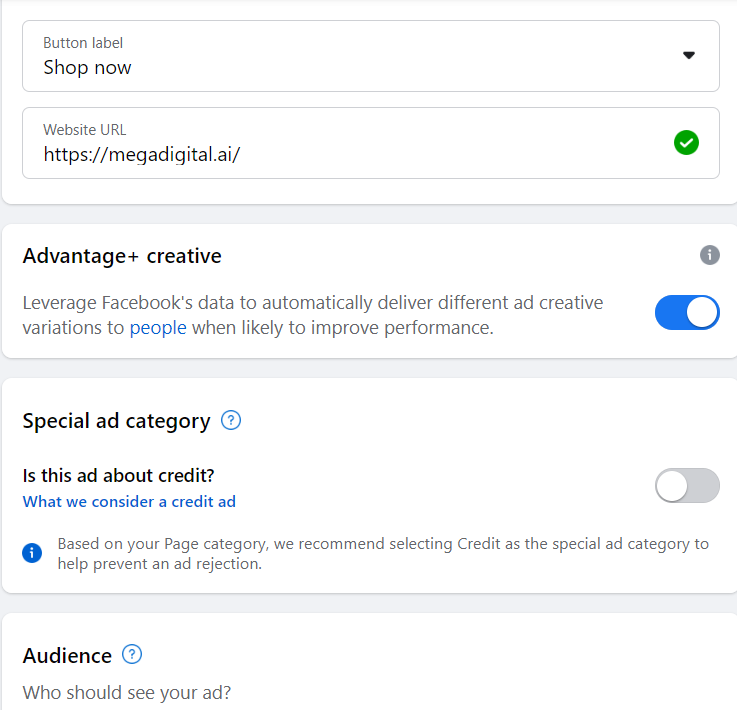
- Step 8: Toggle the Special ad category, if applicable, and make selections for audience, duration, and daily budget.
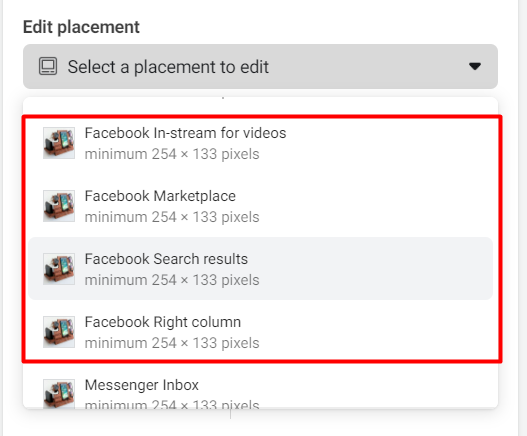
- Step 9: Click the Placements drop-down to specify where your ad appears. Check the box next to a placement to select it. If you have established and implemented a Meta pixel and wish to enable event tracking, toggle the Pixel.
- Step 10: Fill in all advertising information like Budget, Placements, Targetings, or Pixel to complete the setting up phase. Then, click Confirm to start advertising.
Facebook Carousel Ad Best Practices
Carousel ads work best when every card has a clear purpose and the sequence gives users a reason to keep swiping. Mega Digital recommends focusing on the first card, card roles, ordering, landing-page relevance, and card-level performance.
Make the First Card Your Strongest Hook
Use the first card for your strongest product, offer, pain point, or visual instead of a generic brand introduction. If one product or message consistently performs better, test moving it to the first position to capture attention earlier.
Tip: Create 2 – 3 versions of card 1 while keeping the remaining cards unchanged. This lets you test the hook without rebuilding the entire carousel.
Give Every Card a Clear Role
Avoid repeating the same message across multiple cards just to fill the carousel. Structure each card around a distinct role, such as Problem > Solution > Key Benefit > Proof > Offer, or use each card to feature a different product or use case.
Build the Right Card Order
Keep the order fixed when the carousel follows a sequence, such as a tutorial, comparison, or product story. For standalone product cards, place your strongest product, offer, or visual earlier so users are more likely to see it.
Send Each Card to the Right Landing Page
Match each card with the most relevant destination instead of sending every click to the homepage. If a card promotes a specific product, category, or service, direct users straight to that page to keep the ad-to-landing-page journey consistent.
Optimize With Card-Level Performance Data
Do not judge the carousel only by overall CTR, CPC, or ROAS. Review card-level clicks and conversions to identify which products, messages, or visuals deserve more budget or should be reused in future creatives.
Tip: A weak card does not always need to be removed. If it provides proof, comparison, or objection handling, check whether it supports later-card conversions before replacing it.
Facebook Carousel Ad Examples to Learn From
Real campaigns can show how different brands use carousel ads to encourage swiping, tell a story, or help users explore products more naturally.
Gymshark
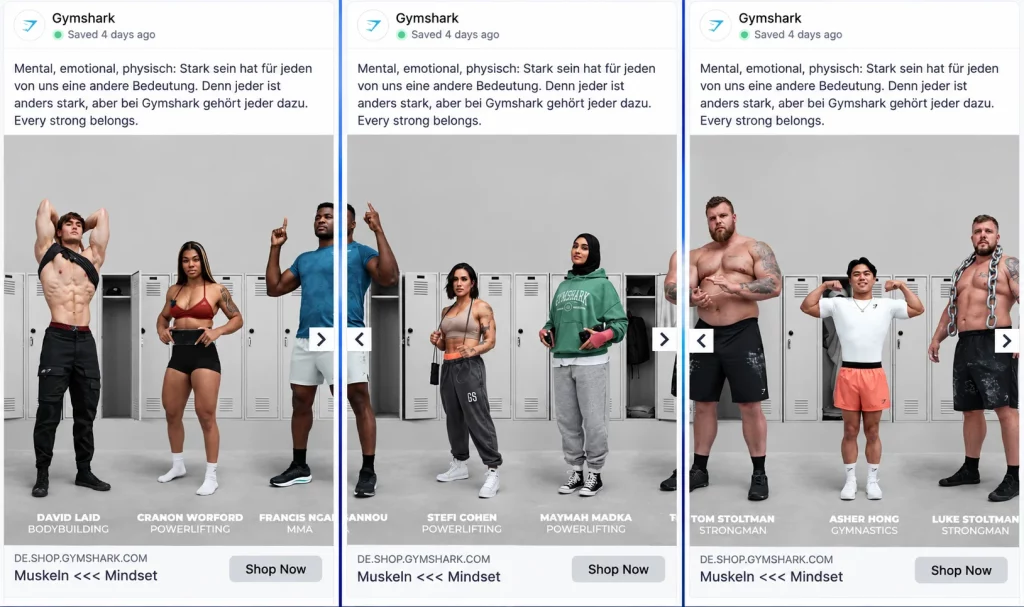
Gymshark turns one wide visual into several connected carousel cards, encouraging users to swipe to reveal the full image. The approach keeps the creative visually consistent while showcasing different athletes and products across the sequence.
Canva
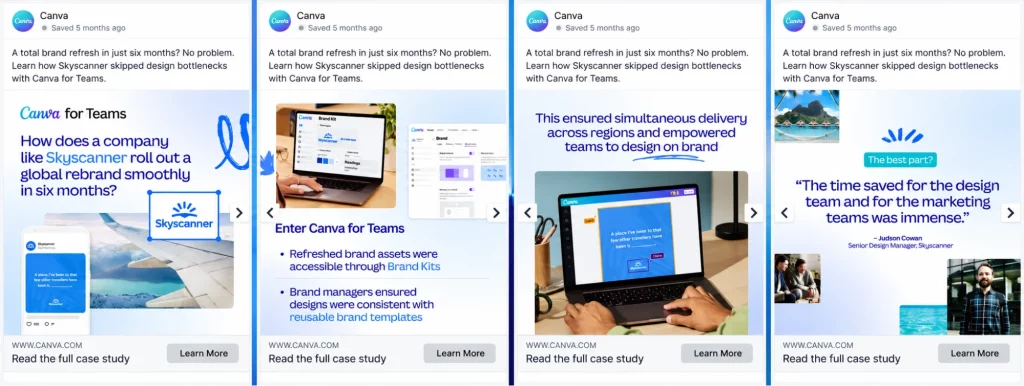
Canva uses carousel ads to turn a detailed customer case study into a shorter, more visual story. The first card introduces the challenge, while the following cards gradually reveal the solution and results, making the content easier to consume without requiring an immediate click.
Dyson
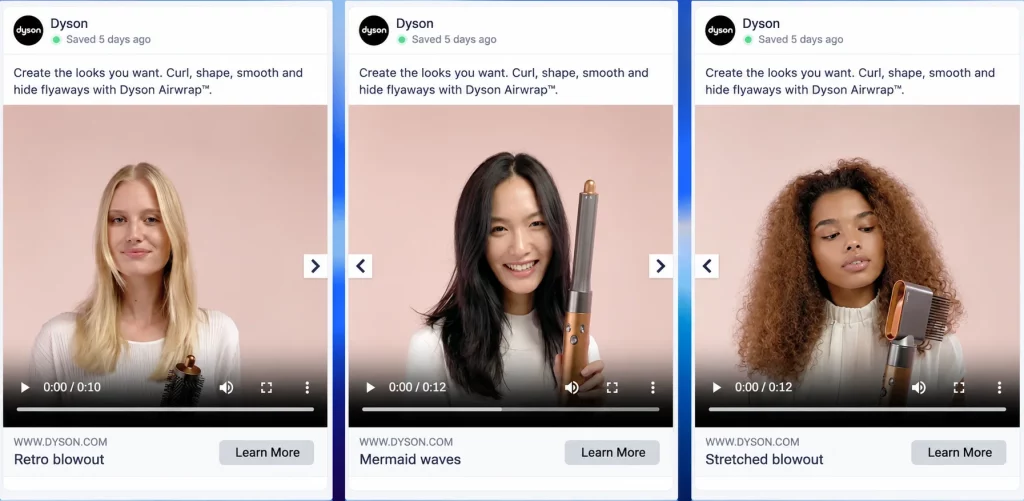
Dyson uses carousel video cards to demonstrate different Airwrap styling options for different hair types and preferences. Each card works as a standalone product demo, allowing users to swipe directly to the example that feels most relevant to them.
Final Word
Facebook carousel ads give advertisers more room to showcase products, explain features, and guide users through a story within a single ad unit. Strong performance, however, depends on how well you structure the cards, match each message with the right destination, and use performance data to refine the campaign.
If you need support with campaign strategy, creative testing, targeting, or ongoing optimization, Mega Digital’s Facebook Advertising Service can help you build and manage campaigns around measurable business goals.